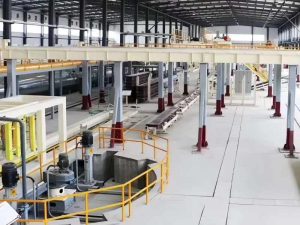
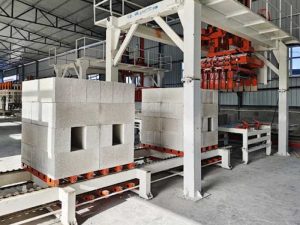
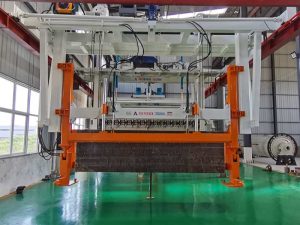
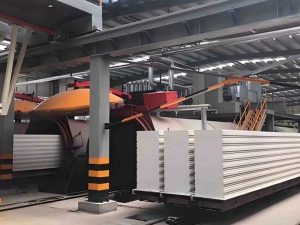
AAC Production Line Manufacturer
If you are planning to start an AAC block manufacturing business, choosing the right AAC production line is the key to ensuring stable quality, low operating cost, and long-term profitability.
As a professional AAC block manufacturing plant manufacturer, we provide complete AAC production solutions — from plant design, machine manufacturing, installation, commissioning, to after-sales support — helping hundreds of clients successfully build their AAC factories worldwide.
- Customized Solutions: tailored to factory size, output & budget.
- Energy Efficiency: Less waste, lower energy use, meets green standards, cuts costs.
- Reliable Performance: Quality parts+strict QC for steady production & long life.
- End-to-End Support: Full help from design, installation & training to after-sales.
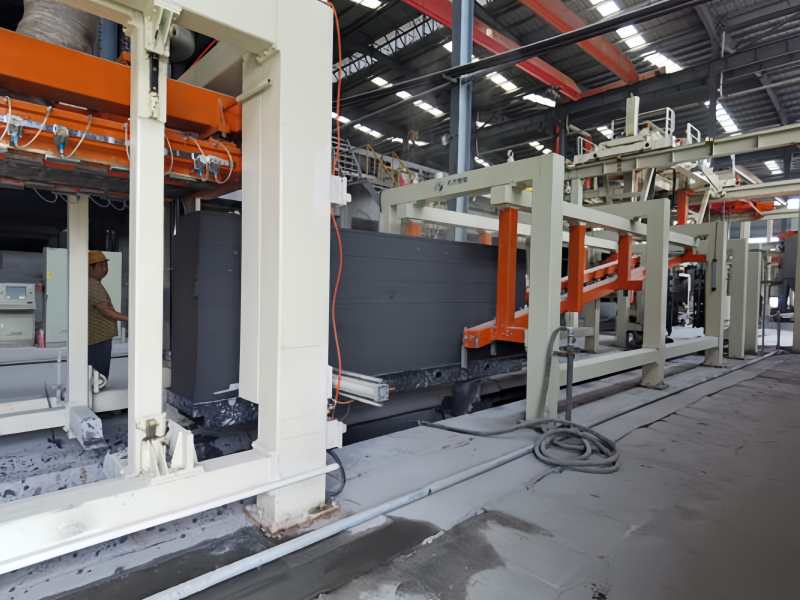
What Is an AAC Production Line?
An AAC production line is a fully automated or semi-automated system designed to produce Autoclaved Aerated Concrete (AAC) blocks.
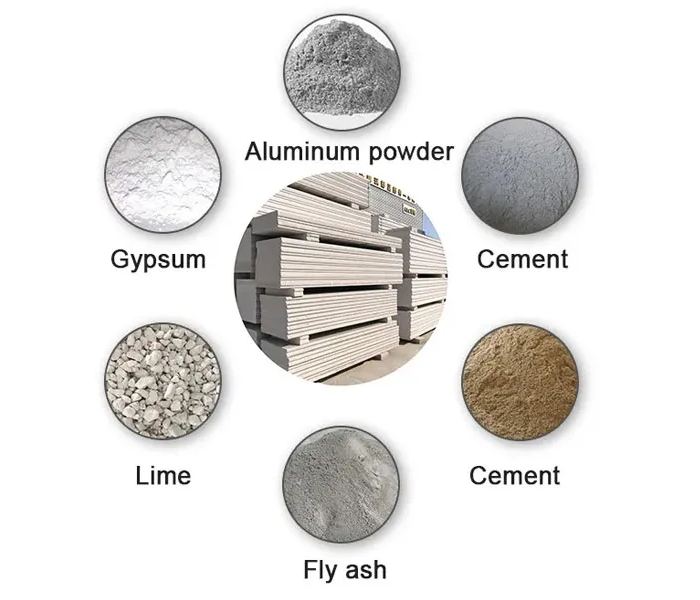
Using materials like cement, lime, fly ash (or sand), gypsum, and aluminum powder, AAC blocks offer benefits such as:
- Lightweight
- Excellent thermal insulation
- Soundproofing
- Fire resistance
- Fast construction speed
- Low environmental impact
With the global adoption of green construction materials, AAC blocks are becoming the preferred alternative to clay bricks and concrete blocks.
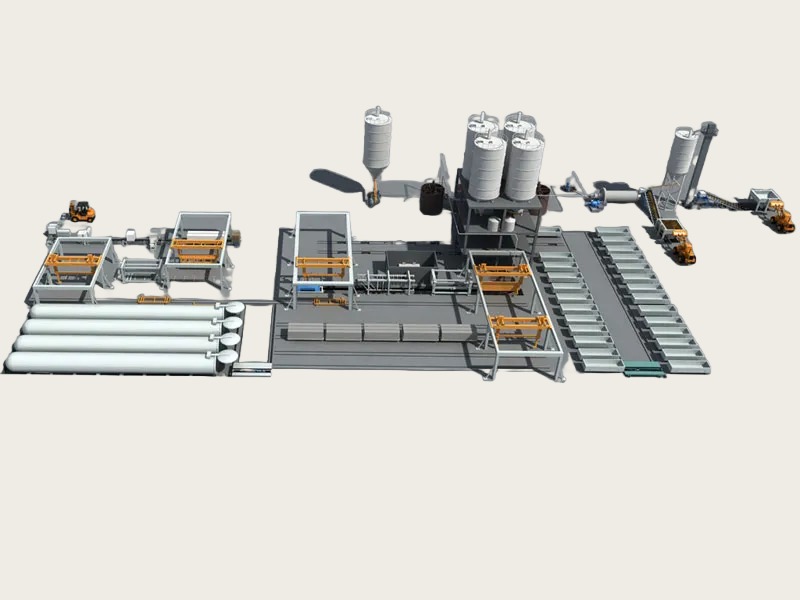
Mini/small AAC Production Line
Capacity: 30000-100000 m3/year
Avtoklav: 1-3 sets
Zavod: about 4000-10000m2
Types: semi-automatic/ fully automatic
Features: low initial investment, high flexibility.
Suitable for: Start-ups or enterprises with limited investment and small market demand.
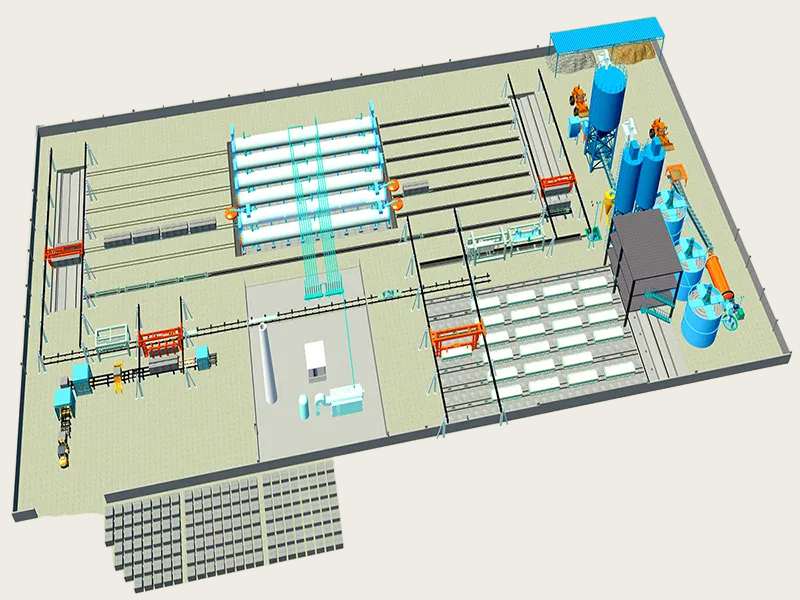
Medium- Scale AAC Production Line
Capacity: 100000-200000 m3/year
Avtoklav: 4-8 sets
Zavod: about 10000-20000m2
Type: fully automatic
Features: stable production capacity, controllable costs, and flexibility and large-scale production.
Suitable for: Enterprises with certain market share and stable demand.
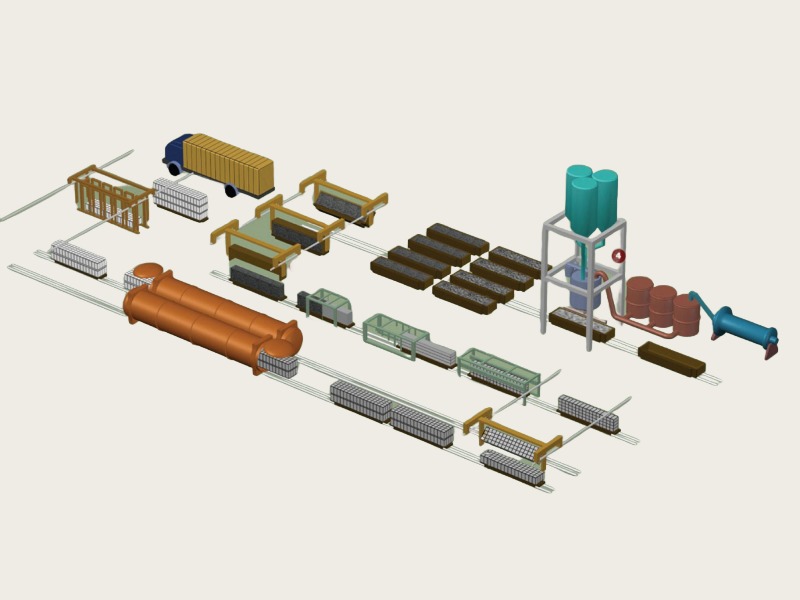
Costs of AAC Production Line
| Scale | Capacity Range | Equipment & Installation Cost | Land & Infrastructure Cost | Total Investment Range | Estimated Payback Period |
|---|---|---|---|---|---|
| Kichik | 30,000–100,000 m³ (Small) | $400,000–$1,000,000 | $150,000–$300,000 | $600,000–$1,300,000 | 2.0–2.5 years |
| Medium | 100,000–200,000 m³ (Medium) | $1,000,000–$2,000,000 | $500,000–$800,000 | $1,500,000–$2,800,000 | 2.0–2.8 years |
| Katta | 300,000–500,000 m³ (Large) | $2,000,000–$3,500,000 | $800,000–$1,500,000 | $2,800,000–$5,000,000 | 2.5–3.5 years |
The payback period is estimated based on a net profit margin of 25–30%. The actual period is subject to fluctuations in market prices, capacity utilization rate, and cost control efficiency.
AAC Production Line Process
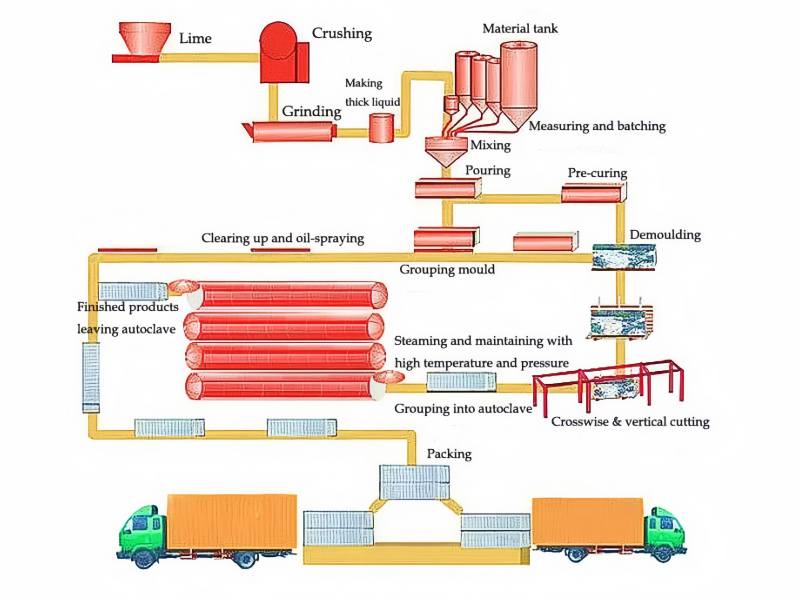
The production process of the AAC Production Line follows a strictly controlled sequence of steps:
- Raw material preparation: Crush and sieve sand, cement, lime, and fly ash. Then store them in silos.
- Mixing: Mix these materials with water in exact proportions to make a slurry. Add aluminum powder to start foaming.
- Casting and rising: Pour the slurry into molds. The aluminum reacts with other components, making the slurry expand and form air bubbles.
- Pre-curing: Let the material set in the molds for a few hours to gain initial strength.
- Cutting: After pre-curing, use wire saws to cut the material into blocks of precise sizes.
- Autoclaving: Put the cut blocks into an autoclave. Cure them at high pressure (up to 12 bar) and high temperature (about 180–200°C) for 8–12 hours. This helps form strong calcium silicate hydrate bonds.
- Packaging and storage: Inspect the finished blocks, package them, and store them for distribution.
Raw Materials Used in AAC Block Production
Sand: A primary aggregate, often sourced locally to reduce transportation costs.
Kuchli kul: A byproduct of coal-fired power plants, reused in AAC to minimize waste.
Tsement va ohak: Essential binders that react to form the material’s structure.
Aluminum powder: A small but critical component for creating the aerated structure.
Suv: Used in mixing and curing, with many plants implementing water recycling systems.
AAC Production Line Equipment List
1. Raw Material Handling Equipment
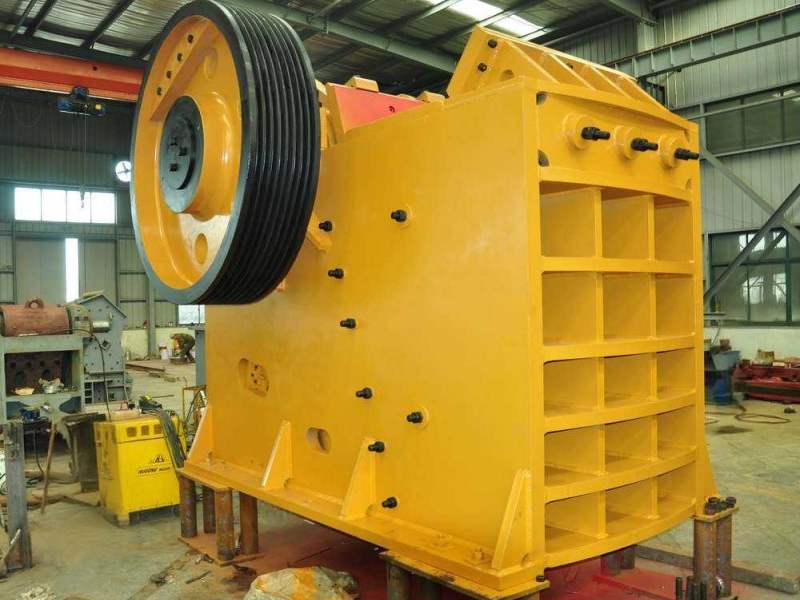
Crusher: Crushes raw materials such as sand and lime to the specified particle size. Jaw crushers are used for hard materials, and impact crushers are used for fine crushing.
Screener: Uses vibratory screening to remove impurities and make sure raw material particles are uniform in size.
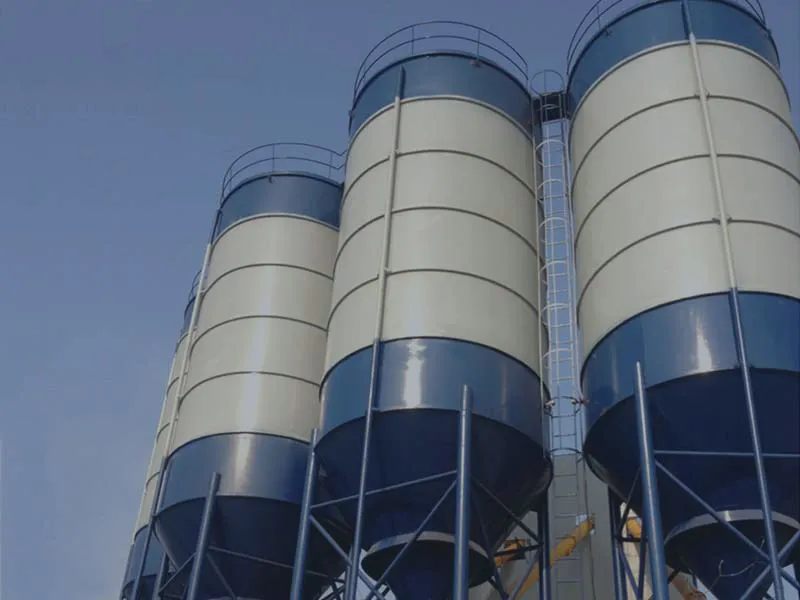
Storage Silo: Stores pre-treated raw materials. It has a level meter and dust removal device to keep production running continuously and meet environmental protection requirements.
Weighing Scale: Belt or spiral scales accurately measure raw material quantities to minimize formulation errors.
2. Mixing and Foaming Equipment
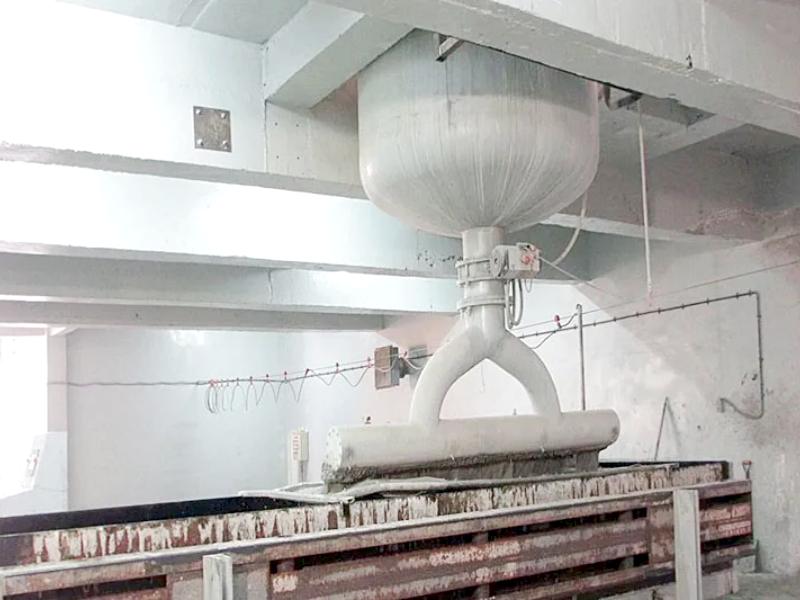

Forced Mixer: Mixes solid raw materials and water at high speed to form a uniform slurry, laying the foundation for foaming.
Aluminum Powder Mixing Tank: Mixes aluminum powder suspension at low speed to prevent sedimentation and ensure uniform dispersion.
Foaming System: Aluminum powder suspension is injected in proportion to react with the slurry to generate bubbles, which are then linked to the mixer for automated control.
3. Casting and Forming Equipment
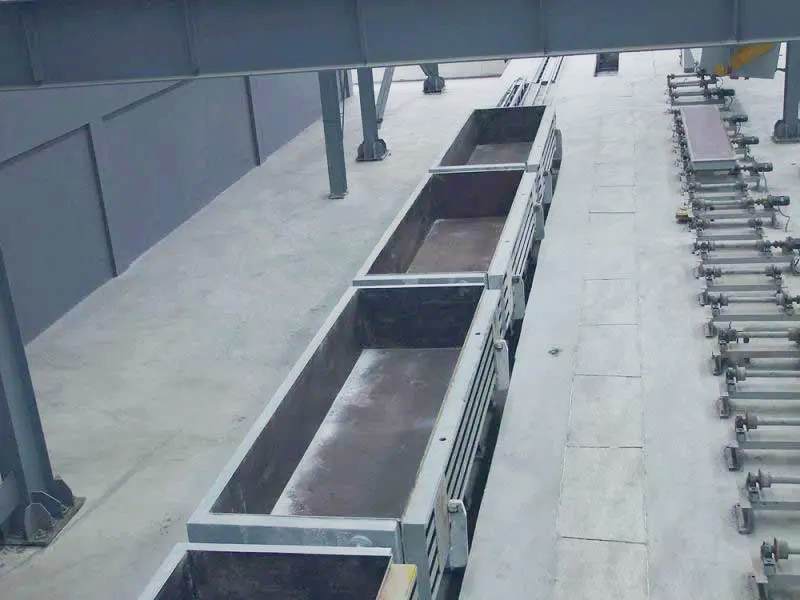
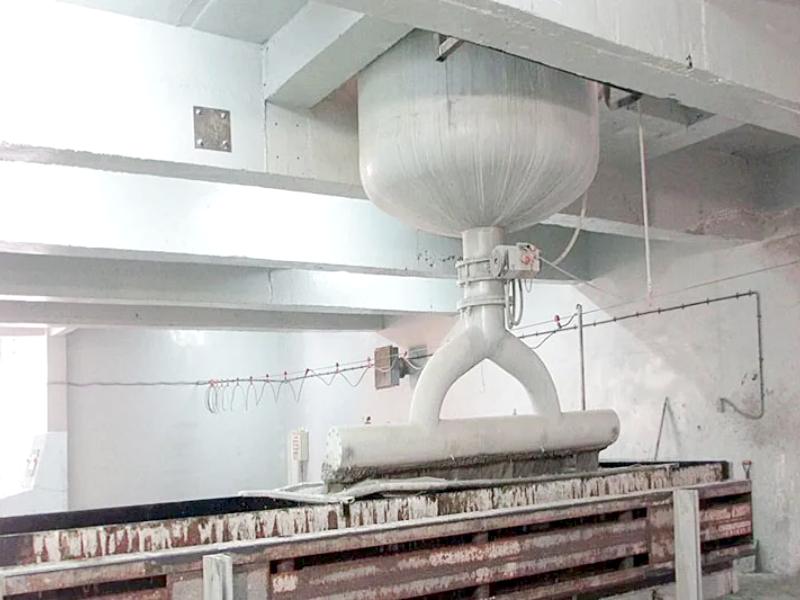
Molds: Custom-made high-strength steel with a special surface treatment, adjustable in size to accommodate different product specifications.
Casting Machines: Precisely control the slurry injection volume, and some are equipped with automatic travel to prevent material shortages or overflow.
Curing Chamber: A constant temperature and humidity environment ensures slurry aeration and initial setting, resulting in a uniform porous structure.
4. Cutting Equipment
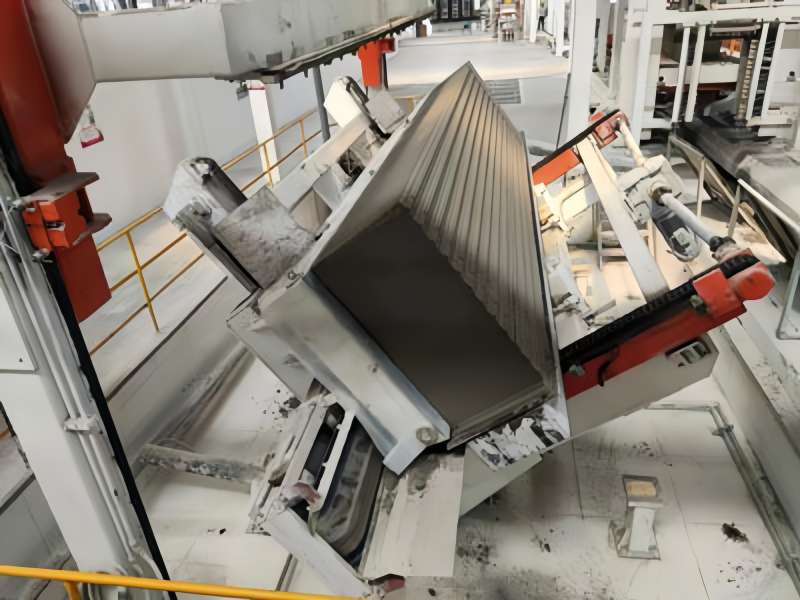
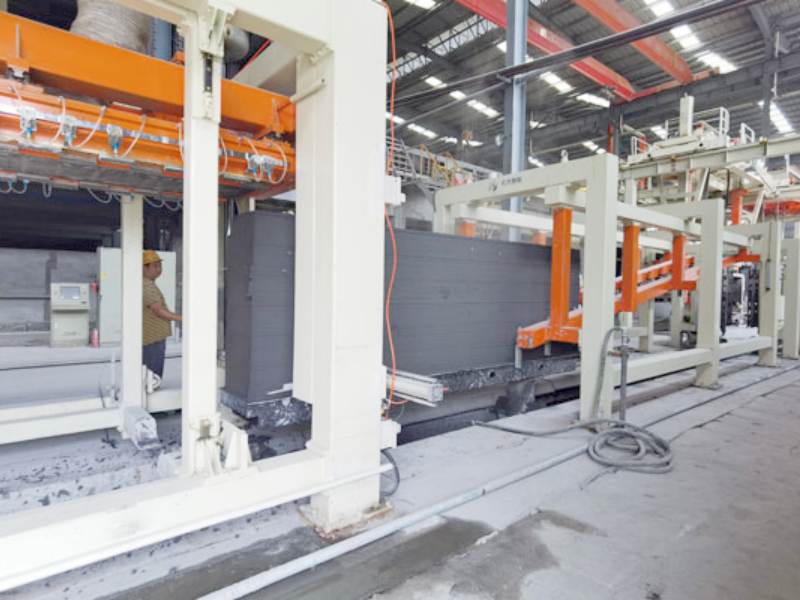
Turning Table: Driven by hydraulics, it rotates molds and blanks smoothly—this makes demolding and cutting easier.
Wire Saw: Uses multiple sets of high-strength steel wires for high-speed cutting. A CNC system ensures cutting accuracy down to the millimeter. For large wire saw equipment, it can do continuous cutting at multiple stations.
5. Autoclave Curing Equipment
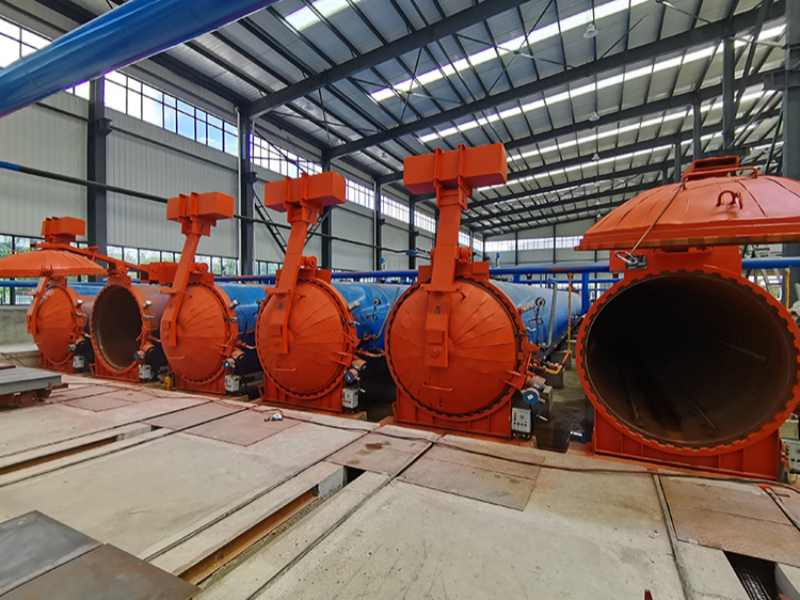

Autoclaves: Large pressure vessels cure blanks at temperatures of 180–200°C and pressures of 10–12 bar, forming high-strength calcium silicate hydrates. Equipped with safety interlocks.
6. Auxiliary Equipment

Steam Boilers: Supply stable steam for autoclaves and curing chambers, with various heating options available.
Air compressor: Provides compressed air for pneumatic equipment, ensuring valves, clamps, and other devices work properly.
Conveyor belt system: Transports materials through the entire process. Uses belt or chain conveyors (chosen based on material needs) for automated, continuous movement.
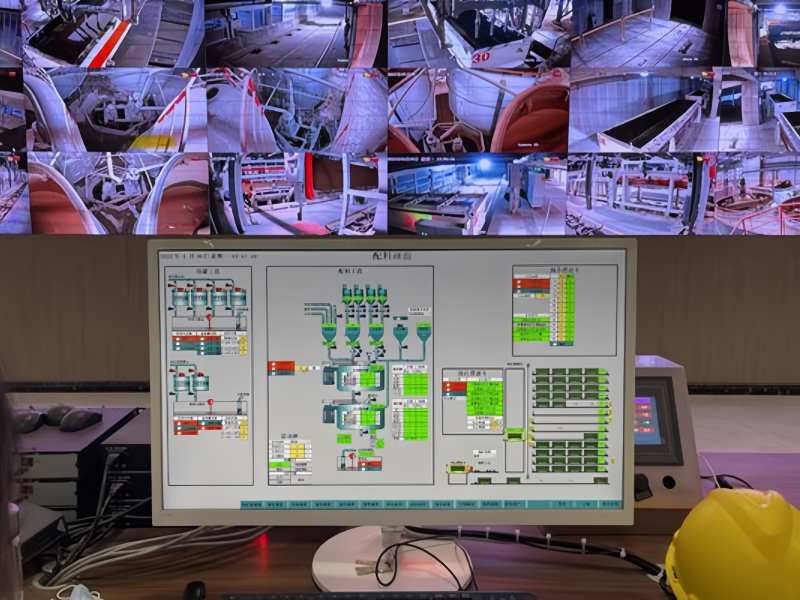
Nazorat tizimi: PLC or DCS systems monitor and adjust production parameters in real time. They record data for management and traceability, and help resolve issues promptly.
Applications of Autoclaved Aerated Concrete Block
AAC’s versatility makes it suitable for a wide range of construction applications:
Residential buildings: Walls, floors, and roofs in houses and apartments.
Commercial structures: Offices, malls, and hotels benefit from its insulation and fire resistance.
Industrial facilities: Used for partitions and external walls due to durability.
Infrastructure projects: Bridges, tunnels, and sound barriers leverage its lightweight properties.
Benefits of Using AAC Block
Lightweight: Reduces structural weight by 20-30%, reducing foundation costs.
Insulation and Energy Saving: Thermal conductivity of 0.10-0.16 W/(m·K) reduces heating and cooling energy consumption.
Fireproof: A1-grade non-combustible, 100 mm wall fire resistance for 4 hours.
Seismic Resistance: Low density, good integrity, and low seismic inertia.
Soundproof: 10 cm wall insulation of 41 dB, blocking sound transmission and improving indoor comfort.
Quick: Large panels can be installed at 8-10 m²/person/shift, reducing construction time by 40%.
Green: Solid waste utilization rate ≥ 60%, zero wastewater discharge.
Precision: CNC cutting, finished product tolerance ≤ ±1 mm, thin-layer masonry reduces mortar consumption by 70%.
Environmental: Uses industrial waste (fly ash), resulting in lower production energy consumption than traditional concrete.
Why Investors Prefer Our AAC Production Lines
As a trusted AAC plant manufacturer, we offer unmatched advantages:
✅ 1. Real Manufacturer with Full Production Capacity
We design, manufacture, assemble, and test all AAC equipment in our own factory — no outsourcing, no trading.
Clients can visit our workshop anytime.
✅ 2. Customized Plant Layout & Engineering Support
Every AAC project is different.
We provide free:
- Plant layout design
- Foundation drawings
- Production planning
- Cost estimation
- Raw material analysis
✅ 3. High Automation & Low Operating Cost
Our AAC production line reduces labor by 30–50%, energy consumption by 15–25%, and material waste by 10–15%.
✅ 4. Precision Cutting Technology
Our cutting machine ensures
- smooth surface
- accurate block size
- minimal waste
This helps clients produce high-quality AAC blocks that sell at better market prices.
✅ 5. Global Installation & After-Sales Service
We have exported AAC plants to: India, Bangladesh, Indonesia, Vietnam, Saudi Arabia, UAE, Kenya, Nigeria, Egypt, Kazakhstan, Russia, etc.
We offer:
- On-site installation
- Online technical support
- Operator training
- Spare parts supply
✅ 6. Competitive Factory Price
Because we are a direct manufacturer, our AAC production line price is more competitive than trading companies — ensuring better ROI for clients.
Top 5 AAC Production Line Manufacturers in China
There are many manufacturers of AAC production line in China. These manufacturers have not only won a large number of users in China, but also exported their products to all over the world, earning a good reputation. Below are the top 10 AAC Plant manufacturers in China.
1. Anhui KEDA Industrial Co., Ltd.
Main Equipment: Complete AAC production line with an annual output of 200,000–800,000 m³.
Advantages: Only company in Asia to combine German AAC technology with localized Chinese manufacturing. The complete line energy consumption is ≤32 kWh/m³, 12% lower than the industry average. With over 170 complete lines worldwide.
Suitable for: Large groups, well-capitalized listed companies.
Advantages: With extensive experience in complete turnkey lines, can assist with applications for export credit and sovereign-guaranteed financing. The average project size is ≥500,000 m³.

2. Jiangsu Teeyer Intelligent Equipment Corp.
Main equipment: Teeyer-ACSR® longitudinal six-sided cutting units, Teeyer-AutoPack® automatic packaging lines, and waste heat recovery systems.
Advantages: The first manufacturer in China to achieve domestic production of AAC production line (since 1997). With national-level CNAS-certified laboratory, and can verify raw material-level formulas for our customers. The full-line delivery cycle is ≤ 6 months, 30% faster than European suppliers.
Suitable for: Medium- to large-sized, established enterprises with a strong need to automate existing lines or those who prefer a phased investment approach.

3. Guangxi Hongfa Group
Main Equipment: Dual-purpose AAC/ALC production lines with an annual output of 100,000–600,000 m³, HF-Cut® high-precision cutting machines, and HF-Steam® energy-saving autoclaves.
Advantages: Equipment is CE, ISO 9001, and Russian GOST certified. 4S parts centers are located in Vietnam, Indonesia, and India, providing 72-hour delivery of overseas spare parts.
Suitable for: Growing companies planning to expand from medium to large within 5–10 years, and export-oriented enterprises in ASEAN/ the Middle East.
4. Beijing REIT Equipment Technology Co.
Main equipment: RT-AAC Mini series (50,000–150,000 m³ modular production lines), RT-Batch® cloud batching system, and RT-Edge® scrap recycling system.
Advantages: Focusing on the small and medium-sized market, the entire AAC Production Line requires only 9,000 m² of floor space. Its containerized modular design allows for on-site assembly overseas within 45 days. It offers a light-asset lease-to-own model to alleviate cash flow pressure.
Suitable for: Startups, small, local private building materials manufacturers, and investors with limited funds who want to quickly enter the AAC market.

5. Aircrete China Co. Ltd.
Main Equipment: Aircrete-4.0® fully automatic panel production line, Aircrete-Cure® steam curing control system, Aircrete-WMS® intelligent warehousing.
Advantages: Exclusively licensed from Aircrete of the Netherlands, the globally patented “Stationary, Formless, and Gas-Enhancing” technology.
Suitable for: High-end panel manufacturers, prefabricated interior/steel structure enclosure companies seeking ≤1 mm diagonal accuracy.

AAC Blocks Market Trends
Sustainable construction: Increasing focus on eco-friendly materials boosts demand for AAC, which reduces carbon footprints.
Urbanization: Rapid urban growth in emerging economies fuels the need for efficient, cost-effective building solutions.
Energy efficiency regulations: Stricter building codes mandating better insulation drive adoption of AAC.
Technological advancements: Innovations in AAC Production Line automation and material science improve product quality and production efficiency.
Global expansion: Growing awareness of AAC’s benefits leads to increased adoption in new regions, expanding market reach.
How to Choose the Right AAC Production Line?
Consider these four factors:
- Expected production capacity
- Automation level (semi-auto or full-auto)
- Local raw material availability (fly ash or sand)
- Project budget
If you send us your land size and expected capacity, we provide a free customized proposal within 24 hours.