
A 30,000–50,000 CBM/Year AAC (Autoclaved Aerated Concrete) Block Plant is a small-scale production line designed for manufacturers and investors looking to enter the lightweight concrete block industry without making large capital investments. AAC blocks are lightweight, energy-efficient, fire-resistant, and environmentally friendly, making them a preferred choice for modern construction.
This plant size is ideal for new investors, local construction markets, and small to medium-scale projects.
It offers the perfect balance of capacity, cost-efficiency, and flexibility, ensuring a steady supply of high-quality AAC blocks to meet market demand.
.
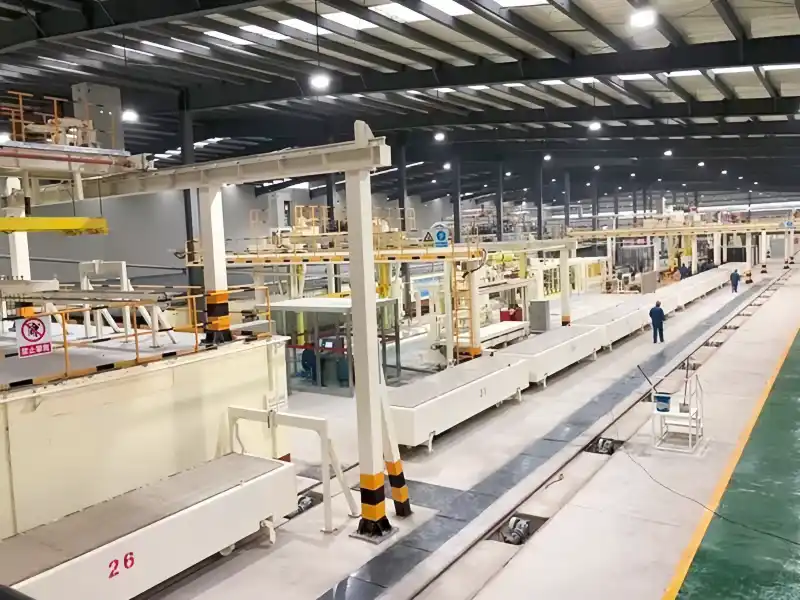
Price Range of a 30,000–50,000 CBM/Year AAC Block Plant
Price depends on the automation level, equipment brand, and project location, but typically:
| Plant Type | Capacity (CBM/Year) | Setup Cost (USD) | Best For |
|---|---|---|---|
| Mini AAC Plant | 30,000 – 100,000 | 100,000 – 1,000,000 | New investors, local markets |
Cost Factors Include:
- Raw materials: Cement, fly ash, lime, gypsum
- Machinery quality: Mixer, autoclave, cutting machine
- Automation level: Manual vs semi-automatic vs fully automatic
- Transportation & installation costs
Investing in a reliable plant ensures long-term durability and stable production.
Advantages of 30,000–50,000 CBM/Year AAC Block Plant
Investing in a 30,000–50,000 CBM/Year AAC Block Plant brings multiple benefits:
1. Cost-Effective Investment
Compared to medium or large AAC plants, the setup cost is significantly lower, making it ideal for small investors or first-time entrepreneurs.
2. High Efficiency with Minimal Labor
Modern small AAC plants come with automated mixing, molding, and cutting systems, reducing labor costs and production errors.
3. Flexible Production
This plant size can adapt to different block sizes, densities, and strengths, allowing manufacturers to meet varied market demands.
4. Environmentally Friendly
AAC blocks reduce carbon footprint, require less raw material, and produce less construction waste, aligning with global sustainable building trends.
5. Fast ROI (Return on Investment)
Due to low setup costs and high market demand, investors can achieve a shorter payback period, often within 1–2 years depending on the local market.
Process of 30,000–50,000 CBM/Year AAC Block Plant
Raw material process → Batching and Mixing → Pouring → Static pre-curing → Cutting → Autoclaving Curing → Finished product Processing
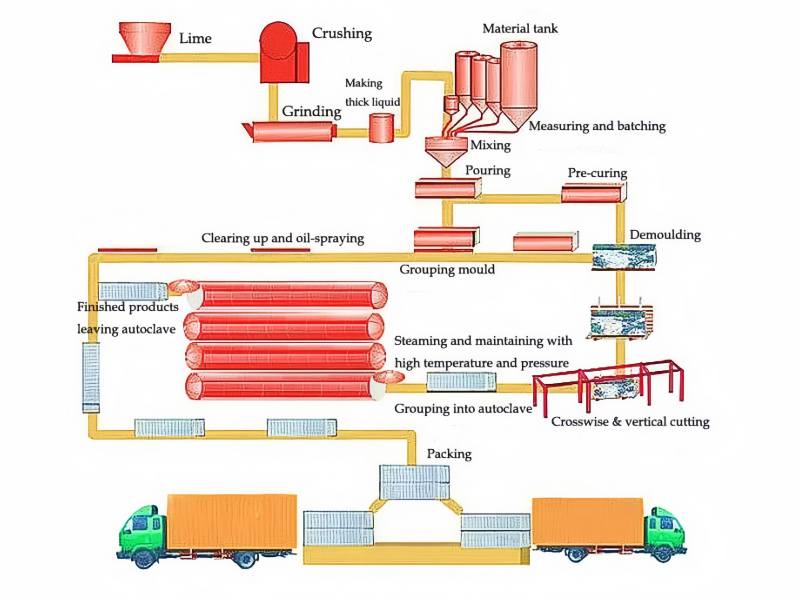
1. Raw Material Processing: Sand is crushed and ground to the desired fineness. Cement, lime, and gypsum are stored in silos, and aluminum powder is mixed with water to form an aluminum slurry.
2. Batching and Mixing: The various raw materials are weighed according to precise proportions and then thoroughly mixed in a mixer to form a uniform slurry.
3. Pouring: The mixed slurry is poured into steel molds. The size and shape of the molds can be designed to meet the desired block specifications.
4. Static Pre-curing: The molds containing the slurry are transported to a pre-curing area where the slurry gradually hardens under suitable temperature and humidity conditions to achieve initial strength. This process typically takes several hours.
5. Cutting: After the slurry is pre-cured, it is cut into the desired size and shape using high-precision cutting equipment like steel wire or blades.
6. Autoclave Curing: Blocks are placed in an autoclave and cured for several hours at temperatures of 175-200°C and pressures of 10-15 bar, significantly enhancing the blocks’ strength and durability.
7. Finished Product Processing: After autoclave curing, the blocks are removed from the autoclave and transported to a storage area. After inspection and packaging, they are ready for shipment.
Raw Materials of AAC block
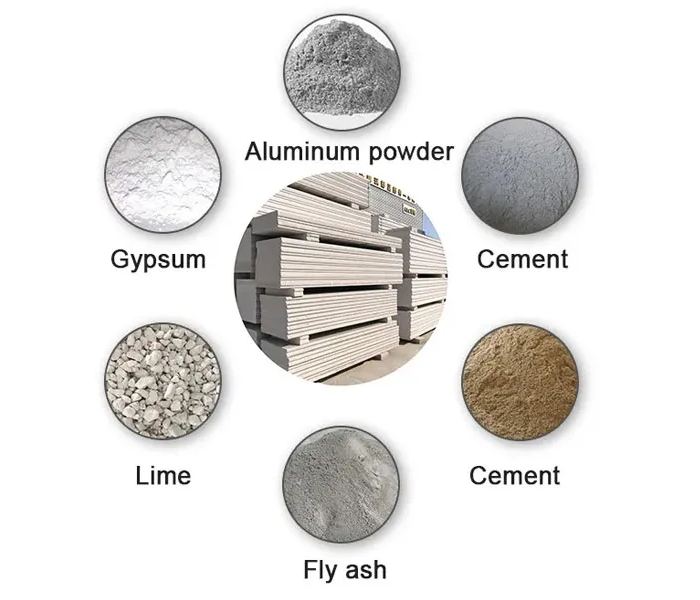
- Cement (Portland Cement): Acts as a primary binder, providing strength and durability to the blocks. Typically, 43 or 53-grade OPC is used.
- Fly Ash or Sand: Serves as the main siliceous material. Fly ash, a byproduct of coal-fired power plants, is an eco-friendly alternative to sand, providing the necessary silica content.
- Lime: A key calcareous material that reacts with other components to form the binding matrix and contributes to the chemical reactions during production.
- Gypsum: Added in small quantities to regulate the setting time and improve the workability of the mix.
- Aluminum Powder or Paste: Functions as a foaming agent. It reacts with lime and water to produce hydrogen gas, creating the characteristic porous, lightweight structure.
- Suv: Essential for the hydration of cement and lime, and to facilitate the chemical reactions necessary for the setting and hardening of the blocks.
These materials are carefully proportioned and mixed to form a slurry, which is then cast, pre-cured, cut, and finally autoclaved to produce the finished AAC blocks.
Main Equipment in 30,000–50,000 CBM/Year AAC Block Plant
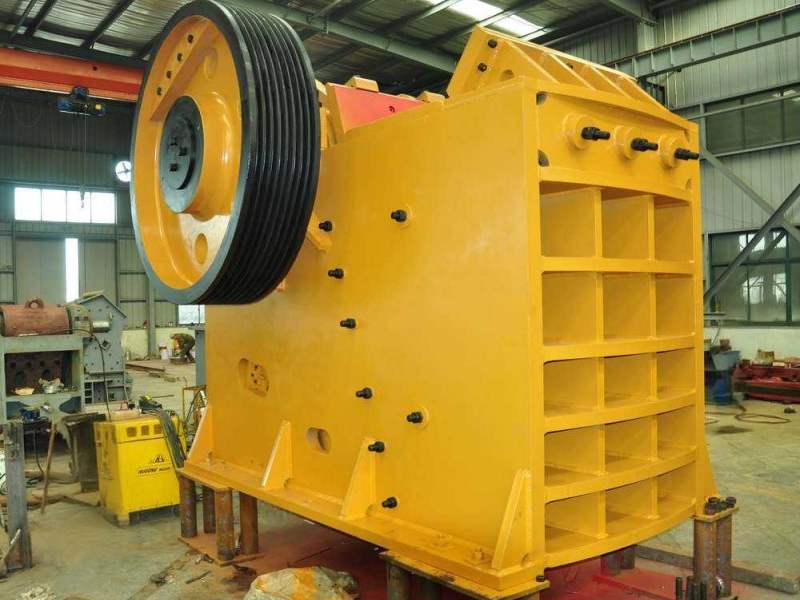
1. Jaw Crusher
Function: Crushes large lumps of raw materials such as limestone and gypsum into 50-150 mm pieces, facilitating subsequent fine grinding. It is a key piece of equipment for raw material pretreatment.
Structure: A fixed jaw plate and a movable jaw plate form a deep-chamber crushing chamber lined with impact-resistant, replaceable high-manganese steel tooth plates.
Capacity Range: Common models range from 100 to 500 t/h. The motor and main unit are integrated on a steel frame base, occupying only 4-6 m² of floor space.
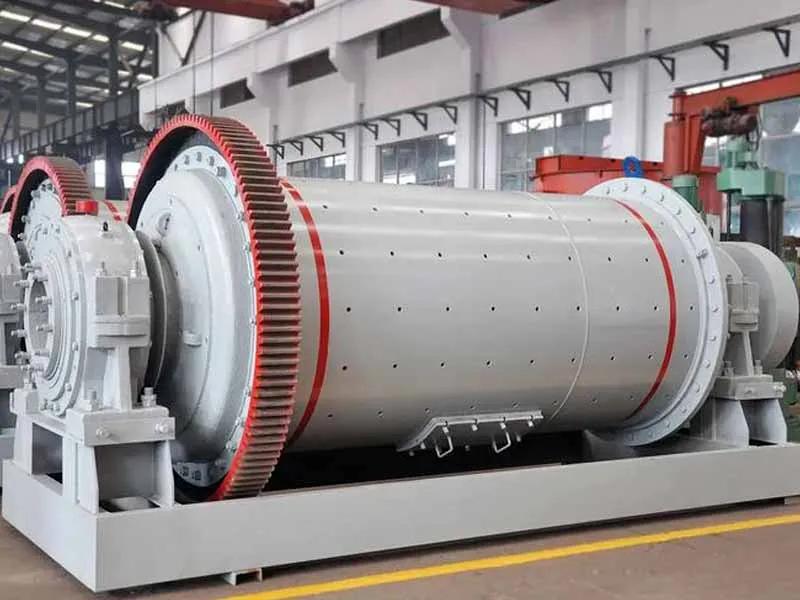
2. Ball Mill
Function: Grinds crushed lime, sand, or fly ash into a fine powder with a mesh size of 80-400 (0.2-0.045 mm) to enhance reactivity.
Structure: Horizontal cylinder+wear-resistant liner+steel ball media. It driven by a motor, reducer, and large gear.
Key Parameters: Cylinder diameter 1.2-2.4 m, ball load 5-30 t, power 55-800 kW.
3. Batching System
Function: Accurately weighs cement, lime, fly ash, aluminum powder, and water according to the recipe, with an error of ≤ ±0.5%. Equipped with multiple silos, metering, and conveying equipment.
Module components: Electronic scale, screw feeder, pneumatic butterfly valve, PLC touch screen; one-touch recipe call, batching completed within 30 seconds.
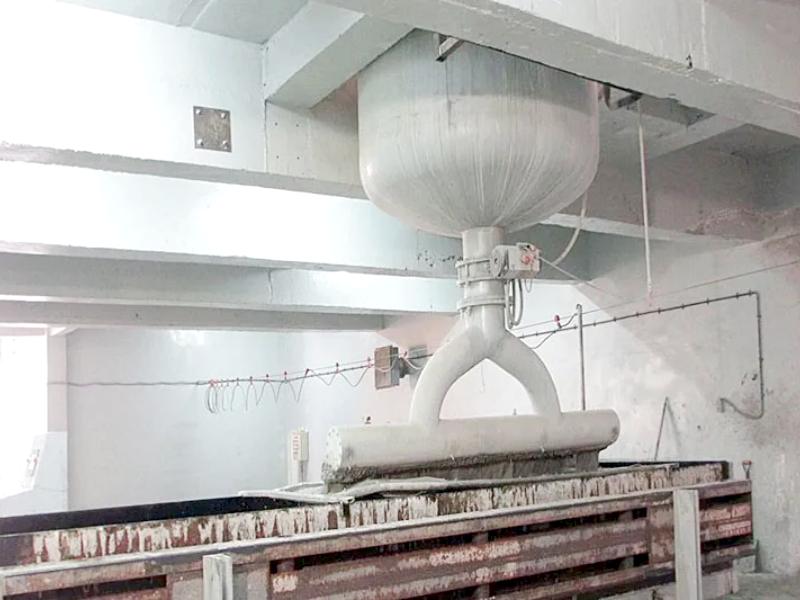
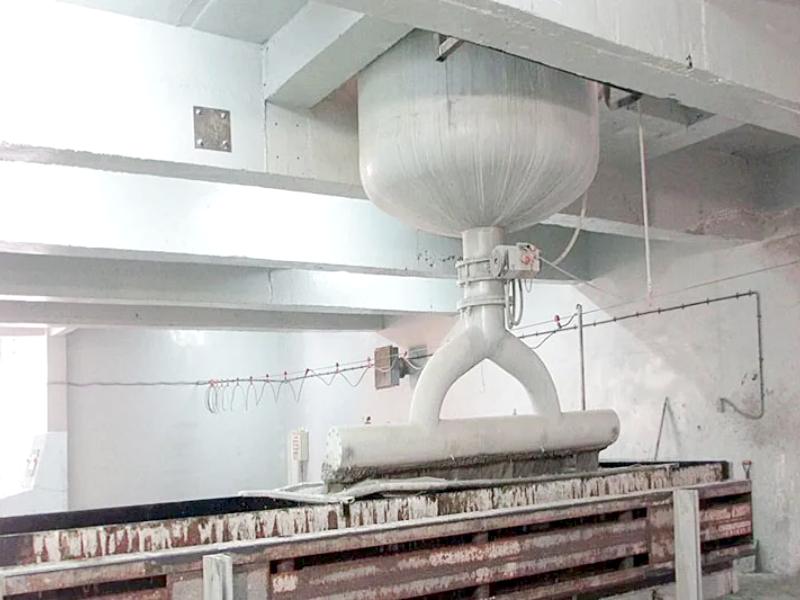
4. Mixing & Casting Machine
Function: Rapidly mixes weighed dry materials with water and aluminum powder into a fluid slurry, which is then poured into a mold for foaming.
Features: Twin-shaft forced mixing completes one batch in 60-90 seconds; hydraulically tilts 90° for drip-free pouring.
Key Parameters: Effective volume 2-4 m³, motor power 37-55 kW, removable mixing blades, wear life ≥ 30,000 cycles.
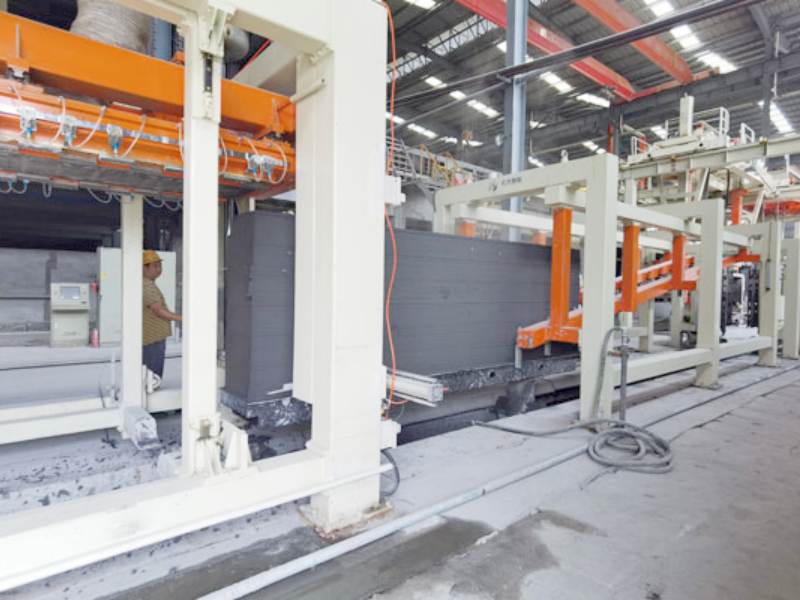
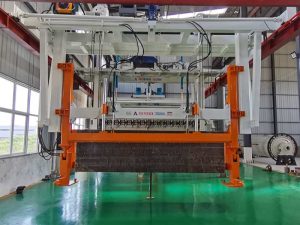
5. Tilting Cutter
Function: Cuts pre-cured billets into desired specifications with an accuracy of ±1 mm. Offcuts are recycled online.
Structure: Three sets of longitudinal, transverse, and horizontal steel wire frames; servo motors synchronize lifting and lowering, automatically compensating for wire wear.
Capacity: Cutting cycle ≤ 5 minutes/die; can cut 75-300 mm thickness, 600 mm standard length, or 1200 mm slabs.
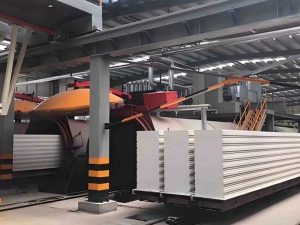
6. Autoclave
Function: High-temperature, high-pressure steam curing allows the green body to complete the hydrothermal synthesis reaction within 8 hours, increasing its strength by 5-8 times.
Specifications: Φ2.68×32 m or Φ2.85×38 m; design pressure 1.6 MPa, operating temperature 200°C; equipped with safety interlock and automatic blowdown.
Configuration: Each medium-sized line is equipped with 4-8 units, which can be connected in series or parallel. Energy-saving models include a waste heat recovery interface.

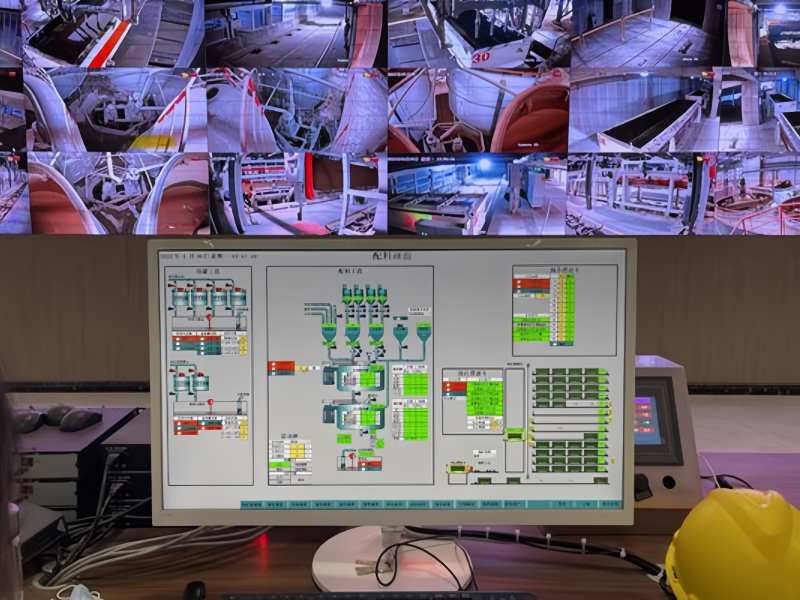
7. PLC Control Room
Function: Serves as the control center for the entire production line, offering features such as recipe management, parameter adjustment, process monitoring, energy consumption analysis, fault alarms, and remote app viewing.
Hardware: Reserved OPC UA interface for integration with the factory’s MES/ERP system.
8. Waste Gas Heat Recovery System
Principle: Autoclave exhaust gas at 160°C is preheated to 90°C via a heat exchanger, saving 8–12% of natural gas annually.
Configuration: Plate heat exchanger+circulation pump+automatic temperature control valve.

Technical Parameters of 30,000–50,000 CBM/Year AAC Block Plant
| Parameter | Value |
|---|---|
| Annual Capacity | 30,000–50,000 CBM |
| Block Size | 600×200×100 mm (standard, adjustable) |
| Density | 400–800 kg/m³ |
| Compressive Strength | 3–5 MPa |
| Autoclave Pressure | 12–14 bar |
| Power Requirement | 50–150 kW |
| Labor Requirement | 8–12 workers |
What Is An AAC Block?
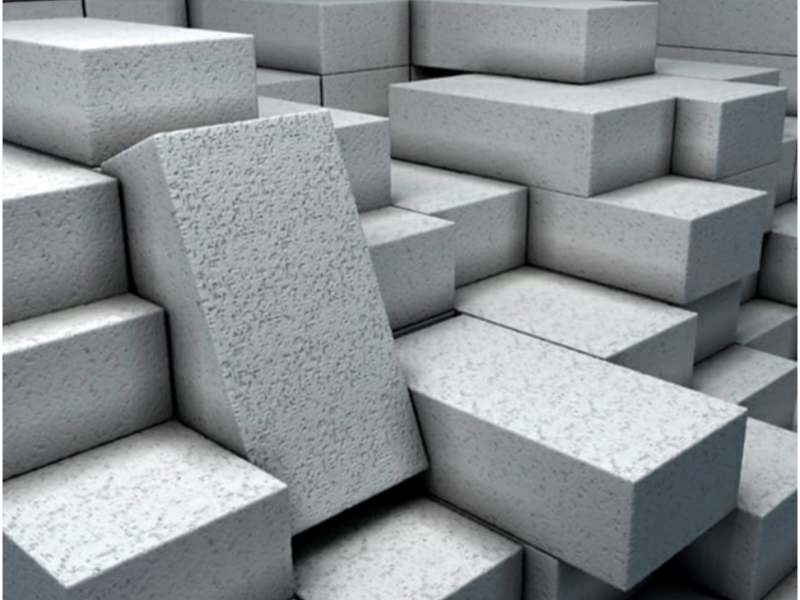
Autoclaved aerated concrete (AAC) blocks are a lightweight, porous, high-strength new building material.
The unique internal pore structure provides lightweight, high strength, thermal insulation, fire resistance, and sound insulation.
It is an ideal choice for achieving energy-saving and structural safety in buildings.
Application of AAC Block
Civil Buildings: Used in internal and external walls, floor slabs, roof slabs, etc. of residential buildings to reduce building weight and improve seismic performance.
Commercial Buildings: Suitable for non-load-bearing walls of shopping malls, hotels, office buildings, etc., with good thermal insulation and sound insulation effects to enhance building comfort.
Industrial Buildings: Served as wall and partition materials for factories and warehouses, meeting the special requirements of industrial production for building materials.
Special Buildings: Widely applied in hospitals, schools, gymnasiums and other places due to their excellent fire resistance and environmental protection properties.
30,000 CBM/Year AAC Block Plant to Bangladesh
Our company successfully exported a 30,000 CBM/year AAC block plant to Bangladesh in 2024.
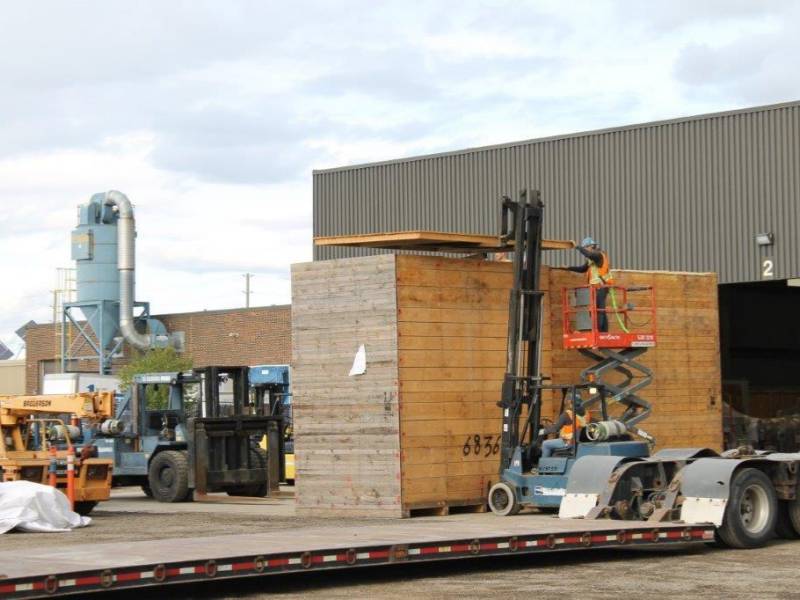
- Capacity: 35,000 CBM/year
- Equipment: Semi-automatic mixer, cutting machine, and autoclave
- ROI: Client reported break-even within 18 months
- Support: Full installation, training, and after-sales service provided
This project demonstrates that small AAC plants can thrive in growing markets with high construction demand.
Why Choose Us as Your AAC Block Plant Supplier?
Investors choose us because we deliver quality, reliability, and complete technical support.
1. 20+ Years of AAC Engineering Experience
We have installed AAC plants in:
- Southeast Asia
- Middle East
- Africa
- Eastern Europe
- Latin America
Our technical team has handled 30,000 m³ to 600,000 m³ AAC lines worldwide.
2. Complete Turnkey Service
We provide:
- Project consulting
- Layout design
- Raw material testing
- Equipment manufacturing
- Global shipping
- Installation & commissioning
- Formula optimization
- Long-term technical support
3. Advanced Cutting Technology
Smooth cutting, low waste, and precise dimensions give your blocks strong market competitiveness.
4. Strong Autoclave Manufacturing Capability
Our autoclaves feature:
- seamless welding
- high-pressure tests
- optimized steam circulation
Ensuring long lifetime (15–20 years).
5. Lower Operating Costs
Efficient machinery allows you to reduce:
- energy consumption
- labor cost
- material waste
- maintenance cost
6. Fast ROI & High Profitability
Typical payback period: 18–30 months
Profit margin per m³: USD 12–22 (varies by region)
Services We Offer
- Loyihani rejalashtirish va loyihalash
Mijozlarning ehtiyojlari va haqiqiy sharoitlarga asoslangan AAC bloklari zavodlari uchun umumiy rejalashtirish va batafsil dizayn sxemalarini taqdim eting, shu jumladan jarayonni loyihalash, uskunalarni joylashtirish va qurilish muhandislik dizayni. - Uskunalarni etkazib berish va o'rnatish
AAC ishlab chiqarish liniyasi uskunalarining to'liq to'plamini etkazib bering va normal ishlashini ta'minlash, loyihalashtirilgan quvvat va mahsulot sifati standartlariga javob berish uchun o'rnatish va ishga tushirishni amalga oshiring. - Texnik ta'lim
Operatorlar, texniklar va menejerlar uchun ishlab chiqarish jarayonlari, uskunalardan foydalanish, texnik xizmat ko'rsatish va sifatni boshqarish bo'yicha professional treninglarni taklif qiling. - Sotishdan keyingi xizmat
Uzluksiz barqaror ishlab chiqarishni ta'minlash uchun kundalik parvarishlash bo'yicha ko'rsatmalar, nosozliklarni bartaraf etish va ehtiyot qismlar bilan ta'minlash bo'yicha ishonchli sotuvdan keyingi tizimni yarating. - Texnik qo'llab-quvvatlash va yangilash
Doimiy texnik yordam ko'rsating va samaradorlik va sifatni yaxshilash uchun mijozlar ehtiyojlari va sanoat tendentsiyalariga asoslangan uskunalarni yangilash/texnik o'zgartirish echimlarini taklif qiling. - EPC Bosh pudratchi
Muammosiz tajriba uchun loyihalash, asbob-uskunalarni xarid qilish, fuqarolik qurilishi, o'rnatish va o'qitishdan tortib, sinov ishlab chiqarishgacha bir martalik EPC xizmatlari.
Other Hot-sale Block Manufacturing Plant
| Annual Production | Price (USD) | Core Configuration |
|---|---|---|
| 100,000 m³ | 1.5–1.9 M | Air-turning cutting, 3×31 m autoclaves |
| 150,000 m³ | 2.1–2.6 M | Robotic palletizing, 4×31 m autoclaves |
| 200,000 m³ | 2.8–3.5 M | Six-sided cutting, 4×37 m autoclaves |
| 300,000 m³ | 4.0–4.8 M | Dual cutting lines, 6×37 m autoclaves |
| 400,000 m³ | 5.5–6.5 M | Fully automatic air-turning, 8×37 m and above autoclaves |



Tegishli AAC zavodi



Related: AAC Block Plant Cost, AAC Plant Manufacturer, AAC bloklarini yasash mashinasi