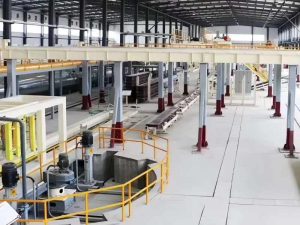
A customized 100,000–200,000 CBM/Year AAC Block Plant is designed for manufacturers who are moving beyond small-scale operations and entering stable, industrialized AAC production.
At this capacity range, investment decisions are no longer based solely on equipment price. Raw material compatibility, automation level, steam efficiency, land planning, and future expansion capability all directly influence long-term operating stability and return on investment.
From practical project experience, plants within 100,000–200,000 CBM/year are typically established by investors with clear market positioning and structured production planning.
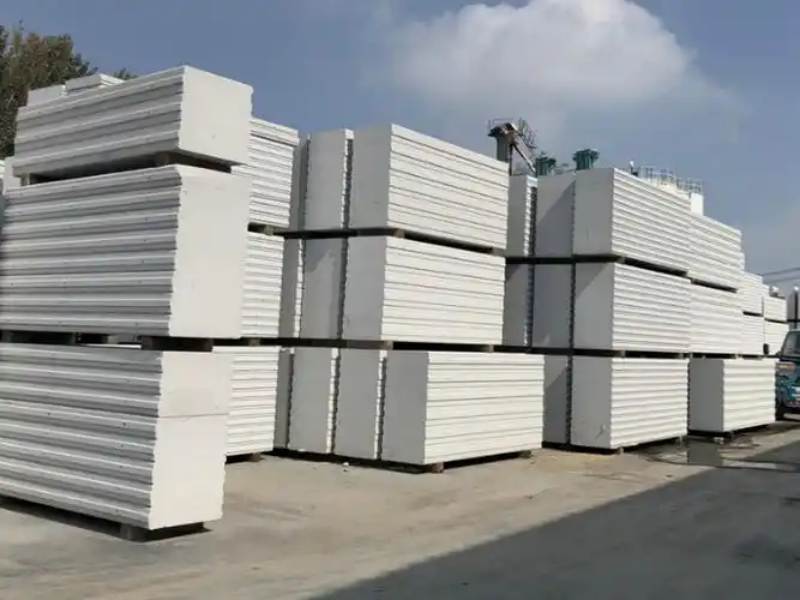

Who Typically Invests in a Customized 100,000–200,000 CBM/Year AAC Block Plant
A customized 100,000–200,000 CBM/Year AAC Block Plant is commonly selected by:
- Traditional brick manufacturers upgrading production technology
- Existing AAC factories expanding regional supply capacity
- Real estate developers securing internal block supply
- Infrastructure contractors reducing material procurement risk
- Industrial investment groups building large-scale building material bases
At this scale, operational efficiency becomes more critical than simple output capacity.
Capacity Planning and Production Configuration
A properly designed customized 100,000–200,000 CBM/Year AAC Block Plant balances daily output with steam cycle time and cutting precision.
Reference Production Parameters
| Annual Capacity | Production journalière | Autoclaves | Niveau d'automatisation |
|---|---|---|---|
| 100,000 CBM | 330–350 m³ | 4–6 | Semi or full automatic |
| 150,000 CBM | 480–520 m³ | 6–8 | Entièrement automatique |
| 200,000 CBM | 650–700 m³ | 8–10 | High automation + PLC control |
Land requirement for a 150,000 CBM/year plant generally ranges from 20,000–30,000 m², depending on finished goods storage and future expansion reservation.
Planning sufficient space at the beginning avoids structural modification later.
Raw Material Adaptation and Formula Design
Raw material stability directly determines block strength and density consistency.
A customized 100,000–200,000 CBM/Year AAC Block Plant must adapt to:
- Fly ash with varying fineness
- River sand or crushed sand systems
- Tailings or mixed industrial residue
- Lime reactivity differences
Before equipment configuration is finalized, laboratory testing evaluates:
- Fly ash fineness index
- Lime digestion rate
- Aluminum paste reaction efficiency
- Slurry density control
Low-quality or unstable fly ash can affect expansion rate and compressive strength. Formula adjustment and batching accuracy are critical to maintaining A3.5–A5.0 strength grades.
Automation Level and Labor Structure
Automation configuration significantly impacts operating cost.
A customized 100,000–200,000 CBM/Year AAC Block Plant can be configured as:
- Semi-automatic AAC block plant
- Fully automatic AAC production line
- Centralized PLC intelligent control system with remote diagnostics
In regions where labor cost is increasing or skilled operators are limited, full automation improves production consistency and reduces operational dependency.
However, in markets with lower labor costs, semi-automatic systems may provide more balanced short-term capital recovery. Automation decisions should match regional economic conditions.
Complete Production Process Structure
The workflow of a customized 100,000–200,000 CBM/Year AAC Block Plant follows a structured industrial sequence:
1. Préparation des matières premières
- Crushing
- Ball milling
- Slurry storage and agitation
2. Mélange et dosage
- Automatic weighing
- Aluminum dosing
- High-speed mixing
3. Casting & Pre-curing
- Mold pouring
- Static curing chamber
4. Cutting Section
- Vertical cutting
- Horizontal cutting
- Profiling system
Cutting accuracy affects block dimensional tolerance and finished product appearance.
5. Autoclaving
- Steam pressure: 1.2–1.3 MPa
- Curing cycle: 8–12 hours
Stable steam supply is essential. Inconsistent pressure can lead to density deviation or surface cracking. Steam system reliability must be evaluated during project planning.
6. Finished Product Handling
- Automatic separation
- Packing and palletizing
- Finished goods storage
Core Equipment Configuration Example (150,000 CBM)
Typical equipment includes:
- Concasseur à mâchoires
- Broyeur à billes
- Slurry tanks
- Automatic batching system
- Casting molds
- Tilting crane
- 6–7 wire cutting machine
- Autoclaves (φ2.85m × 38m typical specification)
- Steam boiler system
- Packing line
Electrical components can be configured according to European standards or local supply conditions.
Investment Cost Reference
The investment range for a customized 100,000–200,000 CBM/Year AAC Block Plant depends on automation level, regional construction cost, and energy system selection.
Estimated Investment Range
| Capacité | Equipment Cost | Total des investissements |
|---|---|---|
| 100,000 CBM | $2.2M – $3.0M | $3.5M – $5.0M |
| 150,000 CBM | $3.0M – $4.2M | $4.8M – $6.8M |
| 200,000 CBM | $4.0M – $5.5M | $6.5M – $9.0M |
Total investment includes:
- Equipement
- Steam and boiler system
- Electrical installation
- Civil construction
- Commissioning
- Initial working capital
Energy pricing and raw material sourcing are major variables in cost structure.
Operating Cost and Profitability Evaluation
A customized 100,000–200,000 CBM/Year AAC Block Plant must be evaluated based on long-term operating data rather than equipment price alone.
Production Cost per Cubic Meter
Main cost components:
- Raw materials
- Power consumption
- Consommation de vapeur
- Labor
- Maintenance
Average production cost typically ranges between $28–$45 per m³, depending on energy cost and automation.
Market Pricing
In many markets, AAC blocks sell between $55–$85 per m³, depending on density grade and regional demand.
Période de récupération
Under stable market demand:
- 100,000 CBM plant: 2.5–3.5 years
- 200,000 CBM plant: 2–3 years
Plants with stable steam systems and optimized batching accuracy generally achieve faster capital recovery.
Modular Expansion Planning
Many investors begin with 100,000–150,000 CBM and expand later.
A well-designed customized 100,000–200,000 CBM/Year Usine de fabrication de blocs AAC should include:
- Reserved autoclave foundations
- Expandable cutting section
- Scalable electrical control system
Expansion without proper planning often leads to production interruption and higher retrofit cost.
Turnkey EPC Implementation
For projects within this capacity range, structured EPC delivery improves execution control.
Typical services include:
- Factory layout planning
- Raw material laboratory testing
- Equipment manufacturing
- Overseas installation team
- Operator training
- Technical support after commissioning
Steam balance calculation and utility consumption analysis are completed before equipment shipment to reduce commissioning risk.
Project Reference Example
A clay brick manufacturer transitioned to a customized 100,000–200,000 CBM/Year AAC Block Plant with an initial capacity of 120,000 CBM.
After commissioning:
- Labor reduced by 40%
- Production cycle shortened by 30%
- Stable A3.5–A5.0 strength grade achieved
- Capacity expanded to 180,000 CBM within two years
Early expansion planning significantly reduced structural modification cost.

Plan Your Customized 100,000–200,000 CBM/Year AAC Block Plant with Clear Technical Direction
A customized 100,000–200,000 CBM/Year AAC Block Plant is a significant industrial investment. Before construction, key factors such as equipment selection, raw material testing, steam balance, automation, and expansion planning should be finalized.
Instead of focusing solely on price, start with:
- Raw material evaluation
- Market demand analysis
- Utility and land planning
- Expansion strategy for the next five years
A detailed technical plan will define investment scale, production cost, and expected returns. Early consultation ensures your plant operates efficiently and consistently from the first production cycle.