
What Is an AAC Brick Production Line?
An AAC (Autoclaved Aerated Concrete) brick production line is an integrated manufacturing system designed to produce lightweight, porous concrete blocks through a precisely controlled chemical and thermal process. Unlike traditional concrete block lines, an AAC line is not a single machine—it is a coordinated process chain combining raw material handling, batching, casting, cutting, and high-pressure curing into a continuous or semi-continuous operation.
From an engineering standpoint, the system is built around three core principles:
- Material homogenization
- Controlled aeration (foaming reaction)
- Autoclave curing under saturated steam pressure

System-Level Definition (Equipment + Process Integration)
A standard AAC brick production line typically consists of the following subsystems:
Raw Material Preparation System
- Ball mill (for sand or fly ash grinding)
- Slurry storage tanks
- Cement, lime, gypsum storage and dosing units
Batching & Mixing System
- Automatic weighing system (high accuracy dosing)
- Slurry mixer (ensures uniform distribution of aluminum powder)
Casting & Pre-curing System
- Casting molds
- Pre-curing chamber (controlled temperature environment for expansion)
Cutting System (Critical Precision Stage)
- Vertical and horizontal cutting machines
- Wire cutting technology for dimensional accuracy
Autoclave System (Core Value Stage)
- High-pressure steam curing vessels
- Typically operated at 1.2–1.3 MPa dan 180–200°C
- Responsible for forming the final crystal structure (tobermorite)
Finished Product Handling
- Block separation
- Packing system
- Waste recycling (return slurry system)
How It Differs from Traditional Brick Production
AAC production is fundamentally different from clay brick or concrete block manufacturing:
| Aspect | AAC Brick Line | Traditional Brick Line |
|---|---|---|
| Bahan Baku | Fly ash / sand + cement + lime | Clay or cement |
| Process Type | Chemical reaction + autoclave curing | Mechanical forming + natural curing |
| Density | 500–700 kg/m³ | 1800–2000 kg/m³ |
| Isolasi Termal | High | Low |
| Production Complexity | High (multi-stage system) | Low |
This difference is why AAC lines require process engineering expertise, not just equipment supply.
Key Engineering Characteristics
An AAC brick production line is defined by several technical characteristics that directly impact output quality and ROI:
- Continuous Process Flow: Each stage is interdependent; imbalance causes bottlenecks.
- Precision Control: Especially in aluminum dosage and cutting accuracy.
- Steam Energy Dependency: Autoclaving is energy-intensive and must be optimized.
- High Initial Investment: But lower long-term production cost per m³.
Full Production Process Flow
An AAC brick production line is governed by a strict, sequential process chain where each stage directly influences the next. From raw material preparation to final autoclaving, the process must be synchronized in terms of timing, temperature, and material consistency. Any deviation—especially in early stages—will propagate and amplify downstream.
Below is the standard industrial process flow, with practical control points and operational guidance.
1. Raw Material Preparation (Foundation Stage)
Objective: Ensure all incoming materials meet particle size and consistency requirements before batching.
Process:
- Sand or fly ash → Ball milling → Slurry (controlled fineness, typically 200–300 mesh)
- Lime → Crushing + grinding
- Cement and gypsum → Stored in silos (ready for dosing)
Key Control Points:
- Slurry density (typically 1.55–1.65 g/cm³)
- Particle fineness (affects reaction rate and final strength)
- Impurity control (especially in fly ash)
Action Insight:
If slurry fineness is inconsistent, you will see unstable expansion and uneven pore structure later in the process.
2. Batching & Mixing (Critical Accuracy Stage)
Objective: Achieve precise proportioning and uniform mixing of all materials.
Process:
- Automated weighing system doses:
- Slurry
- Cement
- Kapur
- Gypsum
- Aluminum powder (aerating agent)
- Materials enter high-efficiency mixer
Key Control Points:
- Aluminum powder dosage (typically 0.05%–0.08%)
- Mixing time (short → uneven pores, long → premature reaction)
- Temperature of slurry (ideal: 35–40°C)
Action Insight:
Overdosing aluminum leads to over-expansion and cracks; underdosing leads to high density and poor insulation.
3. Casting & Pre-Curing (Expansion Stage)
Objective: Allow the slurry to expand and form a stable porous structure before cutting.
Process:
- Mixed slurry poured into molds
- Chemical reaction begins (aluminum + alkaline environment → hydrogen gas formation)
- Material expands to 2–3 times original volume
- Pre-curing in chamber (typically 2–3 hours)
Key Control Points:
- Pre-curing temperature: 35–45°C
- Expansion time synchronization
- Mold filling level (must match expansion ratio)
Action Insight:
Cutting too early → collapse
Cutting too late → hardening → wire breakage
4. Cutting Process (Dimensional Precision Stage)
Objective: Shape the semi-hardened “green cake” into final block dimensions.
Process:
- Demolding (tilting or lifting system)
- Horizontal cutting → defines block height
- Vertical cutting → defines length and width
- Optional profiling (tongue & groove)
Key Control Points:
- Cutting timing (must match cake hardness)
- Wire tension and alignment
- Dimensional tolerance (±1–2 mm)
Action Insight:
This stage determines final product geometry and surface quality—errors here cannot be corrected later.
5. Autoclave Curing (Core Transformation Stage)
Objective: Convert raw materials into a stable crystalline structure (tobermorite) using high-pressure steam.
Process:
- Cut blocks loaded into autoclave
- Steam curing cycle:
- Heating phase
- Constant pressure phase
- Cooling phase
- Total cycle: 8–12 hours
Typical Parameters:
- Pressure: 1.2–1.3 MPa
- Temperature: 180–200°C
Key Control Points:
- Steam pressure curve (must be gradual, not abrupt)
- Holding time consistency
- Condensate drainage
Action Insight:
Poor steam curve design results in:
- Low compressive strength
- Micro-cracks
- High breakage rate
6. Finished Product Handling (Output Stage)
Objective: Prepare finished AAC blocks for storage, transport, and sale.
Process:
- Block separation
- Quality inspection
- Automatic stacking and packing
- Waste recycling (cutting scrap returned to slurry system)
Key Control Points:
- Breakage rate (<2–3% is considered good)
- Moisture content before packaging
- Palletizing stability
Action Insight:
An efficient handling system directly reduces labor cost and improves plant throughput.
7. Process Synchronization (What Actually Determines Performance)
In real production, the biggest challenge is not individual machines—it is process synchronization:
- Mixing cycle must match mold turnover
- Cutting speed must match pre-curing rhythm
- Autoclave capacity must match daily casting volume
If one section is mismatched, it creates:
- Bottlenecks
- Idle equipment
- Increased energy consumption
Main Equipment in AAC Brick Production Line
1. Peralatan Penanganan Bahan Baku
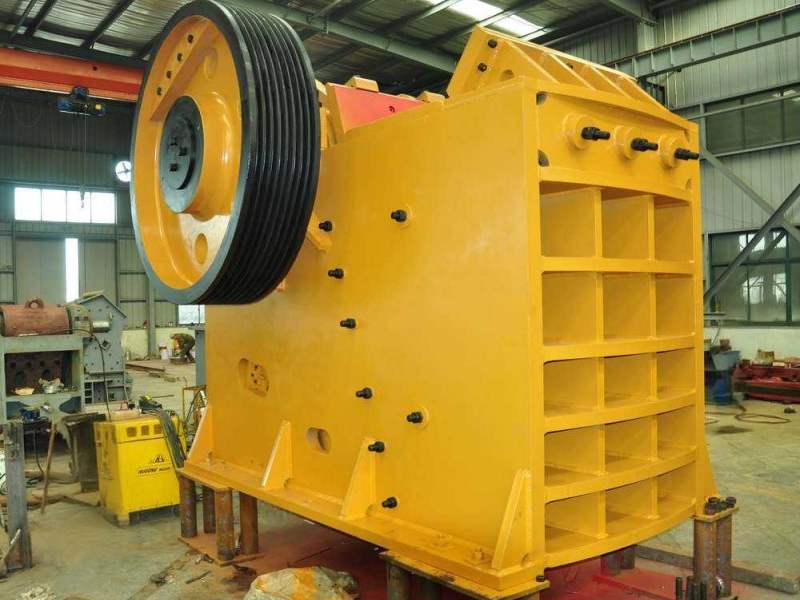
Penghancur: Menghancurkan bahan mentah seperti pasir dan kapur ke ukuran partikel yang ditentukan. Penghancur rahang digunakan untuk material keras, dan penghancur tumbukan digunakan untuk penghancuran halus.
Penyaring: Menggunakan penyaringan getaran untuk menghilangkan kotoran dan memastikan partikel bahan baku memiliki ukuran yang seragam.
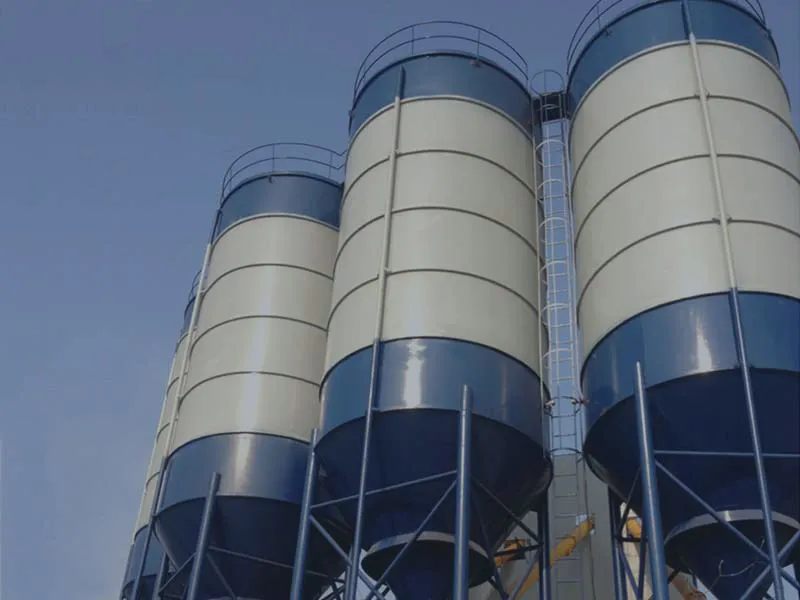
Silo Penyimpanan: Menyimpan bahan baku yang sudah diolah sebelumnya. Memiliki pengukur level dan perangkat penghilang debu untuk menjaga produksi berjalan terus menerus dan memenuhi persyaratan perlindungan lingkungan.
Timbangan Berat: Timbangan sabuk atau spiral secara akurat mengukur jumlah bahan baku untuk meminimalkan kesalahan formulasi.
2. Peralatan Pencampuran dan Pembusaan
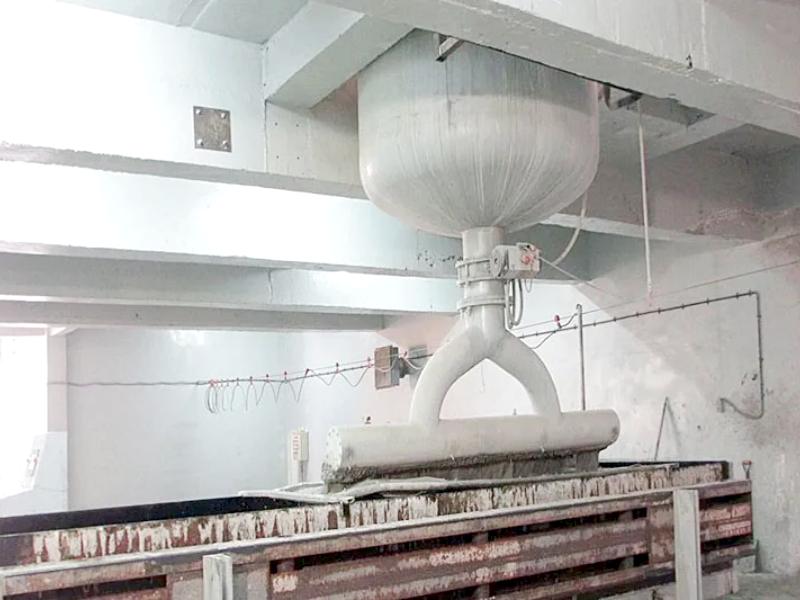

Pengaduk Paksa: Mencampur bahan baku padat dan air dengan kecepatan tinggi untuk membentuk bubur yang seragam, yang menjadi dasar pembusaan.
Tangki Pencampur Bubuk Aluminium: Mencampur suspensi bubuk aluminium dengan kecepatan rendah untuk mencegah sedimentasi dan memastikan dispersi yang seragam.
Sistem Berbusa: Suspensi bubuk aluminium disuntikkan secara proporsional untuk bereaksi dengan bubur untuk menghasilkan gelembung, yang kemudian dihubungkan ke mixer untuk kontrol otomatis.
3. Peralatan Pengecoran dan Pembentukan
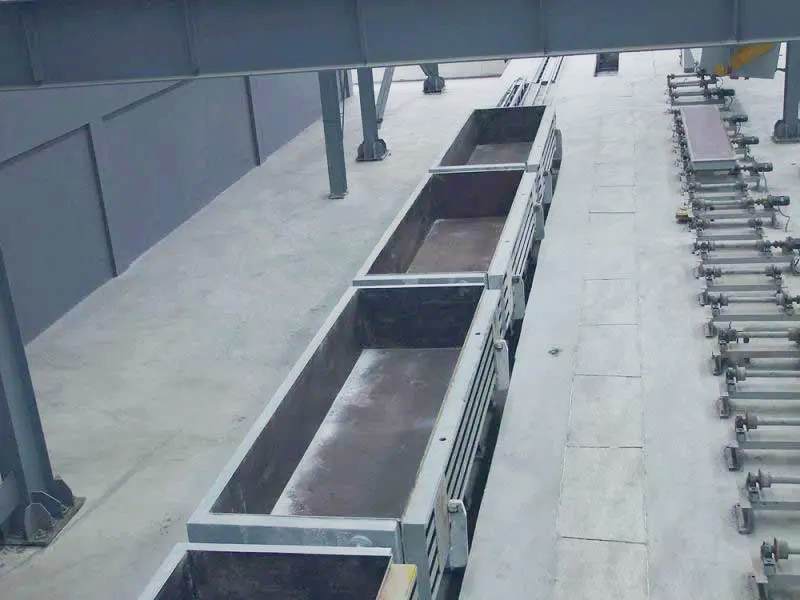
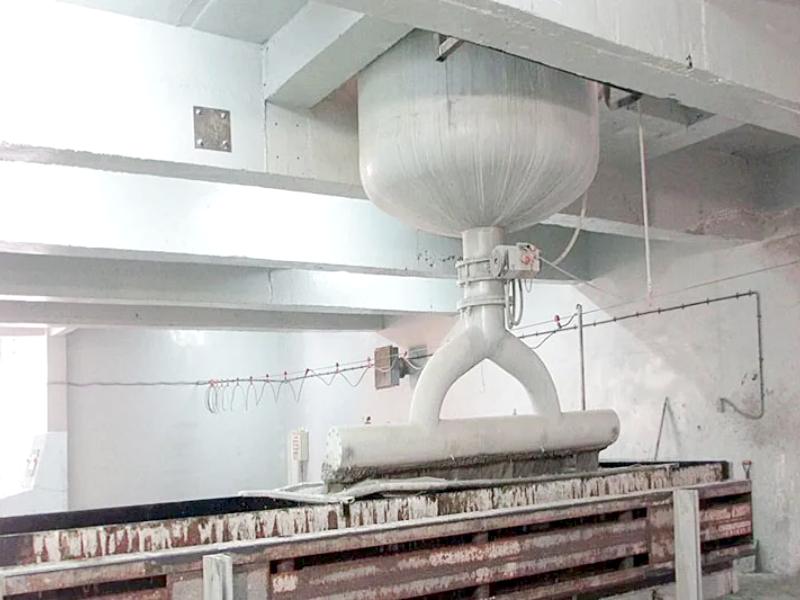
Cetakan: Baja berkekuatan tinggi yang dibuat khusus dengan perlakuan permukaan khusus, dapat disesuaikan ukurannya untuk mengakomodasi spesifikasi produk yang berbeda.
Mesin Pengecoran: Mengontrol volume injeksi bubur secara tepat, dan sebagian dilengkapi dengan travel otomatis untuk mencegah kekurangan atau luapan material.
Ruang Pengawetan: Lingkungan suhu dan kelembapan yang konstan memastikan aerasi bubur dan pengaturan awal, menghasilkan struktur berpori yang seragam.
4. Peralatan Pemotongan
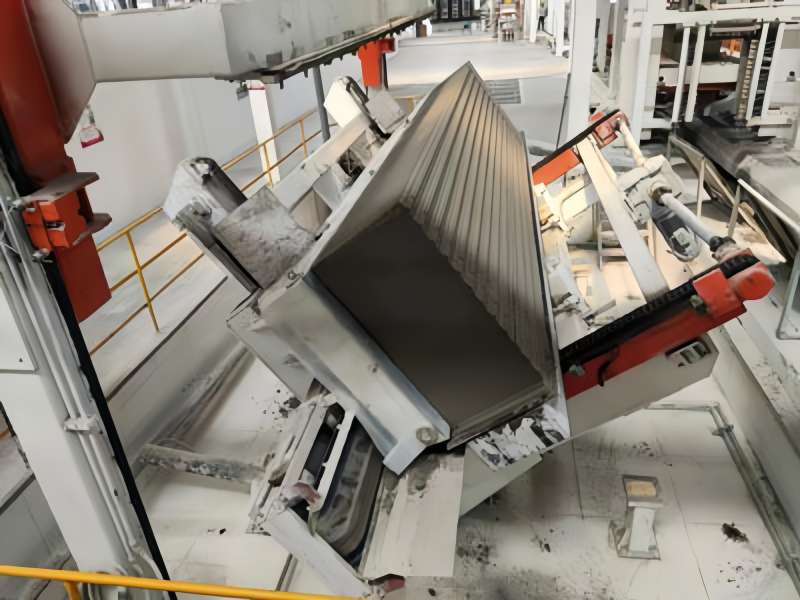
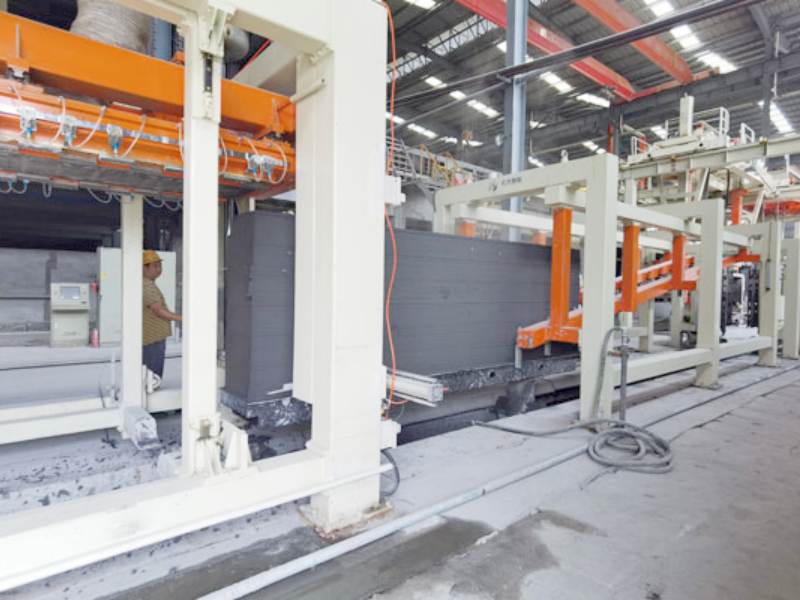
Meja Putar: Digerakkan oleh hidraulik, alat ini memutar cetakan dan blanko dengan mulus-hal ini membuat proses demolding dan pemotongan menjadi lebih mudah.
Gergaji Kawat: Menggunakan beberapa set kabel baja berkekuatan tinggi untuk pemotongan kecepatan tinggi. Sistem CNC memastikan akurasi pemotongan hingga ke milimeter. Untuk peralatan gergaji kawat besar, dapat melakukan pemotongan terus menerus di beberapa stasiun.
5. Peralatan Pengawetan Autoklaf
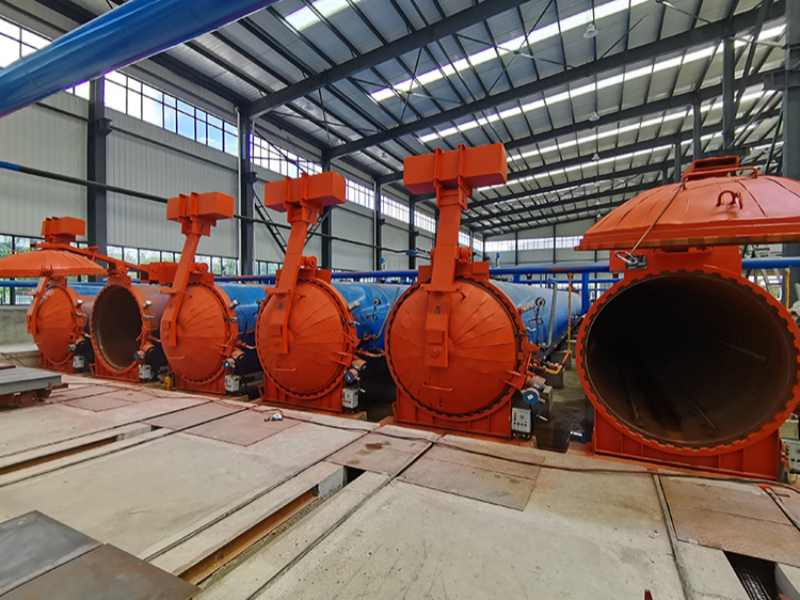

Autoklaf: Bejana bertekanan besar mengawetkan blanko pada suhu 180-200°C dan tekanan 10-12 bar, membentuk kalsium silikat hidrat berkekuatan tinggi. Dilengkapi dengan kunci pengaman.
6. Peralatan Bantu

Ketel Uap: Memasok uap yang stabil untuk autoklaf dan ruang pengawetan, dengan berbagai opsi pemanasan yang tersedia.
Kompresor udara: Menyediakan udara bertekanan untuk peralatan pneumatik, memastikan katup, klem, dan perangkat lain berfungsi dengan baik.
Sistem sabuk konveyor: Mengangkut material melalui seluruh proses. Menggunakan konveyor sabuk atau rantai (dipilih berdasarkan kebutuhan material) untuk pergerakan otomatis dan berkelanjutan.
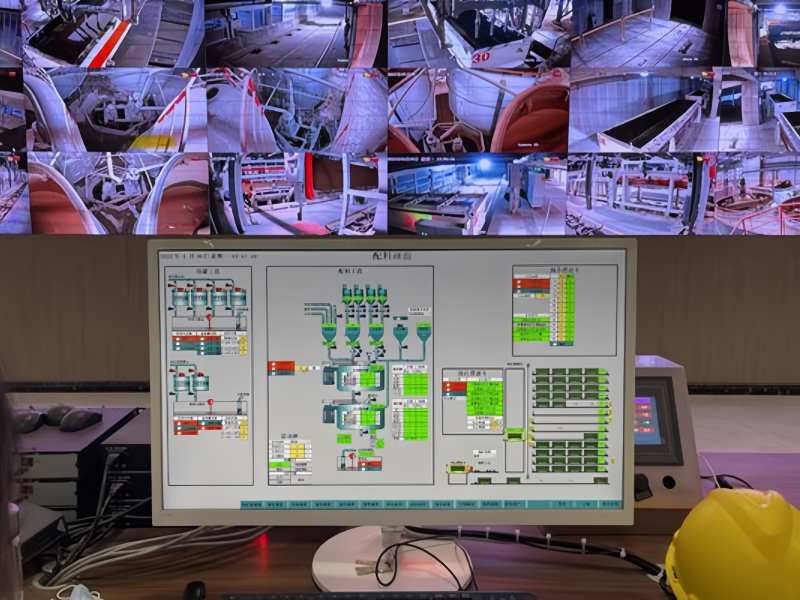
Sistem kontrol: Sistem PLC atau DCS memantau dan menyesuaikan parameter produksi secara real time. Sistem ini merekam data untuk manajemen dan penelusuran, serta membantu menyelesaikan masalah dengan segera.
Automation Levels Comparison (Semi vs Full Automatic)
In AAC production, automation level affects more than labor—it determines stability, cost control, and achievable capacity. The right choice depends on your production scale and cost structure, not just budget.
1. Basic Definition
Semi-Automatic Line
- Core processes mechanized, but material transfer and some operations rely on manual handling
- Partial control system
Saluran Sepenuhnya Otomatis
- End-to-end automated flow (batching → cutting → autoclave → packing)
- Centralized PLC control with minimal manual intervention
2. Key Differences
| Aspect | Semi-Otomatis | Fully Automatic |
|---|---|---|
| Labor | 20–30+ | 8–12 |
| Stability | Operator-dependent | Consistent |
| Capacity Utilization | ~70–85% | ~90–95% |
| Initial Cost | Lower | Higher |
| Long-Term Cost | Higher | Lower |
3. Where the Gap Really Shows
- Process flow: manual vs synchronized automatic transfer
- Timing control: experience-based vs system-controlled
- Error rate: higher vs significantly reduced
These directly impact output consistency and operating cost per m³.
4. Selection Guidance
Choose Semi-Automatic if:
- Capacity ≤100,000 m³/year
- Labor cost is low
- Budget is limited
Choose Fully Automatic if:
- Capacity ≥150,000 m³/year
- Labor cost is rising
- You need stable, scalable production
AAC Brick Production Line Capacity Comparison
| Parameter | 100.000 m³/tahun | 150,000 m³/year | 300.000 m³/tahun |
|---|---|---|---|
| Market Position | Entry-level | Standard commercial | Large-scale industrial |
| Investment Level | Low | Sedang | High |
| Tingkat Otomasi | Mainly semi-automatic | Semi or fully automatic | Sepenuhnya otomatis |
| Kebutuhan Tenaga Kerja | High | Moderate | Low (per unit output) |
| Capacity Utilization | 70–80% | 80–90% | 90–95% |
| Cost per m³ | Higher | Balanced | Lowest |
| Efisiensi Energi | Lower | Moderate | Highest |
| Operational Complexity | Low | Sedang | High |
| ROI Potential | Moderate | Stable | High (if fully utilized) |
| Best Fit For | Market entry / small demand | Stable regional markets | Large demand / long-term operation |
| Main Risk | Higher unit cost | Relatively low risk | Overcapacity if demand is weak |
Quick Selection Guide
- 100k m³/year → Best for entering the market with lower upfront risk
- 150k m³/year → The most balanced option for stable returns
- 300k m³/year → Ideal for scale-driven operations with strong demand
Energy Consumption & Efficiency (Steam + Power)
Energy cost is one of the key operating expenses in an AAC brick production line, mainly split into steam for autoclaves dan electricity for production equipment.
1. Main Energy Consumption Sources
Steam (largest cost)
- Used in autoclave curing (180–200°C, 1.2–1.3 MPa)
- Boiler system and heat loss are the main cost drivers
Listrik
- Ball mills (highest load in preparation stage)
- Cutting machines, mixers, conveyors
2. Key Efficiency Factors
- Boiler efficiency and heat recovery
- Autoclave insulation and loading rate
- Motor efficiency in grinding and cutting systems
- Production scheduling (avoiding idle cycles)
3. Capacity Impact on Energy Cost
| Kapasitas | Efficiency Level | Reason |
|---|---|---|
| 100k m³ | Lower | Fixed losses not fully absorbed |
| 150k m³ | Balanced | Stable utilization |
| 300k m³ | Highest | Scale efficiency + continuous operation |
Our Case Study
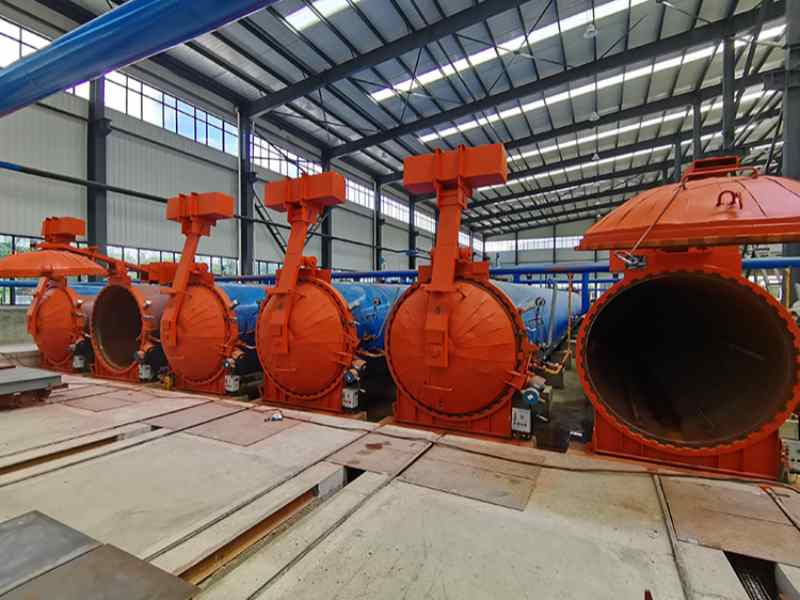
In Nigeria, a 300,000 m³/year AAC production line was implemented for a local building materials investor targeting large-scale housing demand. The main challenge was unstable raw material quality and unbalanced process flow, which led to inconsistent density and energy inefficiency.
Our optimization focused on system coordination rather than single machines:
- Adjusted slurry formulation to match local sand/fly ash conditions
- Improved batching accuracy and aluminum reaction stability
- Synchronized cutting timing with pre-curing stage
- Optimized autoclave loading and steam cycle efficiency
After commissioning, the plant achieved stable high-volume output with significantly reduced waste rate and improved energy efficiency per m³, ensuring reliable supply for regional construction projects.

A separate project in South Africa involved the export and installation of a medium-capacity AAC production line, designed for a fast-growing construction market with increasing demand for energy-efficient materials.
The key focus was rapid deployment and local adaptability:
- Equipment configured to match South African raw material conditions
- Production line layout optimized for efficient material flow
- On-site installation and operator training completed for quick startup
After commissioning, the plant achieved stable production and enabled the client to enter the local AAC supply market quickly, supporting residential and commercial construction demand.
Pabrik Beton Aerasi Autoklaf Terkait




Get Technical Layout from Engineers
Every Pabrik AAC requires a custom engineering layout, not a standard configuration. Capacity, raw materials, land size, and automation level must be designed as a complete system.
Our engineering team provides:
- 2D/3D plant layout design
- Capacity-based equipment configuration (100k–300k m³)
- Raw material adaptation and process optimization
- Autoclave and energy system planning
- Full turnkey technical proposal for investment evaluation
Send us your project details and our engineers will deliver a custom AAC plant layout and feasibility plan within 24–48 hours.