
Why You Need the Customized Block Manufacturing Machine?
Every project is influenced by its own conditions—raw materials, target capacity, plant layout, labor situation, and market requirements. If you apply a standard configuration without adjusting these variables, the result is usually unstable production or unnecessary cost.
From an engineering standpoint, AAC equipment has to be configured around your specific project, not selected from a fixed list.
As a manufacturer, what we provide is not just equipment—we design customized AAC block production solutions, adjusting key systems like raw material processing, cutting precision, autoclave capacity, and automation level to match your actual conditions.
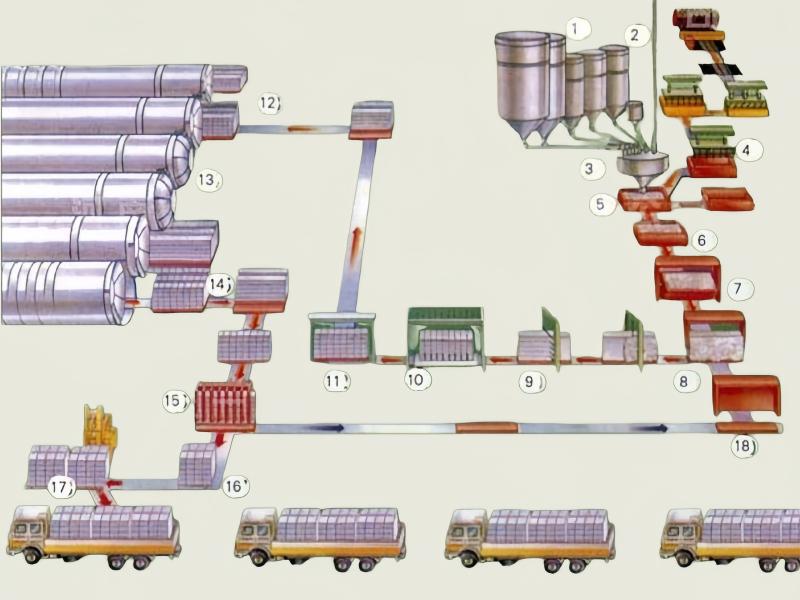
Types of Block Manufacturing Machines
There are several mainstream block production systems in the market:
| Block Type | Machine Type | Production Method |
|---|---|---|
| AAC block | AAC production line | Chemical reaction + autoclaving |
| Concrete block | Block making machine | Vibration + pressing |
| Hollow block | Concrete block system | Mold forming |
| Solid brick | Brick machine | High-pressure molding |
Each system has completely different:
- Equipment configuration
- Investment level
- Production cycle
This is why selecting the right type at the beginning is critical.
Do You Need AAC or Other Block Solutions?
This is where most investors need clarity.
AAC is suitable if:
- You target lightweight construction
- You need thermal insulation performance
- Labor efficiency is important
- Market is moving toward modern materials
Concrete blocks may be better if:
- Initial investment must be low
- Market is price-sensitive
- Traditional construction dominates
| Factor | AAC Block | Concrete Block |
|---|---|---|
| Investment | Higher | Lower |
| Product value | Higher | Medium |
| Automation level | High | Medium |
| Market positioning | Modern construction | Traditional use |
In many markets, we see both systems coexist—but they serve different segments.
Why Customization Matters Across Different Block Types?
Even within the same block type, no two projects are identical.
Customization becomes necessary because of:
- Raw material variation
- Land layout differences
- Target capacity
- Labor conditions
For example:
- AAC systems require precise adjustment of mixing and curing
- Concrete block systems require mold and vibration tuning
Without customization, production stability becomes difficult to maintain.
Customization Options Explained
In practice, customization focuses on a few key areas:
1. Capacity Adjustment
- Small-scale (market entry)
- Medium-scale (stable supply)
- Large-scale (mass production)
2. Raw Material Adaptation
- Fly ash vs sand (AAC)
- Aggregate type (concrete blocks)
3. Automation Level
- Semi-auto vs fully automatic
4. Layout Design
- Linear vs compact layout
- Material flow optimization
| Custom Area | Impact |
|---|---|
| Capacity | Investment & output |
| Raw material | Product quality |
| Automation | Labor & stability |
| Layout | Efficiency & cost |
Industry Applications
Different industries require different block specifications.
| Industry | Preferred Block Type | Key Requirement |
|---|---|---|
| Residential construction | AAC | Lightweight, insulation |
| Infrastructure | Concrete block | Strength, cost efficiency |
| Industrial buildings | AAC / mixed | Speed & performance |
| Export projects | AAC | Standardized quality |
Understanding your end-use market helps determine the correct system.
Cost vs Flexibility Trade-off
Customization always involves a balance between cost and flexibility.
1. Standard vs Customized Comparison
| Item | Standard Machine | Customized Solution |
|---|---|---|
| Initial Cost | Lower | Higher |
| Flexibility | Limited | High |
| Production Stability | Medium | High |
| ROI Predictability | Uncertain | More stable |
2. ROI Insight
| Scenario | Outcome |
|---|---|
| Standard system in ideal conditions | Acceptable performance |
| Standard system in complex conditions | Frequent issues |
| Customized system | Stable long-term returns |
Customization is not about spending more—it’s about avoiding hidden losses.
Real Case: Multi-Block Production Solution
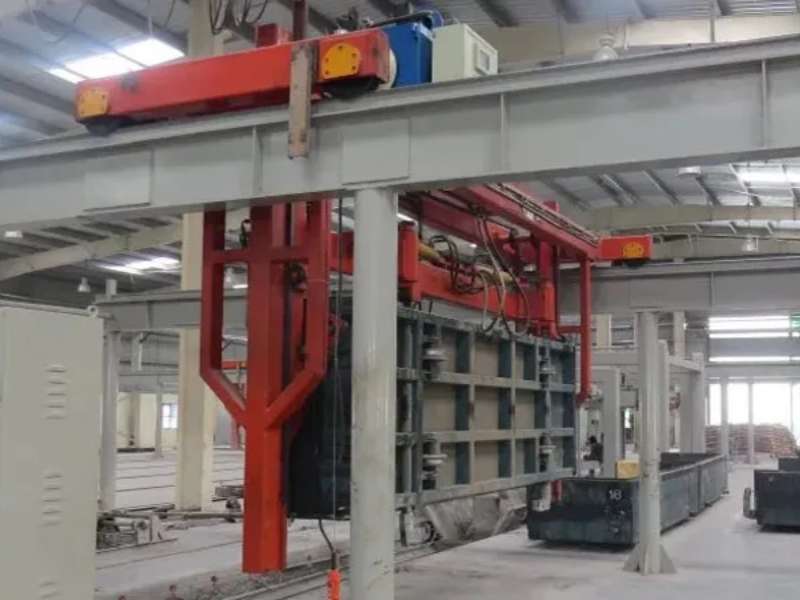
In this project, the client required:
- High product consistency
- Compliance with strict construction standards
- Long-term operational stability
We customized:
- High-precision cutting system
- Optimized autoclave configuration
- Advanced control system
Result:
- Stable block quality
- Low rejection rate
- Strong acceptance in local construction projects

This project had a different focus:
- Growing construction demand
- Need for flexible production capacity
- Balanced investment strategy
We adjusted:
- Capacity configuration
- Automation level
- Material handling system
Result:
- Smooth production ramp-up
- Ability to adapt to market growth
- Reduced operational pressure
How to Choose the Right Manufacturer
When selecting a supplier, we usually recommend focusing on:
- Experience with similar block types
- Ability to customize solutions
- Proven project cases
- Engineering support capability
Price comparison alone is not enough.
What matters is whether the supplier can design a system that works in your conditions.
FAQs
Q1: Can one machine produce different types of blocks?
Usually no. Different block types require different production systems.
Q2: Is AAC always better than concrete blocks?
Not always. It depends on market demand and investment capacity.
Q3: How much does customization increase cost?
Typically a moderate increase, but it improves long-term efficiency.
Q4: Can I start small and expand later?
Yes, if expansion is planned in the initial design.
Q5: What is the most important factor in machine selection?
Matching the system to your raw materials and market demand.
Related Autoclaved Aerated Concrete Plant




Get Your Custom Block Machine Proposal
If you are planning a block production project, the best starting point is not a quotation—it is a clear definition of your needs.
When you contact us, it helps to provide:
- Block type (AAC, concrete, etc.)
- Target capacity
- Raw material condition
- Project location
Based on this, we can offer:
- Customized equipment configuration
- Layout suggestion
- Investment estimation
- ROI analysis
This approach avoids most early-stage mistakes.