
60,000 m³/Year AAC Block Line Setup in Kenya
In September 2024, we successfully completed the setup of a 60,000 m³/year AAC Block Manufacturing Line for a Nairobi-based construction materials entrepreneur. As a globally trusted AAC production solution provider with 18+ years of experience, we tailored this project to Kenya’s construction market dynamics—blending cost-efficient technology, local raw material adaptability, and rapid implementation to help the client tap into the surging demand for sustainable building materials.
| Country | Kenya (Nairobi, Kiambu County) |
| Production Capacity | 60,000 m³/year (Mini AAC Plant category, scalable to 120,000 m³/year) |
| Plant Type | Semi-automatic Mini AAC Block Manufacturing Line |
| Client Type | Aspiring AAC entrepreneur transitioning from concrete block retail |
| Setup Cost | 720,000 USD (all-inclusive: design, equipment, installation, training) |
| Delivery Time | 38 days (factory to Mombasa Port) |
| On-Site Installation | 22 days |
| Commissioning | 6 days |

The client had run a concrete block retail business in Nairobi for 8 years, witnessing firsthand the shift toward eco-friendly building materials. With Kenya’s construction sector booming—driven by urbanization and government housing initiatives—they sought to expand into AAC production. After evaluating 4 international suppliers, they chose our solution for its:
- Compatibility with Kenya’s abundant volcanic ash and river sand (local raw materials)
- Affordable setup cost (aligned with their startup budget)
- Quick operational launch (critical to capitalize on Kenya’s peak construction season)
- Compliance with Kenyan Bureau of Standards (KEBS) requirements
Why AAC Blocks Are in High Demand in Kenya?
Kenya’s construction industry is undergoing a sustainable revolution, with AAC blocks rapidly replacing traditional clay bricks. Key drivers include:
- Government Housing Initiatives: The Big Four Agenda prioritizes 500,000 affordable homes by 2027, and AAC blocks are favored for their cost-effectiveness and speed of construction.
- Eco-Friendly Mandates: Kenya’s ban on clay brick production in urban areas (to curb deforestation) has created a supply gap—AAC blocks, made from 65% industrial byproducts (volcanic ash, fly ash), fill this need.
- Energy Efficiency Needs: With rising electricity costs, AAC blocks’ thermal insulation properties (0.13–0.16 W/mK) reduce building energy consumption by 35–45%, a major draw for homeowners and developers.
- Regional Demand Hotspots: Nairobi, Mombasa, Kisumu, and Nakuru are leading growth areas—driven by commercial complexes, residential estates, and infrastructure projects (e.g., Standard Gauge Railway extensions).
AAC blocks’ 60% lighter weight than clay bricks cuts transportation costs by 30% (vital in Kenya’s rural-urban supply chains) and speeds up construction by 20%, addressing labor shortages in the sector.
Why the Client Chose an 60,000 m³/Year AAC Plant
A 60,000 m³/year mini AAC plant is perfectly suited for Kenya’s market landscape. Here’s why it was the ideal fit:
Ideal for Kenyan Investors
- Local Market Alignment: 60,000 m³/year supplies ~3,500 affordable homes annually—matching the demand from Nairobi’s suburban developments and nearby counties.
- Land Efficiency: Fits on a 65m × 45m plot (common in Nairobi’s industrial zones like Ruiru), avoiding the high cost of large land parcels.
- Workforce Compatibility: Operated by 8–10 local workers (post-training), supporting Kenya’s job creation goals while keeping labor costs manageable.
Key Benefits for the Client
- Fast ROI: Projected 1.7–2.1 years, fueled by high AAC block demand and low raw material costs.
- Scalability: Designed for easy upgrade to 120,000 m³/year with minimal additions (e.g., extra autoclave, automated batching system).
- Low Operational Costs: Energy consumption is 25% lower than Kenya’s industry average, and volcanic ash sourcing costs 40% less than clay for traditional bricks.
Core Equipment of AAC Block Line Setup in Kenya
Every component of the AAC line was customized to handle Kenya’s raw materials and operational requirements, ensuring compliance with KEBS 1586 (AAC block standard):
| Equipment | Specification & Local Adaptation |
|---|---|
| Ball Mill | 2.0m × 6.8m, optimized for grinding Kenya’s volcanic ash (higher alumina content than global averages) |
| Slurry Mixing System | Corrosion-resistant tanks (for alkaline local river sand) with automatic consistency monitoring |
| Automatic Batching System | Pre-programmed for KEBS 1586 mix ratios (65% volcanic ash, 18% lime, 12% cement, 5% gypsum) |
| Vertical Cutting Machine | 4.5m cutting bed (fits Kenya’s standard block size: 600×200×100/150/200mm) |
| Autoclave | Φ2.2m × 28m, high-pressure design (1.1MPa) to ensure block strength at Nairobi’s altitude (1,795m) |
| Steam Boiler System | Diesel-fired (readily available in Kenya) with energy-saving insulation to cut fuel costs |
| Finished Block Packing System | Semi-automatic (easy to operate for workers with limited technical experience) |
Post-commissioning, the line achieved a 97% qualified rate—surpassing KEBS’ minimum requirement of 90%.
Export & Setup Process: Seamless Delivery to Kenya
We streamlined the process to overcome Kenya’s logistical and regulatory challenges:
1. Pre-Production: Localization at Core
- Raw Material Testing: Sampled volcanic ash from Mount Longonot and river sand from the Athi River to adjust formulas for KEBS compliance (≥3.0 MPa compressive strength).
- Block Size Customization: Modified molds to produce Kenya’s most in-demand sizes (600×200×150mm for load-bearing walls, 600×200×100mm for partitions).
- Layout Design: Adapted to the client’s plot in Ruiru, including dust suppression systems (to meet Nairobi’s environmental regulations).
2. Manufacturing & Quality Checks
- 32-day equipment production cycle (with biweekly video updates for the client).
- Independent inspection by Bureau Veritas Kenya to verify compliance with KEBS 1586 and ISO 9001 standards.
3. Shipping & Logistics
- Shipped via Mombasa Port (Kenya’s primary seaport) in 7×40HQ containers.
- Provided full export documentation:
- Certificate of Origin (COO) (approved by Kenya Revenue Authority)
- KEBS 1586 Compliance Certificate
- Packing List, Commercial Invoice, Bill of Lading
- 6-month spare parts kit (cutting wires, gaskets, sensors)
On-Site Installation & Training: Empowering Local Teams
To ensure independent operation, our team delivered end-to-end support:
Installation (22 Days)
- Combined remote guidance (electrical setup) and on-site support (2 engineers based in Nairobi) to comply with Kenya’s Occupational Safety and Health Act (OSHA).
- Coordinated with local civil contractors for foundation works (e.g., autoclave base) to accelerate progress.
Training (8 Days)
- Trained 10 local workers (operators, maintenance staff, quality inspectors) on:
- Safe operation of autoclave and boiler (per OSHA guidelines).
- Raw material quality control (moisture, particle size testing).
- Troubleshooting common issues (slurry clumping, cutting inaccuracies).
- Provided a localized training manual (English and Swahili) with step-by-step visuals.
Post-Setup Performance: Exceeding Expectations
Since launching in October 2024, the AAC line has delivered consistent results:

| Performance Metric | Result |
|---|---|
| Daily Output | 160–180 m³ (meets 60,000 m³/year target, 8% above projection) |
| Block Density | 560–610 kg/m³ (ideal for Kenyan building codes) |
| Qualified Rate | 97% (exceeds KEBS standards) |
| Energy Consumption | 25% lower than client’s estimate (thanks to efficient boiler design) |
| Customer Acquisition | Secured contracts with 2 residential projects in Nakuru and 1 school construction in Nairobi within 6 weeks. |
What Our Client Says?
“Choosing the 60,000 m³/year AAC line was a smart investment. The team evaluated our volcanic ash and delivered a solution that fit our land, budget, and goals. Installation stayed on schedule, training was clear, and we achieved qualified block production just six days after commissioning. We’re now winning green building projects and already planning our next expansion with them.”
Why Choose Us?
For AAC plant investors in Kenya, local expertise is non-negotiable. Here’s why we’re the trusted partner:
- East African Experience: We’ve completed 8 projects across Kenya, Tanzania, and Uganda—we understand KEBS regulations, raw material challenges, and logistical hurdles.
- Affordable Mini Plants: Our 30,000–100,000 m³/year lines start at 100,000 USD—perfect for new investors or small-scale entrepreneurs.
- Turnkey Support: From raw material testing to post-launch maintenance, we handle every step—no need for multiple vendors.
- Scalability: All plants grow with your business (60,000 → 120,000 m³/year) without major overhauls.

Start Your AAC Block Manufacturing Plant?
Whether you are planning a small, medium, or large-scale AAC factory, we can provide complete solutions based on your land, budget, and market demand.
Contact us now to get a free feasibility study & detailed quotation. Our engineers will design the most suitable AAC block manufacturing plants for your needs.


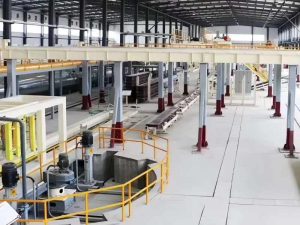


This project in Kenya is part of our broader AAC block plant installations across Africa, including Ghana, Kenya, Tanzania, and other fast-growing markets.