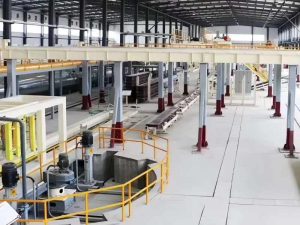
150,000 m3/year AAC Block Manufacturing Unit to Bolivia
We are a leading provider of high-quality AAC production systems. In this case study, we focus on the export of a Medium AAC Block Manufacturing Unit with a capacity of 150,000 m³/year to Bolivia.
- Location: Bolivia
- Annual Capacity: 150,000 m³/year
- Investment Range: USD 1,200,000 – 2,300,000
- Products Produced: AAC blocks, panels, U-blocks, reinforced blocks, lightweight concrete
- Target Market: Residential and commercial construction, infrastructure, export to neighboring countries
- Raw Materials: Sand, cement, lime, gypsum, aluminum powder
- Production System: Semi-automated with customizable automation options
- Commissioning Time: 45–60 days
- After-Sales Services: 12-month warranty, training, and technical support

Why Bolivia Needed a 150,000 m³ AAC Block Manufacturing Unit?
Bolivia’s construction industry has been expanding in both residential housing and commercial infrastructure. Major urbanization in cities like La Paz and Cochabamba, coupled with a growing emphasis on eco-friendly building practices, has driven the demand for sustainable materials like AAC blocks.
The client in Bolivia faced the following challenges, which this 150,000 m³ AAC production line aims to address:
- Growing demand for high-quality building materials to keep up with urban expansion.
- Need for energy-efficient solutions to meet national building regulations and reduce energy costs.
- Limited local production of AAC blocks, which created a need for reliable, high-volume manufacturing.
The 200,000 m³/year production capacity of this AAC plant ensures the client can meet local demand, support regional supply chains, and expand operations in the future as Bolivia continues to grow economically.
What Is an AAC Block Manufacturing Unit?
An AAC Block Manufacturing Unit is a fully integrated manufacturing system designed to convert raw materials like sand, cement, lime, and aluminum powder into lightweight, fire-resistant, thermally insulated building blocks. The production process includes:
- Raw material preparation (mixing and proportioning)
- Molding and cutting to the required sizes
- Autoclaving to cure and harden the blocks
- Finished product handling for packaging and dispatch.
AAC blocks are an ideal building material because of their lightweight, energy efficiency, fire resistance, and soundproofing properties.
Customized Configuration for AAC Block Manufacturing Unit to Bolivia
To meet the client’s requirements in Bolivia, we designed a semi-automated AAC plant with a production capacity of 150,000 m³/year. Below is a breakdown of the key components of the plant:
1. Raw Material Preparation System
- Ball mills for fine grinding of raw materials (sand, gypsum, and lime).
- Automated batching and dosing system for precise proportions of raw materials.
→ Ensures high consistency and quality control in the mixing process.
2. Molding & Pre-Curing
- Customizable molds for different block sizes (standard and custom)
- Pre-curing chamber with temperature and humidity control to prepare the molded blocks for autoclaving.
→ Ensures consistent block strength and durability.
3. Cutting System
- Automatic cutting machine with high-precision wire tension
- Horizontal and vertical cutting capabilities for producing blocks of varying sizes.
→ Increases cutting precision and reduces material waste.
4. Autoclaving System
- High-efficiency autoclaves to ensure blocks are fully cured and hardened.
- Energy-saving steam cycle to minimize operational costs.
→ Ensures long-lasting strength and fire resistance of the blocks.
5. Finished Product Handling
- Automatic palletizer for efficient stacking and packaging of finished products.
- Conveyor systems for seamless transfer of blocks to storage or dispatch areas.
→ Reduces manual labor and improves efficiency.
6. Optional Upgrades for Full Automation
- Waste material recycling system to minimize raw material loss.
- Online production monitoring system (ERP) for real-time performance tracking.
- Full automation options for high-efficiency operations.
Advantages of the 150,000 m³ AAC Plant for Bolivia
1. Suitable for Growing Construction Needs
- Ideal for high-volume residential, commercial, and public infrastructure projects across Bolivia’s expanding cities.
2. Compliance with Bolivian Standards
- Fully meets local building codes and environmental regulations, providing energy-efficient, seismic-resistant, and fire-resistant products.
3. Economic and Environmental Benefits
- The lightweight nature of AAC blocks reduces transportation costs and construction time, improving overall project cost-efficiency.
- Made from eco-friendly materials, the plant helps Bolivia meet green building goals and reduces carbon emissions.
4. Scalable for Future Expansion
- The 150,000 m³/year plant can be easily scaled up to meet future demand as Bolivia’s urban development and construction projects continue to grow.
5. Fast Return on Investment
- Lower labor costs, reduced production times, and increased efficiency allow for quick returns on investment—typically within 2 years.
Export, Installation & Commissioning
Shipping: Equipment is shipped safely in steel-frame containers to ensure protection during transport.
Installation: Our technical team oversees the on-site installation and ensures everything is properly calibrated for optimal performance.
Training: We provide operator training and ongoing support to ensure your team can operate the plant independently.
Testing: The plant undergoes testing and trial runs to ensure the equipment meets the required standards before final handover.
Why Choose Us?

1. 20+ Years of Expertise
2. Complete Turnkey Solutions
3. Reliable, High-Quality Equipment
4. Competitive Pricing
5. Tailored for Australian Standards
Contact Us to Start Your AAC Block Manufacturing Unit?
Interested in establishing an AAC Block Manufacturing Unit? Contact us for a customized quote, feasibility analysis, and site evaluation.