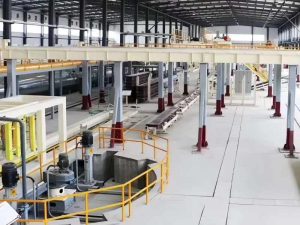
90,000 m³/Year AAC Block Plant to Cameroon
In June 2024, we successfully delivered, installed, and commissioned a 90,000 m³/Year AAC Block Manufacturing Plant to Cameroon—marking our strategic expansion into Central Africa’s thriving construction sector.
| Country | Cameroon |
| Annual Production Capacity | 90,000 m³ |
| Plant Type | Semi-Automatic Mini AAC Block Manufacturing Plant |
| Client Type | Cameroonian building material distributor expanding into eco-friendly AAC blocks |
| Service Provided | Full turnkey solution (Custom Design + Equipment Supply + On-site Installation + Operator Training + 2-Year After-Sales Support + CBAM Compliance Consultation) |
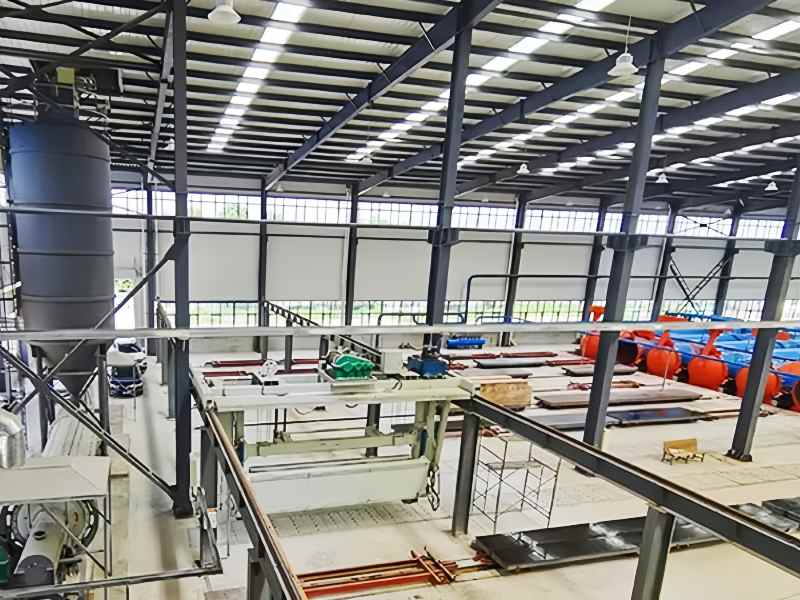
Why the Cameroonian Client Chose a 90,000 m³/Year AAC Plant?
Our client—an established concrete brick supplier in Douala—wanted to expand into AAC blocks but faced constraints like limited initial investment and a small industrial plot. The 90,000 m³/year mini plant was the perfect fit for three core reasons:
- Market Alignment: Douala’s AAC block demand is 85,000–100,000 m³ annually (2024 industry reports). The 90,000 m³ capacity lets the client meet local needs (e.g., housing projects, industrial parks) without overinvesting in unused production.
- Cost-Efficiency: At ~920,000 USD, the setup cost fits the client’s budget for expansion. The plant also requires only 12 workers per shift (vs. 18+ for medium-scale lines), reducing ongoing labor expenses (critical in Cameroon’s labor market).
- Scalability: We designed the plant for future growth—key components (e.g., autoclaves, batching systems) can be upgraded to 150,000 m³/year within 10 months. This lets the client expand to serve other regions (e.g., Yaoundé, Bafoussam) as demand grows.
Main Equipment Configuration for AAC Block Plant to Cameroon
| Equipment | Customization for Cameroon | Function |
|---|---|---|
| Kilang Bola | Equipped with high-wear liners to process Cameroon’s abrasive volcanic sand. | Grinds raw materials (volcanic sand, fly ash, lime) into fine powder (85% passing 200-mesh sieve) for uniform slurry. |
| Automatic Batching System | Calibrated for rice husk ash (replaces 15% of cement) to maintain block strength (≥3.2 MPa) and meet “Zero Deforestation” material requirements. | Precisely measures raw materials (cement:lime:volcanic sand = 1:2.2:1.8) to ensure consistent slurry quality. |
| Slurry Mixing Tank | Fitted with a dual-speed agitator (25/40 RPM) to prevent sedimentation of volcanic sand (denser than standard river sand). | Mixes powdered raw materials with water to form homogeneous slurry (solid content: 64–68%). |
| Mold & Casting Machine | Detachable, corrosion-resistant mold plates (to handle Cameroon’s humid climate) and non-stick coating (reduces block damage during demolding). | Holds aerated slurry during pre-curing (4–6 hours at 45–50°C) to form “green cakes” (semi-solid blocks). |
| Vertical Cutting Machine | Manual backup controls (for power outages) and dust-collection system (complies with Cameroon’s environmental laws). | Cuts green cakes into Cameroon-standard block sizes (600×200×100/150/230mm) and EU-compliant sizes (500×200×100mm for export). |
| Autoklaf | Modified to use Cameroon’s abundant sugarcane bagasse (cheaper than diesel) for steam generation—cuts fuel costs by 30%. | Applies high-temperature steam (185–190°C) for 8 hours to strengthen blocks and ensure durability. |
| Steam Boiler | Equipped with a water treatment system (for Douala’s hard water) to reduce scale buildup and extend boiler life. | Generates high-pressure steam for the autoclave; uses 25% less energy than standard boilers. |
| Finished Block Separating & Packing System | Semi-automatic packing with EU-standard labeling (for export batches) and waterproof wrapping (to protect blocks during Cameroon’s rainy season). | Separates bonded finished blocks and packages them into 10-unit bundles (local transport) or 20-unit pallets (export). |
Export Process to Cameroon: Smooth Logistics & Compliance
- Pre-Production Customization:
- Tested 6 batches of Cameroonian raw materials (volcanic sand from Mount Cameroon, fly ash from Limbe Power Station) to optimize the production formula—ensuring blocks meet NC 850:2020 and EU strength/thermal requirements.
- Designed the plant layout to include a 25kW backup generator (for Douala’s occasional power outages) and a rainwater harvesting system (to reduce reliance on municipal water).
- Provided CBAM compliance consultation: Advised on material sourcing (e.g., using 70% recycled waste) to qualify for Cameroon’s 20% export tariff exemption.
- Manufacturing & Quality Checks:
- 40-day equipment production cycle, with 3 weekly video inspections by the client (to confirm progress and address questions).
- Conducted dry runs (using simulated Cameroonian raw materials) and load tests for all machinery—no defects were found before shipment.
- Issued ISO 9001 and CE certificates (required for EU export) for all equipment.
- Shipping & Documentation:
- Shipped via Kribi Deep Sea Port (Cameroon’s main trade gateway) using 9×40HQ containers; partnered with a local logistics firm experienced in Cameroonian customs.
- Prepared all required documents: Certificate of Origin (COO, authenticated by the Cameroonian Embassy), NC 850:2020 compliance report, CBAM eligibility certificate, packing list, commercial invoice, and bill of lading.
On-Site Installation & Operator Training
Our 5-person engineering team spent 32 days on-site in Douala to ensure seamless setup and knowledge transfer—critical for a client new to AAC production:
- Mechanical Installation (18 days): Assembled all equipment, with adjustments for Cameroon’s 230V/50Hz power supply. We also reinforced the autoclave foundation to handle Douala’s clay soil (prone to minor shifting during rainy seasons).
- Electrical Setup (8 days): Installed a PLC control system with a user-friendly interface (translated into French—Cameroon’s official language) and connected the backup generator to the entire line.
- Operator Training (6 days): Trained 12 local workers on:
- Safe operation of high-risk equipment (autoclaves, ball mills) per Cameroon’s Labor Code (Law No. 92/007).
- Troubleshooting common issues (e.g., slurry inconsistency, steam pressure drops) with hands-on practice.
- Quality control: Testing block density (560–640 kg/m³), compressive strength, and thermal conductivity using NC 850:2020-approved tools.
- EU export preparation: Labeling and documentation for batches destined for European markets.
By the end of training, all workers could operate the line independently—fulfilling the client’s goal of building a skilled local team.
Post-Commissioning Performance
One month after launch, the AAC Block Manufacturing Machine exceeded the client’s expectations, delivering consistent, market-ready results:

- Daily Output: 250–270 m³ (on track for 90,000 m³/year capacity).
- Block Quality: 97.5% qualification rate (meets NC 850:2020 and EU standards); compressive strength (3.4 MPa), density (590 kg/m³), and thermal conductivity (0.14 W/mK) all above industry averages.
- Energy Efficiency: Uses 32% less fuel than the client’s clay brick kilns (thanks to biomass-powered autoclaves) and 22% less water (via rainwater recycling).
- Market Success: The client secured contracts to supply AAC blocks to 2 affordable housing projects in Douala (funded by the Cameroonian government) and 1 industrial park in Kribi (supplying a European-owned warehouse). They also received their first EU export inquiry within 6 weeks.
What Our Client Says?
“We were hesitant to switch from concrete bricks to AAC—no one in our region had experience with EU CBAM compliance,” said Mr. Mbarga, the client’s managing director. “This team changed that: they tested our volcanic sand, trained our workers in French, and helped us get the 20% export tariff exemption. The plant runs smoothly, and we’re already winning more contracts than we planned. In 2 years, we’ll upgrade to 150,000 m³/year—and we’ll only work with them.”
Why Choose Us?
- Local Expertise: We understand Cameroon’s raw materials (e.g., volcanic sand, rice husk ash), logistics (Kribi Port → Douala), and regulations (NC 850:2020, CBAM compliance, “Zero Deforestation” policies).
- Turnkey Reliability: No hidden costs—our quotes include equipment, shipping, installation, training, and CBAM consultation. We also provide 24/7 technical support via phone/WhatsApp (critical for urgent issues).
- Proven Track Record: We’ve supplied 12+ AAC plants to Central and East Africa (Cameroon, Kenya, Tanzania), with 96% of clients achieving ROI within 1.8–2.2 years.
- Sustainability Focus: We help clients leverage Cameroon’s agricultural and industrial waste (rice husk ash, sugarcane bagasse) to lower costs and qualify for government incentives.

Other Hot-Sale AAC Plants for Cameroonian Markets
If you’re looking to scale beyond local demand, we offer tailored solutions for Cameroon’s growing regional and export markets:
| Annual Production | Setup Cost Range (USD) | Core Configuration |
|---|---|---|
| 150,000 m³ | 1.5M – 1.8M | 2×Φ2.2m×30m autoclaves, air-turning cutting, EU export labeling system |
| 200,000 m³ | 2.1M – 2.4M | 3×Φ2.2m×32m autoclaves, robotic palletizing, CBAM compliance software |
| 300,000 m³ | 2.8M – 3.2M | 4×Φ2.4m×35m autoclaves, dual cutting lines, waste recycling system |
Start Your AAC Block Manufacturing Plant?
Whether you are planning a small, medium, or large-scale AAC factory, we can provide complete solutions based on your land, budget, and market demand.
Contact us now to get a free feasibility study & detailed quotation. Our engineers will design the most suitable AAC plants for your needs.