Supporting Zambia’s Construction Materials Market
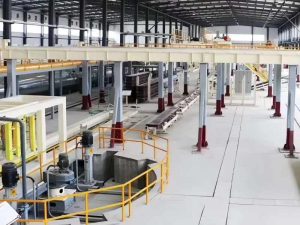
We successfully delivered and commissioned a 20,000 m³/year AAC block manufacturing plant to Zambia, helping our client enter the local AAC block production market and meet rising demand for modern, energy-efficient building materials. This compact AAC production line is an ideal choice for small to medium construction suppliers and investors seeking cost-effective entry into masonry product manufacturing in Zambia.
20,000 m³/Year AAC Block Manufacturing Plant to Zambia
Turnkey Solution for Local Construction Material Supply & Sustainable Growth
Country: Zambia
Annual Production Capacity: 20,000 m³
Plant Type: Small-Scale AAC Block Manufacturing Plant
Client Type: Zambian building materials company
Service Provided: Full turnkey solution (custom design + equipment supply + installation + operator training + after-sales support)
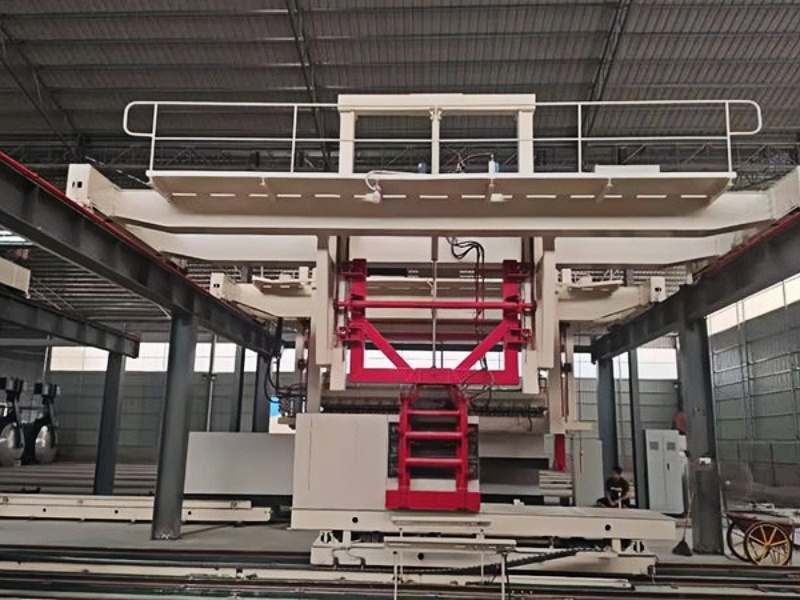
What Is a 20,000 m³ AAC Block Manufacturing Plant?
An AAC (Autoclaved Aerated Concrete) block manufacturing plant produces lightweight, energy-efficient, and fire-resistant masonry blocks using a controlled factory process. AAC blocks significantly outperform traditional clay bricks and ordinary concrete blocks in thermal insulation, dimensional accuracy, and handling efficiency, making them highly desirable in modern construction projects.
Key components of the AAC production line include raw material batching systems, mixing equipment, casting and cutting machines, and autoclaves for steam curing. This setup ensures quality, stable output, and repeatable performance—even with a smaller, 20,000 m³ annual capacity.
Why Zambia Needs a 20,000 m³ AAC Block Plant?
1. Growing Construction Demand and Urbanization
Zambia’s construction sector is expanding steadily, driven by urban growth in cities like Lusaka, Ndola, and Kitwe, affordable housing development, and infrastructure projects. As urban centers grow, the need for reliable building materials is increasing, especially products that offer cost effectiveness and performance advantages over traditional masonry.
2. Local Manufacturing Reduces Import Dependency
Many construction materials in Zambia are still imported, which increases cost due to logistics and customs duties for landlocked countries. A local AAC block plant helps tackle high transport costs and supply chain variability — enabling competitive pricing and faster delivery to construction projects throughout the country.
3. Superior Building Material Performance
AAC blocks produced by this plant offer multiple advantages over conventional options:
- Lightweight and easy to install, reducing labor and foundation costs.
- Superior thermal insulation, helping maintain comfortable indoor temperatures in Zambia’s warm climate and lowering energy use.
- Fire resistance and sound insulation, enhancing building safety and comfort.
- Eco-friendly and sustainable, utilizing recycled fly ash and reducing carbon footprint compared to traditional bricks.
This combination of performance and sustainability makes AAC blocks a preferred choice for modern residential, commercial, and institutional construction.
Production Workflow & Technical Highlights
The 20,000 m³/year AAC plant uses a streamlined production workflow:
- Raw Material Batching: Cement, lime, sand or fly ash, and water are precisely measured according to the production recipe.
- Mixing: Materials are mixed into a uniform slurry with added aluminum powder to induce aeration.
- Pouring & Pre-Curing: The slurry is poured into molds and pre-cured to form “green cakes.”
- Corte: Green cakes are cut with high precision into standardized block sizes.
- Autoclavagem: Blocks are steam-cured under high pressure to achieve strength, durability, and thermal performance.
This optimized workflow supports consistent quality, lower labor needs, and reliable production efficiency tailored to Zambia’s market conditions.
Tailored to Zambia: Local Raw Materials & Site Requirements
Raw Materials Available in Zambia
Zambia has access to key raw materials suitable for AAC block production:
- Cement: Available locally and through regional distribution networks.
- Sand and Aggregates: Accessible from riverbeds and quarries around Lusaka and Copperbelt regions.
- Fly Ash: Can be sourced from industrial by-products or regional suppliers.
- Aluminum Powder & Gypsum: Accessible via chemical distributors.
Locally sourced inputs help reduce production cost, simplify logistics, and ensure a steady supply of materials.
Plant Site and Infrastructure Needs
For stable operation, the plant must include:
- Industrial land with space for raw material storage and production halls.
- Reliable electricity supply, with backup systems.
- Adequate water resources for slurry preparation and steam generation.
- Transportation access to serve clients across Zambia.
Preferential locations include industrial zones around Lusaka, Ndola, and other logistics nodes to optimize utilities and distribution.
Installation, Commissioning & Operator Training
Our Zambia AAC block project included full service delivery:
- On-site equipment installation and calibration.
- Trial runs and production testing to ensure stability.
- Operator and technician training in local languages.
- Maintenance guidance and long-term support.
This guarantee of training and after-sales support ensures smooth transition to independent plant operation and stable production output.
Customer Success & Market Impact
After commissioning, our client in Zambia achieved:
- Consistent output meeting local demand for AAC blocks.
- High product acceptance from builders and contractors due to performance benefits.
- Reduced dependency on imported masonry products, leading to stronger market positioning.
This performance reflects the growing market readiness for AAC block production in Zambia and demonstrates how even small-scale plants can deliver tangible business value.
Applications & Market Opportunities in Zambia
BThe blocks produced serve a wide range of construction needs:
- Edifícios residenciais — walls, partitions, energy-efficient homes.
- Commercial facilities — offices and retail spaces.
- Public infrastructure — schools, clinics, and government buildings.
- Industrial construction — non-load-bearing partitions and utility structures.
This breadth of application makes AAC blocks a versatile masonry product aligned with Zambia’s urbanization and construction growth.

Why Choose Our AAC Block Plant Solution for Zambia?

- Tailored Turnkey Service: From feasibility analysis through long-term support.
- Local Readiness: Plant design and equipment optimized for Zambia’s raw materials and infrastructure.
- High Quality & Stable Output: Achieve consistent block quality with reliable workflows.
- After-Sales Support: Comprehensive training and remote/onsite technical assistance.
Whether launching a first AAC block plant or expanding an existing concrete product portfolio, our solution is engineered for Zambia’s construction supply ecosystem and long-term profitability.
Ready to Launch Your AAC Block Manufacturing Line?
Interested in a 20,000 m³/year AAC block plant in your country? Contact us now for a free feasibility study, customized plant layout, and ROI projection tailored to your business goals and local market demand.