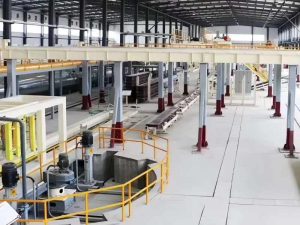
What Is an AAC Brick Plant?
An AAC brick plant is a complete industrial system designed to produce autoclaved aerated concrete blocks through a continuous process: raw material preparation, mixing, casting, pre-curing, cutting, and autoclaving.
It is important to understand this clearly—an AAC plant is not a single production line. It is a fully integrated factory system, where every section must match in capacity, timing, and automation level.
If one part is undersized or over-designed, the whole plant loses balance.

Investment Structure of an AAC Plant
In real projects, investment is not just about equipment. It usually includes civil works, installation, utilities, and commissioning.
| Cost Component | Typical Share |
|---|---|
| Equipment system | 55%–65% |
| Civil construction | 15%–25% |
| Installation & commissioning | 8%–12% |
| Utilities (boiler, power, etc.) | 5%–10% |
The final investment depends heavily on:
- Plant capacity
- Automation level
- Raw material type
- Local construction conditions
A properly designed plant avoids hidden costs during operation, which is often more important than initial price differences.
Recommended Plant Capacities
Capacity selection determines almost everything in an AAC project.
| Kapasitas | Investment Level | Market Position | Cocok untuk |
|---|---|---|---|
| 100.000 m³/tahun | Lower | Entry market | First-time investors |
| 150,000 m³/year | Sedang | Balanced supply | Growing demand markets |
| 300.000 m³/tahun | High | Large-scale supply | Strong demand regions |
From experience, 150,000 m³/year is the most common choice because it balances investment risk and market flexibility.
Factory Layout Planning & Land Requirement
A common mistake we see is underestimating layout planning.
An AAC plant is not compact—it requires linear flow design.
Typical land requirement:
| Kapasitas | Land Area Needed |
|---|---|
| 100,000 m³ | 20,000–30,000 m² |
| 150,000 m³ | 30,000–45,000 m² |
| 300,000 m³ | 50,000–70,000 m² |
Key layout principles:
- Straight material flow (avoid backtracking)
- Separation of raw and finished zones
- Crane coverage planning for molds and blocks
- Autoclave positioning near cutting area
A poorly designed layout will increase labor cost and reduce efficiency permanently.
Production Line vs Full Plant Difference
Many clients confuse a “production line” with a “plant.”
| Item | Production Line | Full AAC Plant |
|---|---|---|
| Scope | Equipment system only | Entire factory |
| Includes civil works | No | Yes |
| Utilities | Partial | Full integration |
| Design responsibility | Limited | Full engineering |
A production line is only part of the system. A plant is a complete operational factory.
ROI of AAC Brick Plant Investment
AAC plants are long-term industrial investments. Profitability depends on stable operation, not only sales price.
Typical financial performance (150,000 m³ plant)
| Item | Value |
|---|---|
| Annual output | 150,000 m³ |
| Profit per m³ | $8–$12 |
| Annual profit | $1.2M–$1.8M |
| Periode pengembalian modal | 2–3 years |
What often determines ROI is not market demand alone, but:
- Production stability
- Waste rate control
- Energy efficiency
- Labor management
Even a small improvement in efficiency has a large impact on annual profit.
Our Case Study
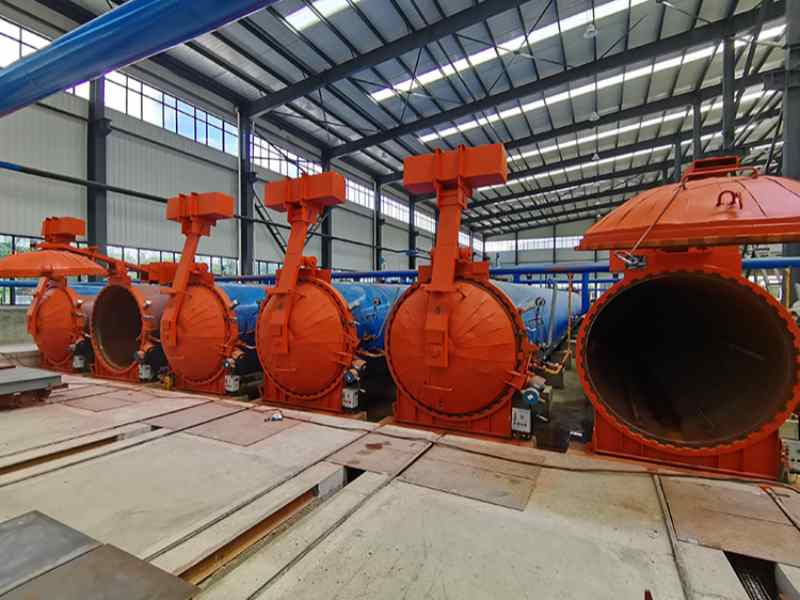
In Saudi Arabia, the client required a large-capacity AAC block manufacturing plant to support fast-growing infrastructure and mega construction projects.
The main challenge in this project was not equipment supply, but system stability under continuous high-load operation.
We designed a full turnkey solution including:
- High-capacity batching and slurry preparation system
- Fully synchronized cutting line for large daily output
- Multi-autoclave configuration for continuous curing cycles
- Reinforced automation system to reduce labor dependency
The plant was optimized for:
- Stable 24/7 operation
- High output consistency
- Reduced energy fluctuation in autoclave process
After commissioning, the system achieved stable mass production and was able to supply AAC blocks to multiple construction zones in Riyadh and surrounding industrial areas.

In India, the project conditions were completely different.
The client was entering the AAC market for the first time, so the priority was:
- Controlled investment
- Kapasitas produksi yang fleksibel
- Easier operation management
- Stable local raw material adaptation
The main engineering challenge was raw material variability, especially sand quality differences across seasons.
We adjusted the system by:
- Optimizing raw material grinding and slurry consistency control
- Designing a more flexible batching ratio system
- Balancing automation level with local operator skill
- Simplifying layout to reduce internal material handling distance
After start-up, the plant achieved stable production and gradually expanded output as market demand increased.
How to Start Your AAC Plant Project
In most successful projects, the starting point is not quotation—it is engineering definition.
When we work with clients, we usually begin with:
- Target market analysis
- Raw material testing
- Capacity planning
- Land and layout evaluation
Based on this, we provide:
- Plant configuration proposal
- Equipment list
- Layout design
- Investment estimation
- ROI projection
This approach reduces risk before any equipment is manufactured.
Equipment Used in AAC Brick Plant
1. Peralatan Penanganan Bahan Baku
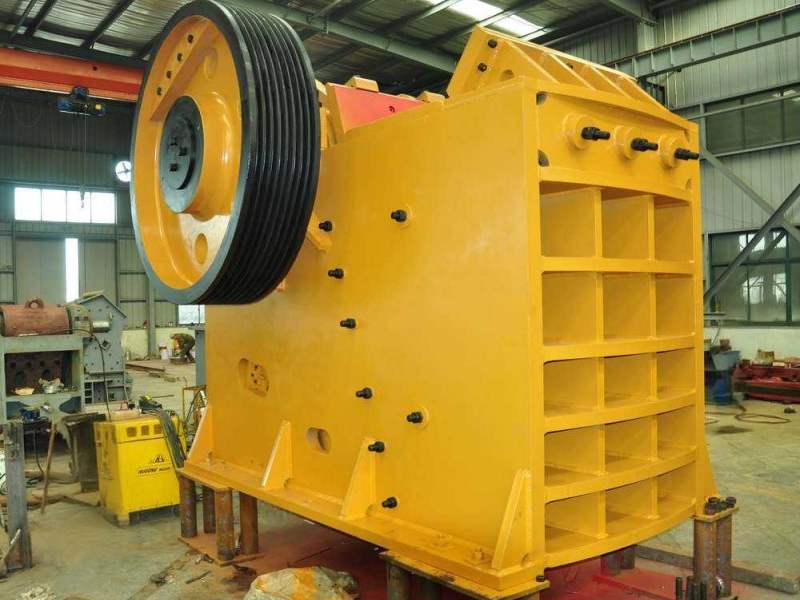
Penghancur: Menghancurkan bahan mentah seperti pasir dan kapur ke ukuran partikel yang ditentukan. Penghancur rahang digunakan untuk material keras, dan penghancur tumbukan digunakan untuk penghancuran halus.
Penyaring: Menggunakan penyaringan getaran untuk menghilangkan kotoran dan memastikan partikel bahan baku memiliki ukuran yang seragam.
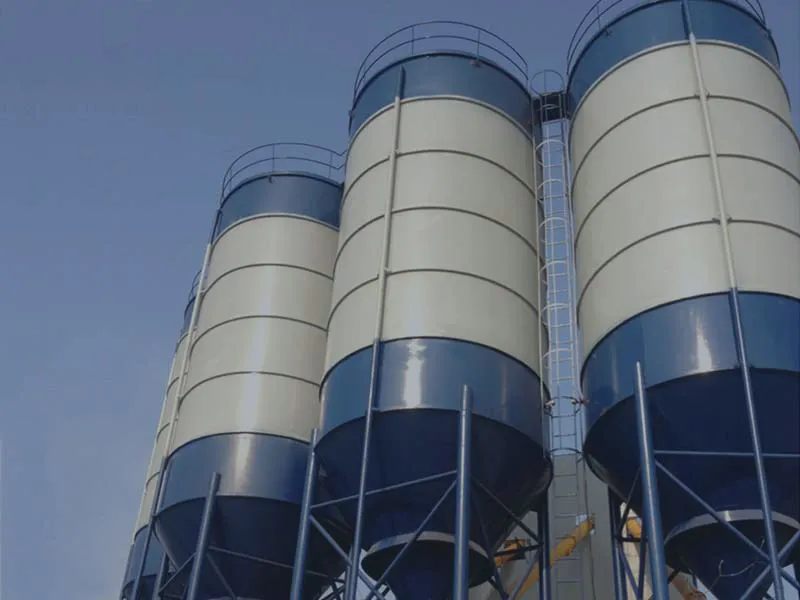
Silo Penyimpanan: Menyimpan bahan baku yang sudah diolah sebelumnya. Memiliki pengukur level dan perangkat penghilang debu untuk menjaga produksi berjalan terus menerus dan memenuhi persyaratan perlindungan lingkungan.
Timbangan Berat: Timbangan sabuk atau spiral secara akurat mengukur jumlah bahan baku untuk meminimalkan kesalahan formulasi.
2. Peralatan Pencampuran dan Pembusaan
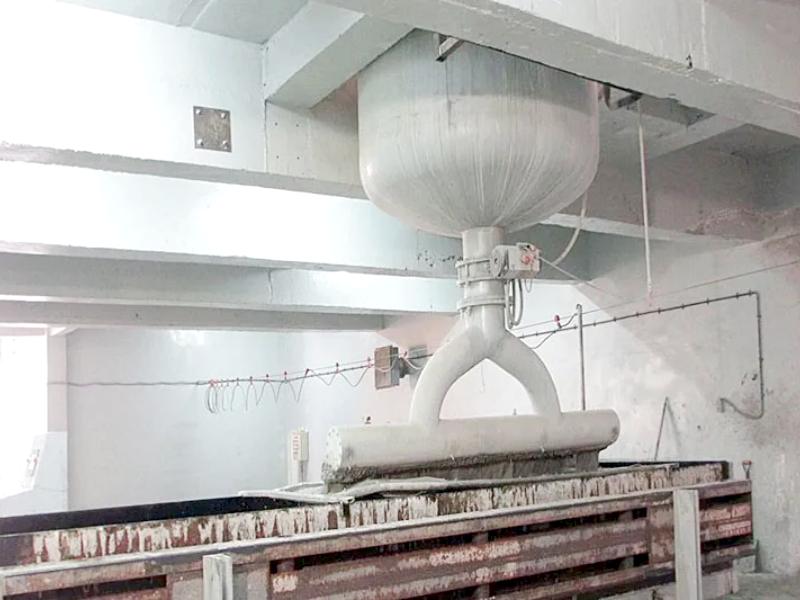

Pengaduk Paksa: Mencampur bahan baku padat dan air dengan kecepatan tinggi untuk membentuk bubur yang seragam, yang menjadi dasar pembusaan.
Tangki Pencampur Bubuk Aluminium: Mencampur suspensi bubuk aluminium dengan kecepatan rendah untuk mencegah sedimentasi dan memastikan dispersi yang seragam.
Sistem Berbusa: Suspensi bubuk aluminium disuntikkan secara proporsional untuk bereaksi dengan bubur untuk menghasilkan gelembung, yang kemudian dihubungkan ke mixer untuk kontrol otomatis.
3. Peralatan Pengecoran dan Pembentukan
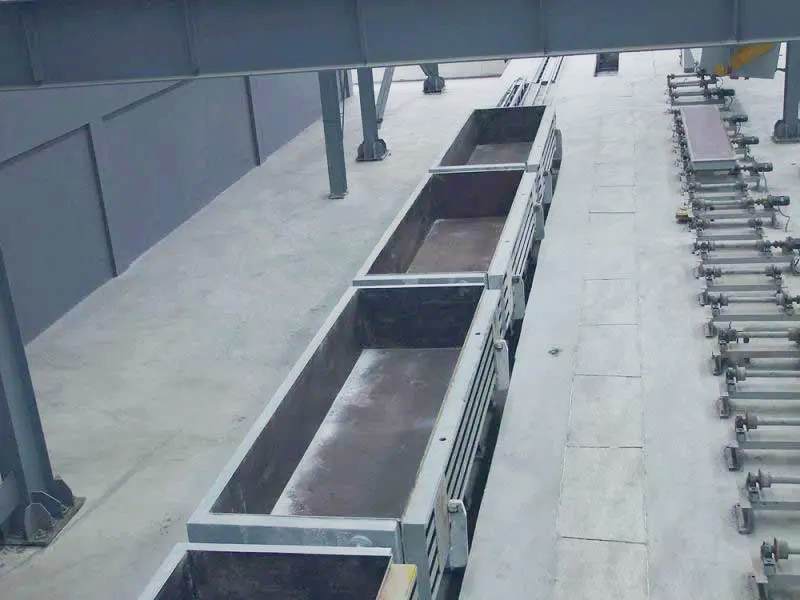
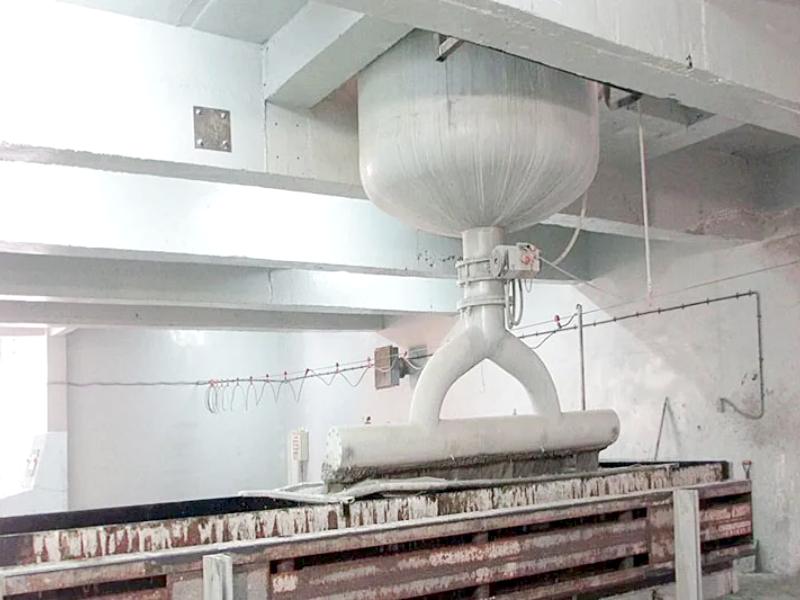
Cetakan: Baja berkekuatan tinggi yang dibuat khusus dengan perlakuan permukaan khusus, dapat disesuaikan ukurannya untuk mengakomodasi spesifikasi produk yang berbeda.
Mesin Pengecoran: Mengontrol volume injeksi bubur secara tepat, dan sebagian dilengkapi dengan travel otomatis untuk mencegah kekurangan atau luapan material.
Ruang Pengawetan: Lingkungan suhu dan kelembapan yang konstan memastikan aerasi bubur dan pengaturan awal, menghasilkan struktur berpori yang seragam.
4. Peralatan Pemotongan
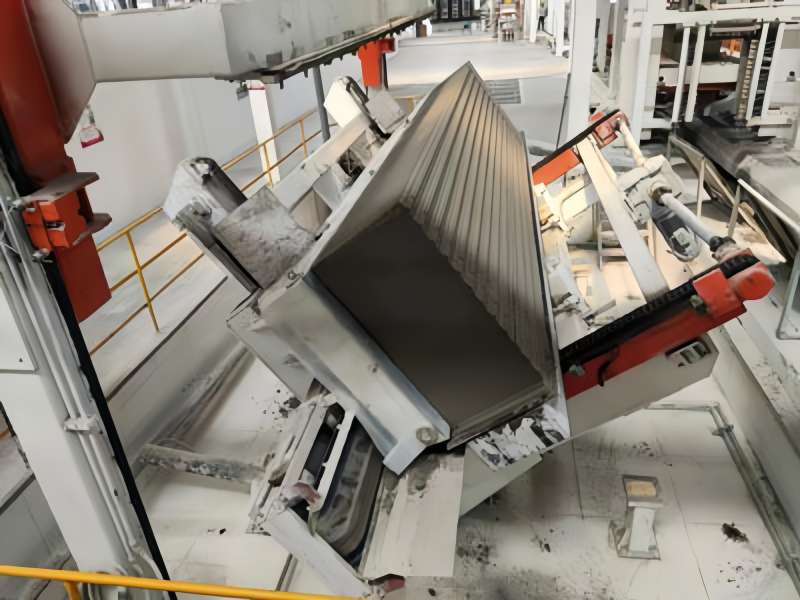
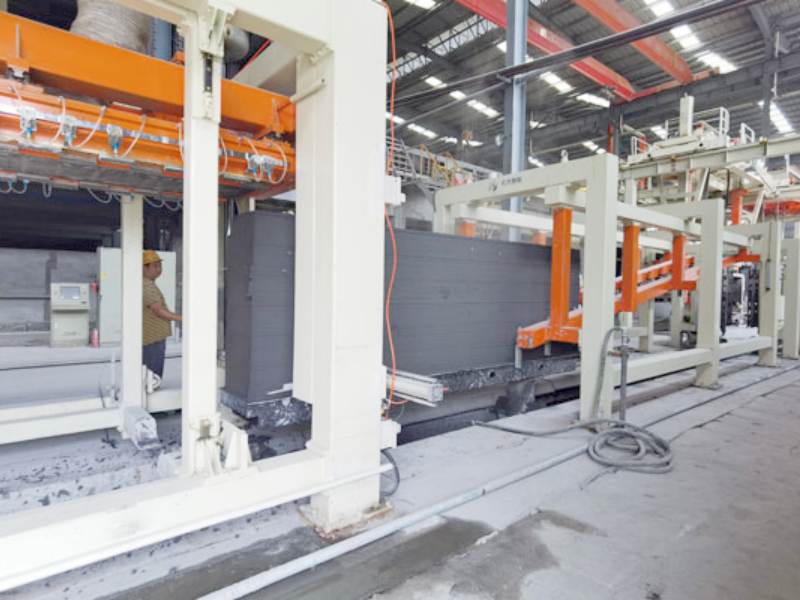
Meja Putar: Digerakkan oleh hidraulik, alat ini memutar cetakan dan blanko dengan mulus-hal ini membuat proses demolding dan pemotongan menjadi lebih mudah.
Gergaji Kawat: Menggunakan beberapa set kabel baja berkekuatan tinggi untuk pemotongan kecepatan tinggi. Sistem CNC memastikan akurasi pemotongan hingga ke milimeter. Untuk peralatan gergaji kawat besar, dapat melakukan pemotongan terus menerus di beberapa stasiun.
5. Peralatan Pengawetan Autoklaf
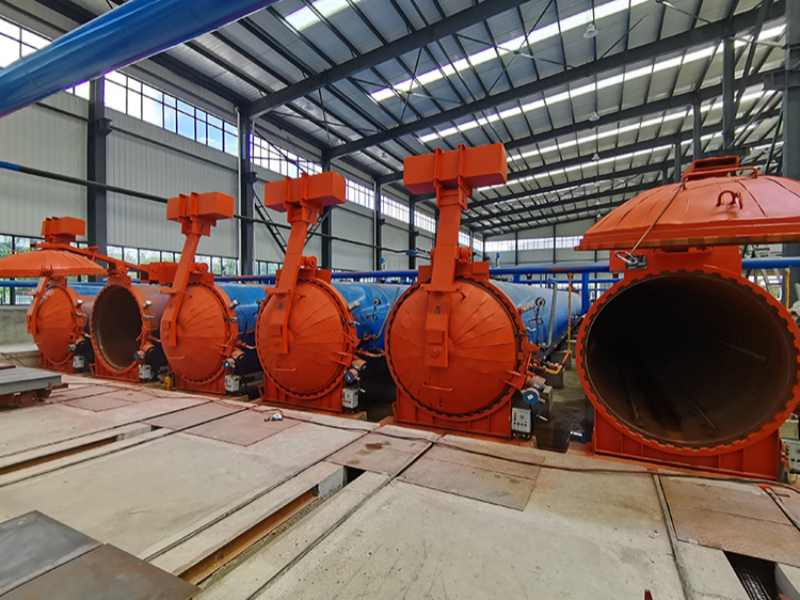

Autoklaf: Bejana bertekanan besar mengawetkan blanko pada suhu 180-200°C dan tekanan 10-12 bar, membentuk kalsium silikat hidrat berkekuatan tinggi. Dilengkapi dengan kunci pengaman.
6. Peralatan Bantu
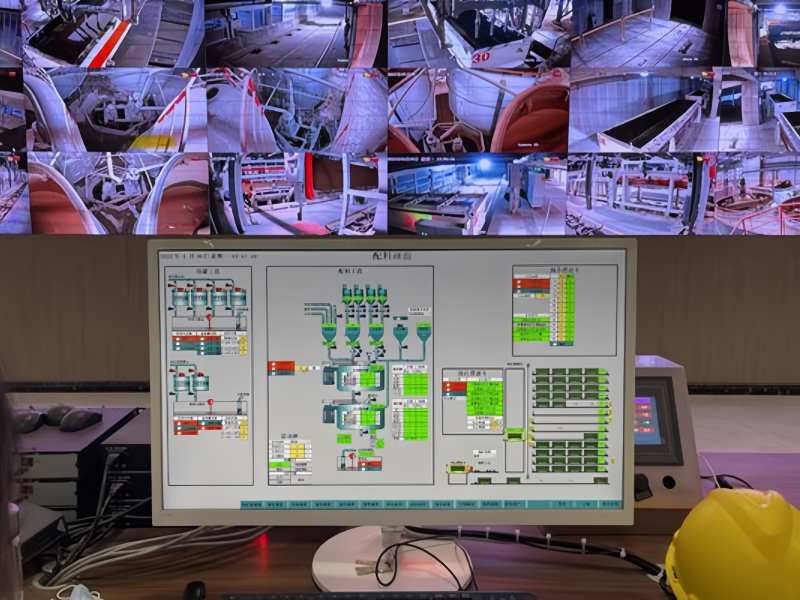

Ketel Uap: Memasok uap yang stabil untuk autoklaf dan ruang pengawetan, dengan berbagai opsi pemanasan yang tersedia.
Kompresor udara: Menyediakan udara bertekanan untuk peralatan pneumatik, memastikan katup, klem, dan perangkat lain berfungsi dengan baik.
Sistem sabuk konveyor: Mengangkut material melalui seluruh proses. Menggunakan konveyor sabuk atau rantai (dipilih berdasarkan kebutuhan material) untuk pergerakan otomatis dan berkelanjutan.
Sistem kontrol: Sistem PLC atau DCS memantau dan menyesuaikan parameter produksi secara real time. Sistem ini merekam data untuk manajemen dan penelusuran, serta membantu menyelesaikan masalah dengan segera.
FAQs
Q1: How long does it take to build an AAC brick plant?
Typically 6–10 months depending on capacity and civil work progress.
Q2: Can I start with a small plant and expand later?
Yes, but expansion must be planned during initial layout design.
Q3: What is the most important system in an AAC plant?
Cutting system and autoclave system are the most critical for product quality and stability.
Q4: Is AAC production profitable?
Yes, if raw material cost and production stability are properly controlled.
Q5: Do you provide full plant design or only equipment?
We provide full EPC-style plant solutions, including design, equipment, and technical support.