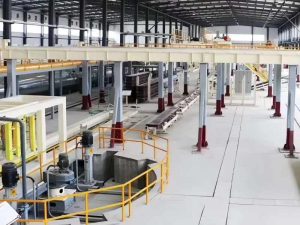
What Is an AAC Brick Plant?
An AAC brick plant is a complete industrial system designed to produce autoclaved aerated concrete blocks through a continuous process: raw material preparation, mixing, casting, pre-curing, cutting, and autoclaving.
It is important to understand this clearly—an AAC plant is not a single production line. It is a fully integrated factory system, where every section must match in capacity, timing, and automation level.
If one part is undersized or over-designed, the whole plant loses balance.

Investment Structure of an AAC Plant
In real projects, investment is not just about equipment. It usually includes civil works, installation, utilities, and commissioning.
| Cost Component | Typical Share |
|---|---|
| Equipment system | 55%–65% |
| Civil construction | 15%–25% |
| Installation & commissioning | 8%–12% |
| Utilities (boiler, power, etc.) | 5%–10% |
The final investment depends heavily on:
- Plant capacity
- Automation level
- Raw material type
- Local construction conditions
A properly designed plant avoids hidden costs during operation, which is often more important than initial price differences.
Recommended Plant Capacities
Capacity selection determines almost everything in an AAC project.
| Kapazität | Investment Level | Market Position | Geeignet für |
|---|---|---|---|
| 100.000 m³/Jahr | Lower | Entry market | First-time investors |
| 150,000 m³/year | Mittel | Balanced supply | Growing demand markets |
| 300.000 m³/Jahr | High | Large-scale supply | Strong demand regions |
From experience, 150,000 m³/year is the most common choice because it balances investment risk and market flexibility.
Factory Layout Planning & Land Requirement
A common mistake we see is underestimating layout planning.
An AAC plant is not compact—it requires linear flow design.
Typical land requirement:
| Kapazität | Land Area Needed |
|---|---|
| 100,000 m³ | 20,000–30,000 m² |
| 150,000 m³ | 30,000–45,000 m² |
| 300,000 m³ | 50,000–70,000 m² |
Key layout principles:
- Straight material flow (avoid backtracking)
- Separation of raw and finished zones
- Crane coverage planning for molds and blocks
- Autoclave positioning near cutting area
A poorly designed layout will increase labor cost and reduce efficiency permanently.
Production Line vs Full Plant Difference
Many clients confuse a “production line” with a “plant.”
| Artikel | Production Line | Full AAC Plant |
|---|---|---|
| Scope | Equipment system only | Entire factory |
| Includes civil works | No | Yes |
| Utilities | Partial | Full integration |
| Design responsibility | Limited | Full engineering |
A production line is only part of the system. A plant is a complete operational factory.
ROI of AAC Brick Plant Investment
AAC plants are long-term industrial investments. Profitability depends on stable operation, not only sales price.
Typical financial performance (150,000 m³ plant)
| Artikel | Value |
|---|---|
| Annual output | 150,000 m³ |
| Profit per m³ | $8–$12 |
| Annual profit | $1.2M–$1.8M |
| Amortisationsdauer | 2–3 years |
What often determines ROI is not market demand alone, but:
- Production stability
- Waste rate control
- Energy efficiency
- Labor management
Even a small improvement in efficiency has a large impact on annual profit.
Our Case Study
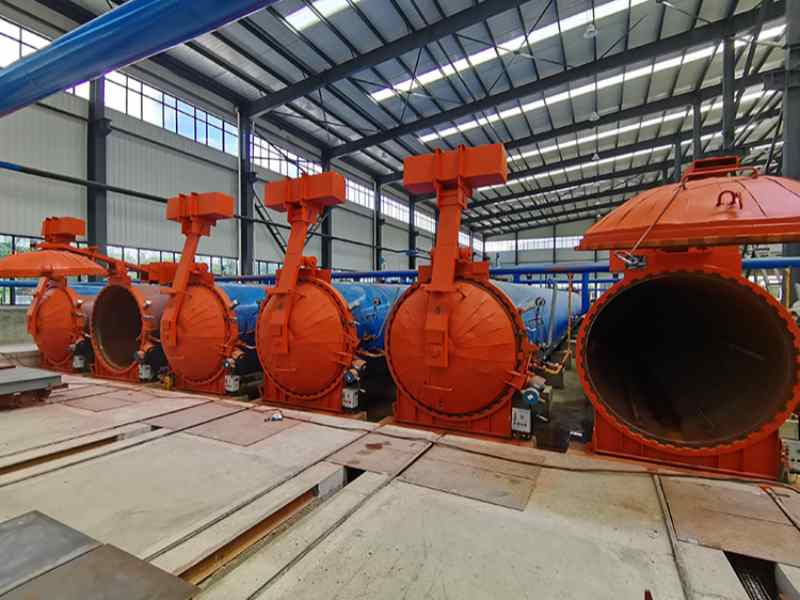
In Saudi Arabia, the client required a large-capacity AAC block manufacturing plant to support fast-growing infrastructure and mega construction projects.
The main challenge in this project was not equipment supply, but system stability under continuous high-load operation.
We designed a full turnkey solution including:
- High-capacity batching and slurry preparation system
- Fully synchronized cutting line for large daily output
- Multi-autoclave configuration for continuous curing cycles
- Reinforced automation system to reduce labor dependency
The plant was optimized for:
- Stable 24/7 operation
- High output consistency
- Reduced energy fluctuation in autoclave process
After commissioning, the system achieved stable mass production and was able to supply AAC blocks to multiple construction zones in Riyadh and surrounding industrial areas.

In India, the project conditions were completely different.
The client was entering the AAC market for the first time, so the priority was:
- Controlled investment
- Flexible Produktionskapazität
- Easier operation management
- Stable local raw material adaptation
The main engineering challenge was raw material variability, especially sand quality differences across seasons.
We adjusted the system by:
- Optimizing raw material grinding and slurry consistency control
- Designing a more flexible batching ratio system
- Balancing automation level with local operator skill
- Simplifying layout to reduce internal material handling distance
After start-up, the plant achieved stable production and gradually expanded output as market demand increased.
How to Start Your AAC Plant Project
In most successful projects, the starting point is not quotation—it is engineering definition.
When we work with clients, we usually begin with:
- Target market analysis
- Raw material testing
- Capacity planning
- Land and layout evaluation
Based on this, we provide:
- Plant configuration proposal
- Equipment list
- Layout design
- Investment estimation
- ROI projection
This approach reduces risk before any equipment is manufactured.
Equipment Used in AAC Brick Plant
1. Ausrüstung zur Handhabung von Rohstoffen
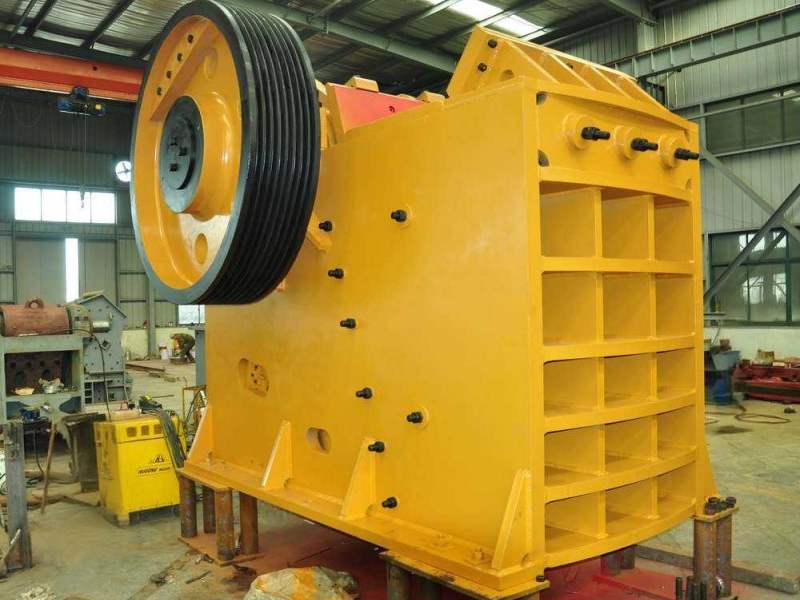
Brecher: Zerkleinert Rohstoffe wie Sand und Kalk auf die gewünschte Korngröße. Backenbrecher werden für harte Materialien und Prallbrecher für die Feinzerkleinerung eingesetzt.
Screener: Das Vibrationssieb entfernt Verunreinigungen und stellt sicher, dass die Partikel des Rohmaterials eine einheitliche Größe haben.
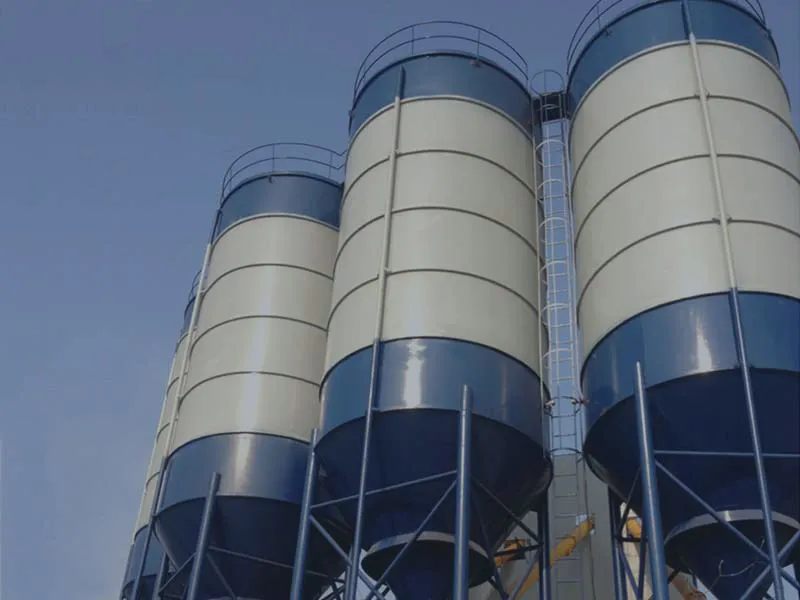
Lager-Silo: Lagert vorbehandelte Rohmaterialien. Er verfügt über einen Füllstandsmesser und eine Staubabsaugung, um die Produktion kontinuierlich aufrechtzuerhalten und die Anforderungen des Umweltschutzes zu erfüllen.
Waage: Band- oder Spiralwaagen messen die Rohmaterialmengen genau, um Rezepturfehler zu minimieren.
2. Misch- und Verschäumungsanlagen
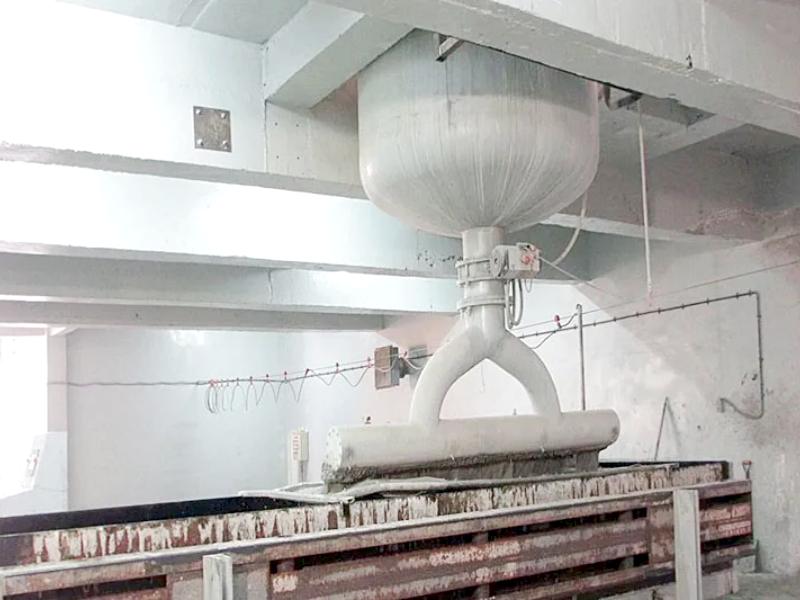

Zwangsmischer: Mischt feste Rohstoffe und Wasser mit hoher Geschwindigkeit zu einem gleichmäßigen Schlamm, der die Grundlage für die Schaumbildung bildet.
Aluminium-Pulver-Mischbehälter: Mischt Aluminiumpulversuspension bei niedriger Geschwindigkeit, um Sedimentation zu verhindern und eine gleichmäßige Dispersion zu gewährleisten.
Schäumendes System: Die Aluminiumpulversuspension wird in einem bestimmten Verhältnis eingespritzt, um mit dem Schlamm zu reagieren und Blasen zu erzeugen, die dann mit dem Mischer zur automatischen Steuerung verbunden werden.
3. Guss- und Formgebungsausrüstung
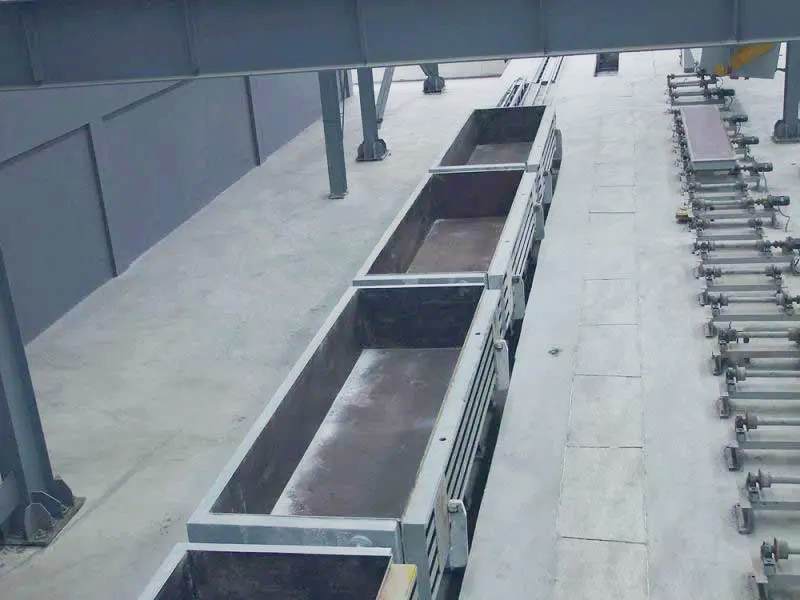
Schimmelpilze: Maßgefertigt aus hochfestem Stahl mit spezieller Oberflächenbehandlung, in der Größe anpassbar an die verschiedenen Produktspezifikationen.
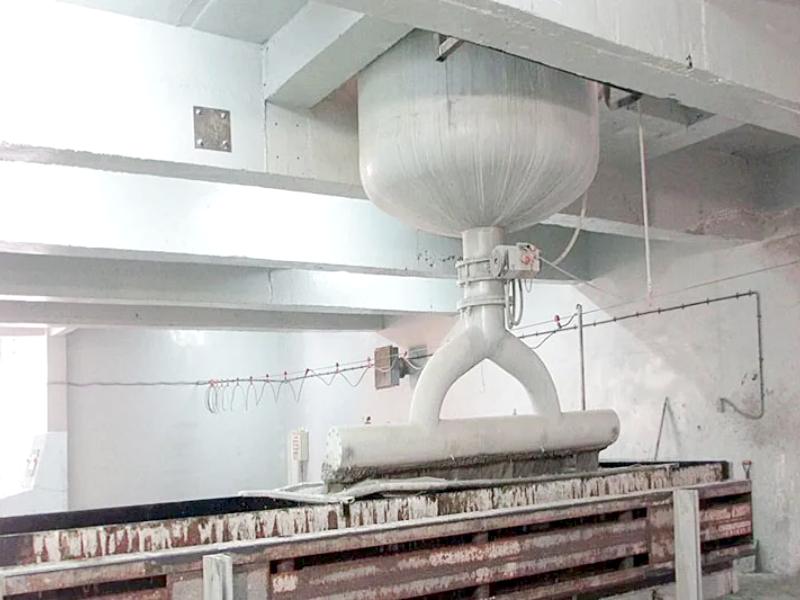
Gießereimaschinen: Die Einspritzmenge der Gülle wird präzise gesteuert, und einige sind mit einer automatischen Bewegung ausgestattet, um Materialmangel oder Überlauf zu vermeiden.
Härtekammer: Eine konstante Temperatur- und Feuchtigkeitsumgebung sorgt für die Belüftung des Schlamms und seine anfängliche Aushärtung, was zu einer gleichmäßigen porösen Struktur führt.
4. Schneidausrüstung
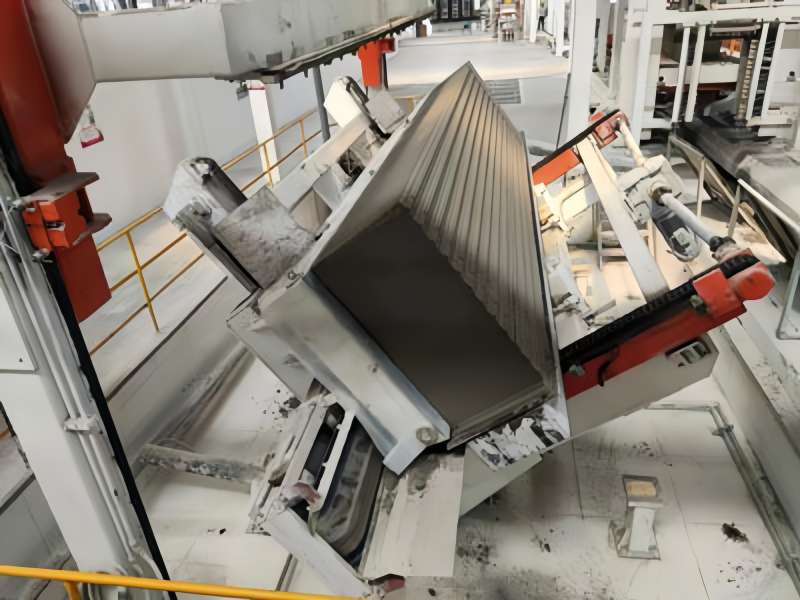
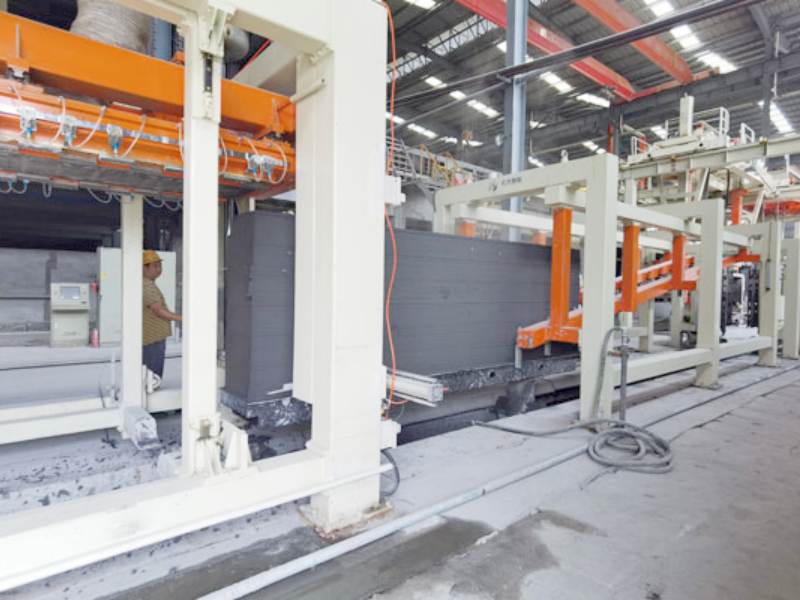
Drehtisch: Der hydraulische Antrieb sorgt für eine gleichmäßige Drehung der Formen und Rohlinge, was das Entformen und Schneiden erleichtert.
Drahtsäge: Verwendet mehrere Sätze hochfester Stahldrähte für Hochgeschwindigkeitsschnitte. Ein CNC-System sorgt für millimetergenaues Schneiden. Bei großen Drahtsägeanlagen ist ein kontinuierlicher Schnitt an mehreren Stationen möglich.
5. Autoklaven-Härtungsgeräte
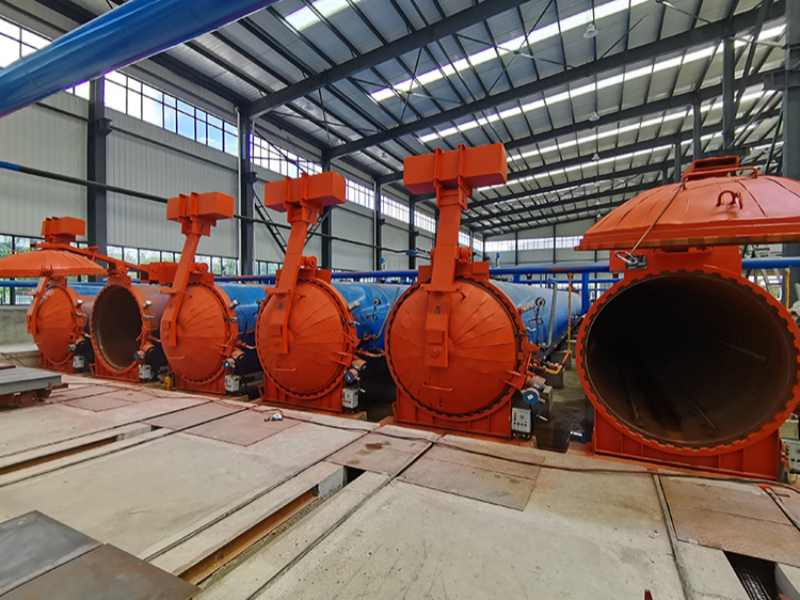

Autoklaven: Große Druckbehälter härten Rohlinge bei Temperaturen von 180-200°C und Drücken von 10-12 bar aus und bilden hochfeste Kalziumsilikathydrate. Ausgestattet mit Sicherheitsverriegelungen.
6. Hilfsmittel

Dampfkessel: Lieferung von stabilem Dampf für Autoklaven und Aushärtekammern, mit verschiedenen Beheizungsoptionen verfügbar.
Luftkompressor: Liefert Druckluft für pneumatische Geräte und stellt sicher, dass Ventile, Klemmen und andere Geräte ordnungsgemäß funktionieren.
Förderbandsystem: Transportiert Materialien durch den gesamten Prozess. Verwendet Band- oder Kettenförderer (je nach Materialbedarf) für eine automatisierte, kontinuierliche Bewegung.
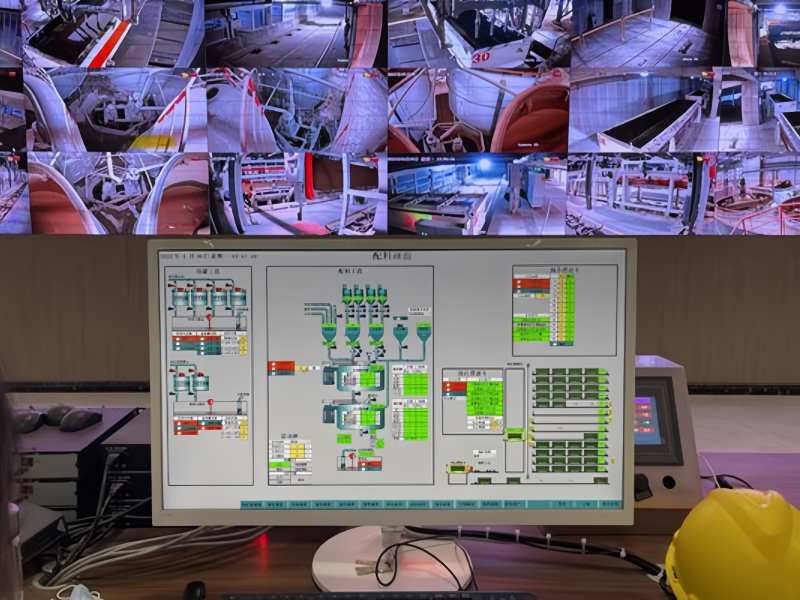
Kontrollsystem: PLC- oder DCS-Systeme überwachen und regulieren Produktionsparameter in Echtzeit. Sie zeichnen Daten für die Verwaltung und Rückverfolgbarkeit auf und helfen, Probleme umgehend zu beheben.
FAQs
Q1: How long does it take to build an AAC brick plant?
Typically 6–10 months depending on capacity and civil work progress.
Q2: Can I start with a small plant and expand later?
Yes, but expansion must be planned during initial layout design.
Q3: What is the most important system in an AAC plant?
Cutting system and autoclave system are the most critical for product quality and stability.
Q4: Is AAC production profitable?
Yes, if raw material cost and production stability are properly controlled.
Q5: Do you provide full plant design or only equipment?
We provide full EPC-style plant solutions, including design, equipment, and technical support.