Why Customized Medium Flyash AAC Block Plants Are in Growing Demand?
In the early stage of AAC development, many projects relied on standardized plant designs. While these designs work in theory, they often fail to match local realities such as raw material quality, land limitations, energy cost, and labor structure.
As markets mature, investors increasingly recognize that:
- Overdesigned plants increase financial pressure
- Undersized plants limit profitability
- Poor raw material adaptation leads to unstable quality
A customized medium flyash AAC block plant solves these issues by aligning production capacity, process design, and automation level with actual market demand and local conditions.

What Is a Customized Medium Flyash AAC Block Plant?
A customized medium flyash AAC block plant is not a fixed model or a “one-size-fits-all” solution. Instead, it is an engineering-based AAC production system, typically designed within a capacity range of 30,000 to 100,000 m³ per year, using fly ash as the main siliceous raw material.
Customization may involve:
- Raw material preparation system design
- Production capacity configuration
- Automation level selection
- Mold size and product mix
- Autoclave and curing system optimization
Compared with standard AAC plants, customized solutions focus on practical output, stable quality, and sustainable operation, rather than maximum theoretical capacity.
Who Is This Type of AAC Block Plant Designed For?
Customized medium flyash AAC block plants are particularly suitable for:
- Medium-scale AAC block manufacturers
- Investors upgrading from clay brick or small AAC facilities
- Building material suppliers serving city-level or regional markets
- Developers and contractors with long-term AAC block demand
For many regions, medium capacity represents the most commercially mature balance—large enough to achieve cost efficiency, but not so large that market absorption becomes a risk.
Why Fly Ash Is a Key Advantage in AAC Block Manufacturing
Fly ash plays a critical role in modern AAC production, especially in regions with coal-fired power plants.
Key Benefits of Fly Ash in AAC Blocks
- Stable chemical composition when properly sourced
- Lower raw material cost compared to sand in many markets
- Improved sustainability and waste utilization
- Compliance with green building and environmental policies
However, fly ash quality varies significantly by source. This is why customized process design is essential—standard solutions often fail to handle variations in fineness, moisture, and reactivity.
Key Customization Areas in a Medium Flyash AAC Block Plant
Raw Material Preparation System
Customization begins at the raw material stage:
- Dry fly ash vs wet fly ash handling
- Storage and dosing accuracy
- Slurry preparation consistency
A well-designed system ensures stable AAC block density and strength.
Capacity and Automation Level
Instead of blindly pursuing maximum automation, a customized plant matches:
- Local labor cost
- Operator skill level
- Maintenance capability
Many medium flyash AAC plants adopt semi-automatic or selective automation, which reduces investment while maintaining efficiency.
Mold Size and Product Configuration
Different markets demand different block sizes and thicknesses. Customization allows:
- Market-oriented block dimensions
- Flexible product mix
- Reduced mold redundancy
Autoclave and Curing System Design
Steam curing is the heart of AAC quality. Customization includes:
- Autoclave size and quantity
- Steam pressure optimization
- Energy-saving curing cycles
Typical Production Capacity and Output Calculation
A medium flyash AAC block plant is commonly designed for:
- 100–300 m³/day, depending on layout and shifts
For example:
- 200 m³/day × 300 working days ≈ 60,000 m³/year
Actual output depends on:
- Shift arrangement
- Automation level
- Raw material consistency
- Production management
This realistic capacity planning helps avoid overinvestment and underutilization.
Investment Cost Structure of a Customized Medium Flyash AAC Block Plant
Rather than quoting a single number, it is more accurate to understand the cost structure:
- Core production equipment
- Autoclaves and boiler system
- Electrical and control systems
- Civil foundation and plant buildings
- Installation, commissioning, and training
Customization means the final investment is aligned with actual project requirements, not unnecessary configurations.
Operating Cost, ROI, and Commercial Feasibility
Key operating cost components include:
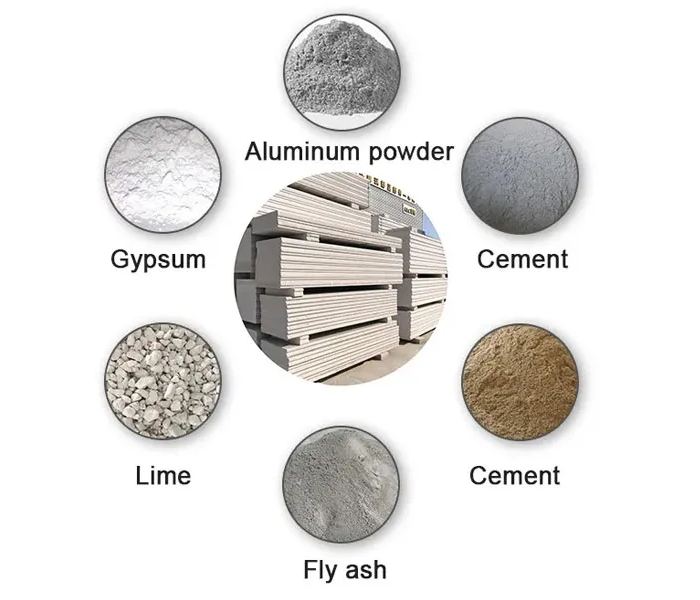
- Fly ash, cement, lime, gypsum
- Electricity and steam
- Labor and maintenance
Fly ash-based AAC blocks often enjoy:
- Competitive raw material costs
- Higher market acceptance in energy-efficient construction
- Better pricing compared with traditional blocks
When matched with stable demand, medium-capacity plants typically achieve predictable and controllable returns, rather than speculative high-risk profits.
Plant Layout and Land Requirement Considerations
Customized layouts consider:
- Available land shape and size
- Logistics flow for raw materials and finished products
- Future expansion space
Medium flyash AAC block plants can be designed with:
- Compact layouts for limited land
- Open layouts for easy expansion
This flexibility reduces long-term relocation or reconstruction costs.
Installation, Training, and Technical Support
Successful AAC production depends not only on equipment, but also on execution.
A professional supplier provides:
- Panduan pemasangan di lokasi
- Operator training
- Commissioning and quality stabilization
- Ongoing technical support
This ensures the plant reaches designed capacity and stable quality as quickly as possible.
Future Expansion and Upgrade Possibilities
One major advantage of a customized medium flyash AAC block plant is its upgrade potential:
- Additional molds and cutting systems
- Increased automation
- Expanded autoclave capacity
- Product diversification from blocks to panels
This protects initial investment and supports long-term growth.
Lainnya Pabrik Pembuatan Blok Penjualan Panas
| Produksi Tahunan | Harga (USD) | Konfigurasi Inti |
|---|---|---|
| 100,000 m³ | 1.5-1.9 M | Pemotongan dengan putaran udara, autoklaf 3×31 m |
| 150,000 m³ | 2.1-2.6 M | Pembuatan palet robotik, autoklaf 4×31 m |
| 200,000 m³ | 2.8-3.5 M | Pemotongan enam sisi, autoklaf 4×37 m |
| 300,000 m³ | 4.0-4.8 M | Jalur pemotongan ganda, autoklaf 6×37 m |
| 400,000 m³ | 5.5-6.5 M | Pemutar udara otomatis penuh, autoklaf 8×37 m ke atas |
Why Choose Us for Your Customized Medium Flyash AAC Block Plant?
With more than 10 years of experience in AAC block manufacturing equipment, we focus on:
- Engineering-based customization
- Export-proven fly ash AAC solutions
- Honest capacity and cost evaluation
- Long-term technical partnership
We believe that a successful AAC project is built on realistic planning and stable operation, not exaggerated promises.
Invest in Your Medium Fly Ash AAC Block Plant
If you are planning a medium-capacity flyash AAC block project, we recommend starting with a technical evaluation rather than a price comparison.
To design a customized solution, we typically assess:
- Target annual capacity
- Fly ash source and quality
- Available land and utilities
- Market demand and product mix
- Budget range and expansion plan
Contact us with your project details, and our engineering team will help you determine whether a Customized Medium Flyash AAC Block Plant is the right solution for your market—both today and in the years ahead.