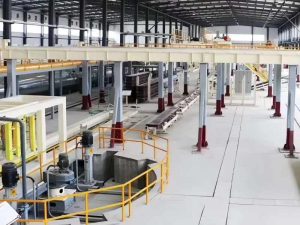
What Is an AAC Brick Plant?
An AAC brick plant is a complete production system designed to manufacture autoclaved aerated concrete products, typically including blocks and bricks in different sizes and densities.
A standard production line includes:
- Raw material batching and mixing system
- Casting section
- Pre-curing area
- Cutting system for precise shaping
- Autoclave system for high-pressure steam curing
- Packaging and handling system
Although it is often called a “brick plant,” in reality most modern AAC lines are designed to produce multiple product types in the same system, including blocks, bricks, and sometimes panel products.
That flexibility is one of the main reasons AAC plants are gaining global adoption.

AAC Brick Plant Cost Overview
Based on recent international projects, Fábrica de CCA investment typically falls within the following range:
| Plant Type | Capacidade | Investment Range |
|---|---|---|
| Small semi-automatic line | 30,000–60,000 m³/year | $500,000 – $900,000 |
| Medium production line | 60,000–120,000 m³/year | $900,000 – $2,000,000 |
| Fully automatic industrial plant | 120,000–300,000+ m³/year | $2,000,000 – $4,000,000+ |
The difference in cost is not only about size. In most cases, the price gap comes from automation depth and system integration level, especially in cutting accuracy and autoclave configuration.
What Affects AAC Brick Plant Cost?
From a manufacturing and project delivery perspective, several factors determine the final investment:
Production capacity
Higher output requires more autoclaves, larger batching systems, and faster curing cycles. This is usually the most significant cost driver.
Automation level
Semi-automatic systems reduce initial investment but require more labor. Fully automatic systems reduce manpower dependency but increase upfront cost.
Multi-product flexibility (brick + block)
Plants designed to produce both AAC bricks and blocks require more advanced cutting systems and mold configurations.
Raw material system
Fly ash-based and sand-based systems require different handling setups, which affects both equipment and operating cost.
Engineering scope
Some suppliers provide only equipment. Others deliver a full turnkey system including layout design, installation, and commissioning. This difference directly impacts pricing.
Full Cost Breakdown of an AAC Brick Plant
A common misunderstanding is treating AAC investment as only equipment cost. In reality, it is a full industrial project.
| Cost Component | Share of Total Investment |
|---|---|
| Equipment (main production line) | 50% – 65% |
| Civil construction | 15% – 25% |
| Installation & commissioning | 5% – 10% |
| Utility systems (steam, power, water) | 5% – 10% |
| Working capital | 5% – 10% |
In most real projects, infrastructure and installation play a much larger role than buyers initially expect.
Production Cost per m³
Beyond investment cost, operating cost determines long-term profitability.
| Elemento de custo | Estimated Cost (USD/m³) |
|---|---|
| Raw materials | $25 – $40 |
| Labor | $5 – $10 |
| Energy (steam + electricity) | $5 – $8 |
| Manutenção | $3 – $6 |
| Total production cost | $45 – $70 |
Typical market selling price for AAC products ranges from: $70 – $120 per m³
However, actual profit depends heavily on logistics, local demand, and production stability—not just machine efficiency.
ROI of an AAC Brick Plant
In most medium-scale projects, the financial model is relatively stable when the market is well positioned.
A typical scenario looks like this:
- Annual output: ~100,000 m³
- Net margin: $8 – $15 per m³
- Annual profit: $800,000 – $1.5 million
Under stable conditions, the payback period is usually: 1.5 to 3 years
In our experience, the biggest variable affecting ROI is not equipment—it is market absorption speed and sales channel development.
Real Project Cases
To make the investment logic more practical, here are two real AAC projects delivered to different markets.
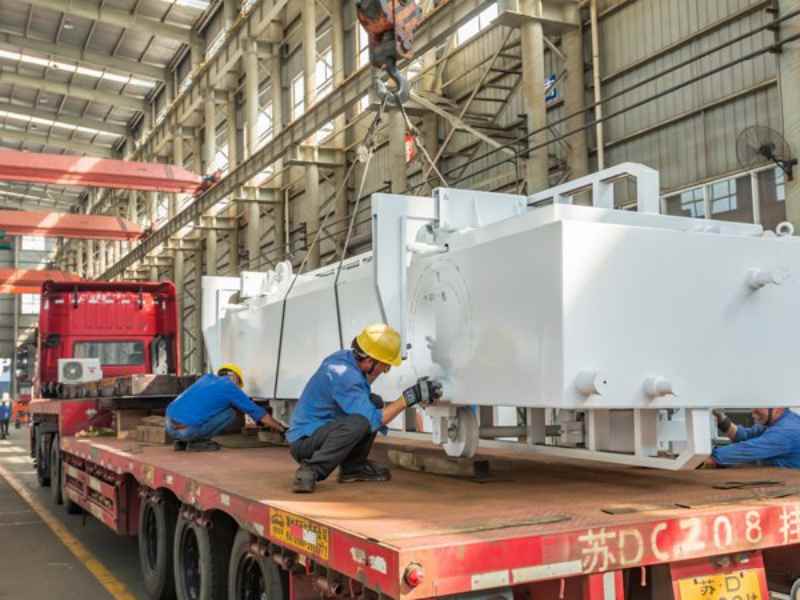
This project was designed for a highly regulated construction market where quality consistency and precision were the top priorities.
Key features of this project:
- High-precision cutting system for dimensional accuracy
- Stable multi-product output (blocks and bricks)
- Strict quality control requirements for urban construction standards
- Optimized automation level to reduce operational deviation
In this case, the client prioritized quality stability over maximum capacity, which influenced the entire plant configuration.

This project was designed for large-scale industrial supply under cold climate conditions.
Key features of this project:
- High-capacity production line for large infrastructure demand
- System adapted for low-temperature environments
- Reinforced curing and material handling stability
- Focus on continuous production efficiency
Unlike smaller markets, the priority here was output stability under harsh conditions, not flexibility.
How to Choose the Right AAC Brick Plant Supplier
At this stage, price alone is no longer a decision factor. What matters is engineering capability.
We usually advise clients to evaluate suppliers based on:
- Whether they provide complete plant design, not just machines
- Real overseas project experience
- Ability to adapt to local raw materials
- Installation and commissioning support
- Long-term spare parts and technical service
In AAC projects, poor system integration can easily reduce production efficiency by 15–30%, even if the equipment itself is high quality.
Recommended Investment Structure by Budget
| Budget Level | Recommended Configuration |
|---|---|
| Below $800,000 | Entry-level semi-automatic AAC line |
| $800,000 – $2M | Standard industrial AAC production line |
| Above $2M | Fully automatic large-scale plant |
In most cases, the middle range provides the best balance between investment risk and production stability.