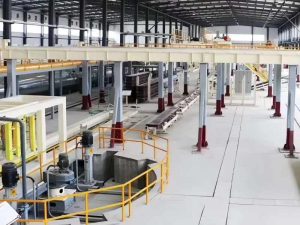
The AAC block plant is used to produce autoclaved aerated concrete (AAC) blocks, which are lightweight, energy-efficient building materials.
AAC blocks are widely used in the construction industry for their excellent thermal insulation and fire-resistant properties.
We are a leading AAC block plant manufacturer and supplier. Our AAC Block Plant Price ranges from $400000 to $3500000 based on different types and capacities of the AAC plant.
Various Capacities of AAC Block Plant for Your Needs
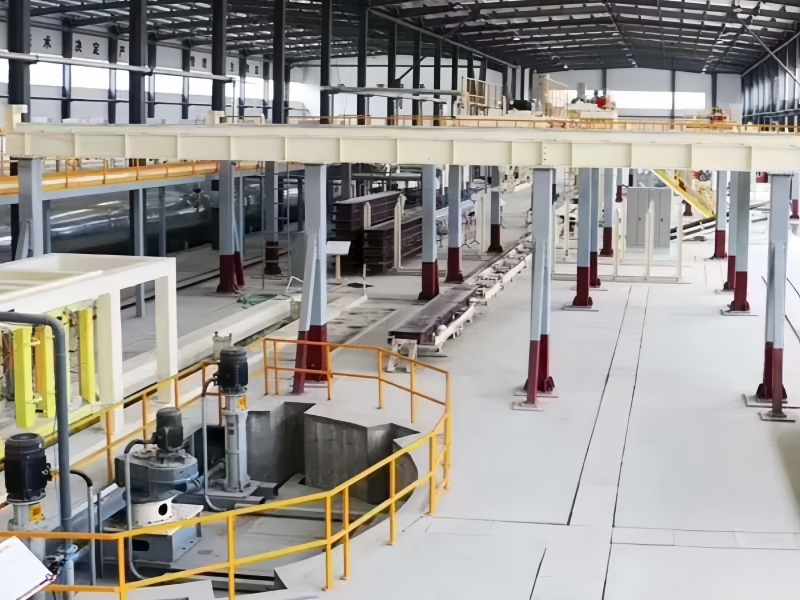
Mini/small AAC Block Plant Price
Capacity: 30000-100000 m3/year
Total investment: $400 000-$1 000 000
Daily output: 300-500 m³ in 8 hours
Pay-back: < 30 months (if local block price ≥ US$75 /m³)

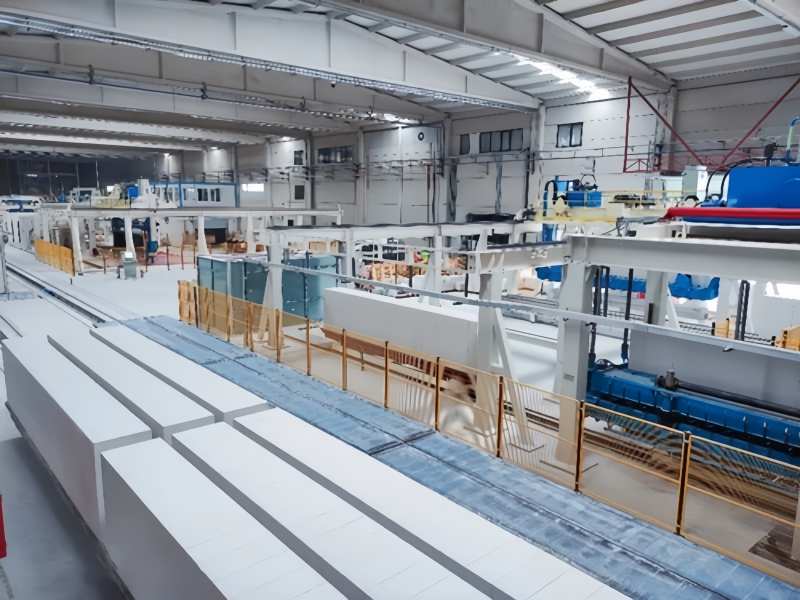
Medium scale AAC block plant price
Capacity: 100000-200000 m3/year
Total investment: $1000000-$200000
Tyes: Semi/fully automatic
Break-even at 60 % capacity utilization
Main Budgets of AAC Line
| Budget | Typical share | Cost range (mini to large) |
| Machinery & equipment | 55–65 % | $450 k – 1.8 M |
| Civil works & utilities | 15–25 % | $100 k – 700 k |
| Land (lease or buy) | 5–15 % | $50 k – 600 k |
| Initial raw-material stock | 3–8 % | $50 k – 400 k |
| Permits, training, spare parts | 3–7 % | $30 k – 150 k |
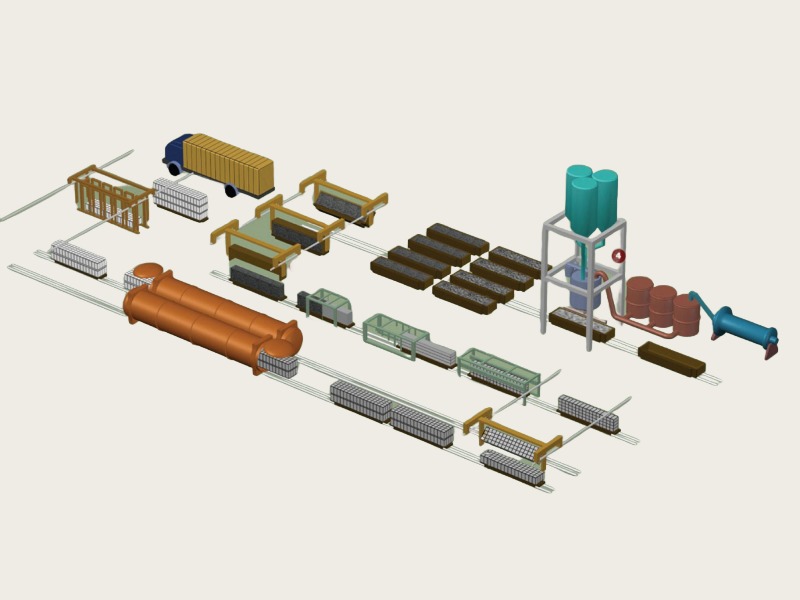
AAC Block Plant Process
Raw material process → Batching and Mixing → Pouring → Static pre-curing → Cutting → Autoclaving Curing → Finished product Processing
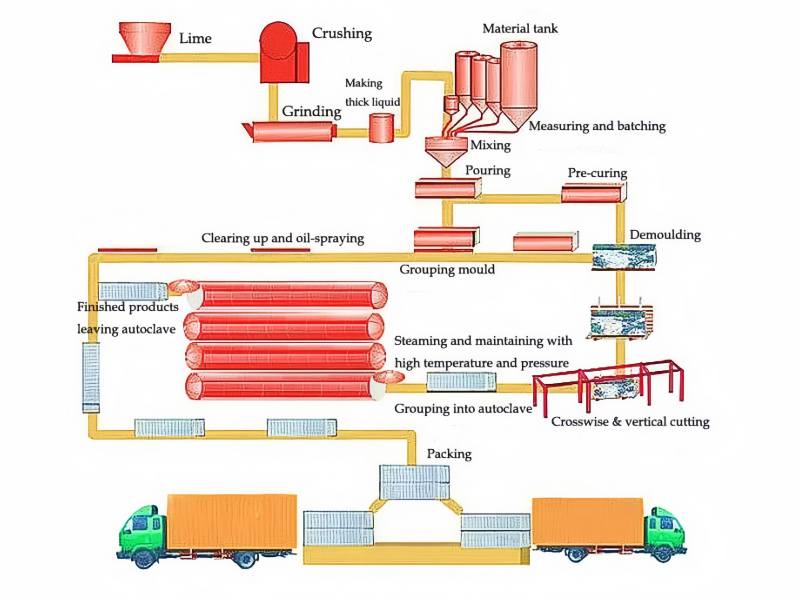
1. Raw Material Processing: Sand is crushed and ground to the desired fineness. Cement, lime, and gypsum are stored in silos, and aluminum powder is mixed with water to form an aluminum slurry.
2. Batching and Mixing: The various raw materials are weighed according to precise proportions and then thoroughly mixed in a mixer to form a uniform slurry.
3. Pouring: The mixed slurry is poured into steel molds. The size and shape of the molds can be designed to meet the desired block specifications.
4. Static Pre-curing: The molds containing the slurry are transported to a pre-curing area where the slurry gradually hardens under suitable temperature and humidity conditions to achieve initial strength. This process typically takes several hours.
5. Cutting: After the slurry is pre-cured, it is cut into the desired size and shape using high-precision cutting equipment using steel wire or blades.
6. Autoclave Curing: Blocks are placed in an autoclave and cured for several hours at temperatures of 175-200°C and pressures of 10-15 bar, significantly enhancing the blocks’ strength and durability.
7. Finished Product Processing: After autoclave curing, the blocks are removed from the autoclave and transported to a storage area. After inspection and packaging, they are ready for shipment.
Why Invest in AAC Block Plant?
The cost of a small AAC production line varies widely and depends on several factors. Generally speaking, the total investment for a small AAC production line with an annual capacity of 300,000-100,000 cubic meters ranges from $250,000 to $800,000.
1. Low equipment price, but comparable technology to European standards.
For the same 300,000 m³/year complete line, European quotes range from $2.8 million to $3.2 million, while ours can deliver for $1.9 million to $2.2 million.
Cutting accuracy of ±1 mm, autoclave waste heat recovery, and fully automated robotic palletizing, all based on authorized German drawings.
2. High production capacity flexibility
Modular design: For example, Initially launch with 100,000 m³/year to validate the market, seamlessly expand to 300,000 m³ within 6 months, with additional investment less than 40% of the original cost.
No production interruption during the upgrade, ensuring continuous cash flow.
3. Fastest Payback
With an average selling price of $85/m³ and 70% capacity utilization, a 200,000 m³/year plant can achieve a payback period of 18–22 months.
4. Perfect After-Sales Service
24/7 remote diagnostics and 48-hour on-site overseas engineer service.
Lifetime price lock for spare parts, ensuring worry-free maintenance.
Application of AAC Block
Civil Buildings: Used in internal and external walls, floor slabs, roof slabs, etc. of residential buildings to reduce building weight and improve seismic performance.
Commercial Buildings: Suitable for non-load-bearing walls of shopping malls, hotels, office buildings, etc., with good thermal insulation and sound insulation effects to enhance building comfort.
Industrial Buildings: Served as wall and partition materials for factories and warehouses, meeting the special requirements of industrial production for building materials.
Special Buildings: Widely applied in hospitals, schools, gymnasiums and other places due to their excellent fire resistance and environmental protection properties.
Factors Affecting the AAC Block Plant Price
Capacity: For every 100,000 m³/year increase in capacity, equipment investment increases by approximately 35–45%.
Automation Level: Fully automated systems offer a 20–30% premium over semi-automatic systems, but reduce labor costs by over 40%.
Raw Material Type: Fly ash systems require additional grinding and dust removal, while sand systems require ball milling and sand washing, resulting in a 5–12% cost difference between the two.
Autoclave Specifications: The price difference between a Φ2.68×31 m and a Φ2.85×38 m autoclave is approximately $80,000–100,000 per unit.
Electrical Standards: CE/UL/CSA certified components are 15–25% more expensive than standard parts.
Transport Distance: For example, the price difference between FOB Qingdao Port, China and DAP Dubai can reach 6–10% of the equipment price.
Payment Options: Installment or finance lease options typically incur a 2–4% finance charge, but can significantly reduce the down payment.
How to Find a High-Quality Manufacturer at a Lower Price
Define your requirements:
Identify production capacity, raw materials, and automation level.
Request a sub-item quote+modular solution:
Request prices for the cutting line, autoclave, dust removal, and electronic control components individually. This can yield a 10-15% price difference.
It’s possible to install core modules first and expand capacity later to avoid a large, one-time investment.
Site Inspection+Demonstration Projects:
Visit at least two AAC production lines of the same scale that have been operating for at least two years, focusing on failure rates, energy consumption, and yield rates.
Strive for package financing
Ask the manufacturer if a export credit+financial leasing package is possible, with a down payment of 20% and interest rates 2–3 percentage points lower than commercial banks.
AAC block Plant ROI
| Plant size | Annual revenue* | Annual profit* | Pay-back |
| 100 000 m³ | US$6.0 – 8.0 M | US$1.2 – 2.0 M | 2.0 – 2.5 yr |
| 200 000 m³ | US$12 – 16 M | US$2.8 – 4.0 M | 1.8 – 2.2 yr |
| 400 000 m³ | US$24 – 32 M | US$6.0 – 8.0 M | 1.5 – 1.8 yr |
Note: Based on average selling price US$75–100 /m³ and 70 % capacity utilization.
Ready to Get Detailed Price of AAC Plant?
Send us three points: target capacity, raw material (fly-ash, sand or tailings), and automation level. You will receive a tailored budget sheet within 24 hours.