
How Much Does an AAC Factory Cost?
In most projects, the total investment for an AAC (autoclaved aerated concrete) factory depends on capacity, automation level, and local conditions. Based on typical industry cases, you can expect the following range:
| Factory Scale | Capacity (m³/year) | Estimated Investment |
|---|---|---|
| Klein | 30,000 – 50,000 | $200,000 – $500,000 |
| Mittel | 50,000 – 100,000 | $500,000 – $1,200,000 |
| Groß | 100,000 – 200,000+ | $1,200,000 – $3,000,000+ |
This is a full factory investment, including equipment, construction, and setup—not just machinery.
AAC Factory Cost Breakdown
A clearer way to approach budgeting is to look at how the investment is distributed.
Equipment (40%–60%)
Equipment is the largest portion of the budget and directly determines production capacity and efficiency. A standard AAC line includes:
- Raw material crushing and batching system
- Mixing and pouring system
- Cutting machine
- Autoclave (steam curing system)
- Control and automation system
Typical pricing:
- Semi-automatic line: $150,000 – $400,000
- Fully automatic line: $500,000 – $1,500,000+
The difference mainly comes from automation level and system integration.
Land & Construction (20%–30%)
This includes:
- Land purchase or lease
- Workshop construction
- Storage areas (raw materials and finished products)
Costs vary widely depending on location. In some regions, land is a minor expense; in others, it can significantly impact total investment.
Raw Material Setup (10%–15%)
AAC production relies on:
- Fly ash or sand
- Zement und Kalk
- Aluminiumpulver
Initial costs involve:
Basic handling equipment
Storage systems
First batch of materials
Installation & Labor (10%–15%)
This part is often underestimated. It includes:
- Equipment installation
- Commissioning
- Worker training
- Initial labor costs
If you choose a turnkey supplier, some of these services may be included in the equipment package.
AAC Factory Price by Capacity
Production capacity is the most important factor affecting total investment. Below is a practical reference:
| Kapazität | Automatisierungsgrad | Investment Range | Typical Application |
|---|---|---|---|
| 50,000 m³/year | Semi-auto | $300,000 – $600,000 | Entry-level investment |
| 100.000 m³/Jahr | Semi / Full | $600,000 – $1,200,000 | Growing markets |
| 200,000 m³/year | Full auto | $1,200,000 – $2,500,000+ | Industrial production |
A larger plant requires more capital upfront, but the cost per cubic meter decreases as scale increases.
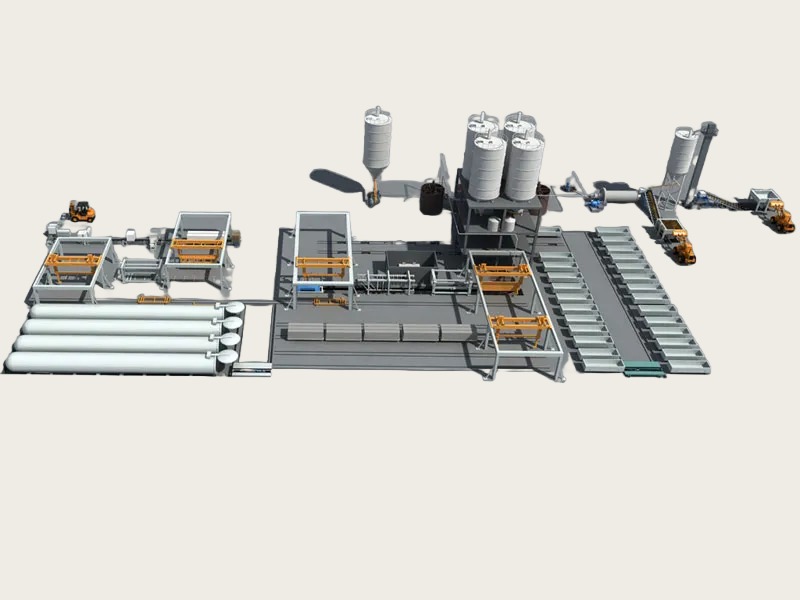
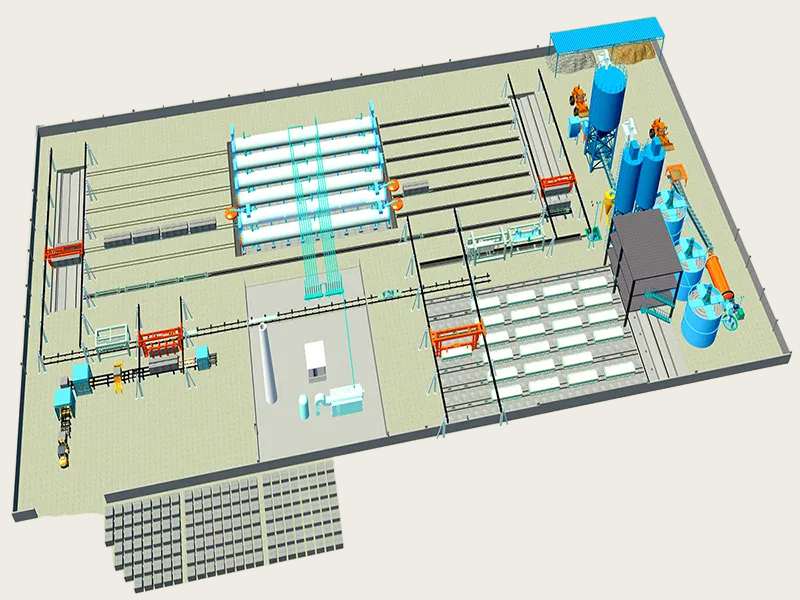
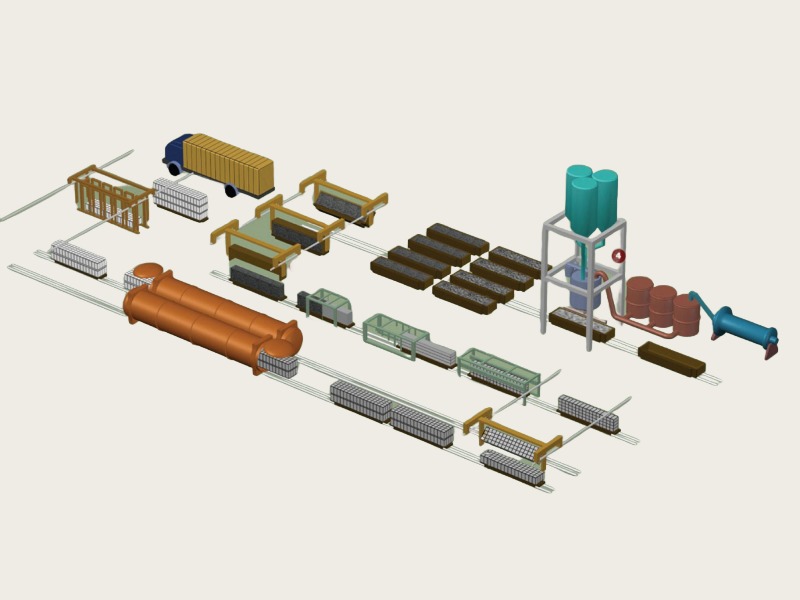
Key Factors That Affect AAC Factory Price
1. Automation Level
Automation is one of the biggest cost drivers.
- Semi-automatic systems require more labor but cost less upfront
- Fully automatic systems improve efficiency and consistency, but require higher investment
In most cases, automation pays off over time through reduced labor costs and stable production quality.
2. Region
Location influences several cost components:
- Land and construction costs
- Labor wages
- Transportation and logistics
- Installation expenses
For example, factories in developing regions typically have lower setup costs, while projects in developed markets often require higher standards and additional investment.
3. Raw Material Availability
AAC production depends heavily on locally available materials such as fly ash or sand.
- If materials are locally available → lower production cost
- If materials must be transported → higher ongoing expenses
This factor affects not only initial setup, but also long-term profitability.
Real AAC Factory Project Examples
Rather than relying on estimates, looking at real projects gives a clearer picture of how AAC factory investment works in practice. Below are three actual projects from different markets, each representing a different investment level and strategy.
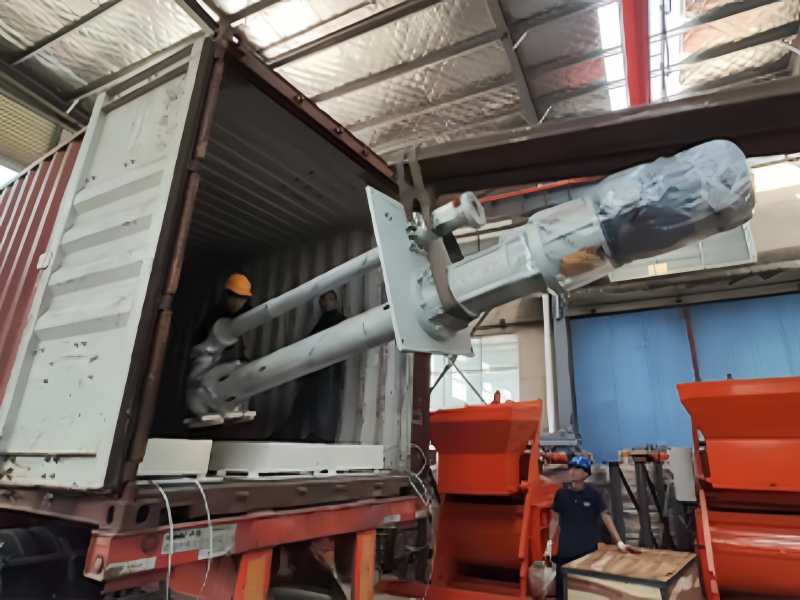
In Indonesia, a local building materials supplier invested in a 75,000 m³/year AAC block plant to enter the growing construction materials market.
Kapazität: 75,000 m³/year
Plant Type: Mini to medium-scale
Configuration: Vollständig automatisierte Produktionslinie
Daily Output: 220–250 m³
Key Focus: Efficient entry into a high-growth market
The project was designed as a market entry strategy, balancing investment cost and production efficiency. With full automation and optimized energy systems, the plant achieved stable production shortly after commissioning, with a qualified product rate of over 97%.
This type of investment is typical for Southeast Asia, where demand is strong but investors still prefer controlled initial budgets with room for future expansion.

In Nigeria, the client chose a significantly larger setup, installing a 300,000 m³/year AAC block production line to supply high-volume construction demand.
Kapazität: 300.000 m³/Jahr
Plant Type: Large-scale industrial plant
Configuration: Vollautomatisch
Daily Output: 900–1,000 m³
Land Requirement: ~25,000–30,000 m²
Key Focus: High output and regional market coverage
The project was developed for a company already active in construction materials, aiming to scale production and supply major cities like Lagos and Abuja.
To ensure stable operation, the system was adapted to local conditions, including sand quality, energy costs, and infrastructure limitations. The plant achieved stable production within about 40 days and is expected to reach ROI within approximately 1.8–2.5 years.
This type of large-capacity project is common in fast-growing African markets where demand can support high-volume production.
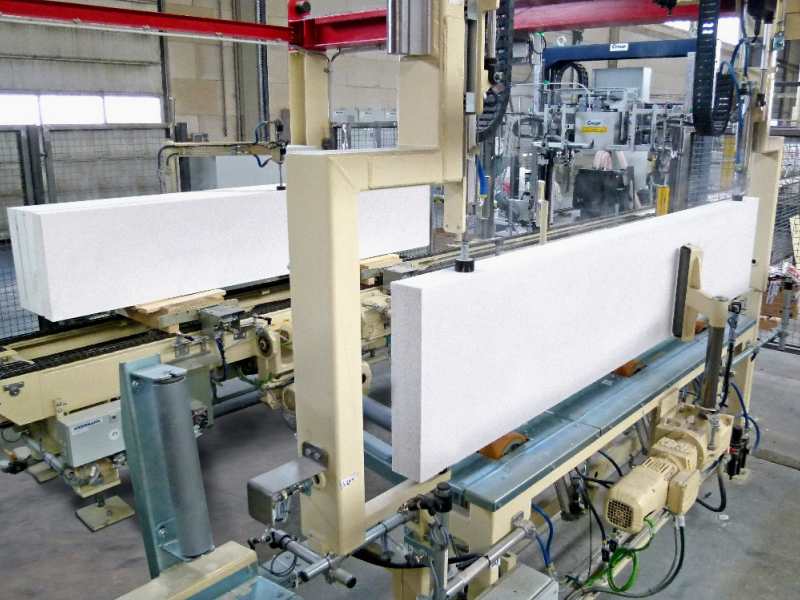
In India, the project followed a more balanced approach, focusing on stable production and cost efficiency rather than maximum scale.
Kapazität: ~80,000 m³/year (typical configuration)
Plant Type: Medium-scale plant
Configuration: Automated production line
Key Focus: Efficiency, quality, and steady output
Projects at this scale are widely adopted in India because they offer a strong balance between investment and return. Investors can supply multiple construction projects while maintaining manageable operational complexity.
This type of plant is particularly suitable for companies transitioning from traditional brick production to AAC, where consistency, energy efficiency, and product quality are critical for market acceptance.
How to Reduce AAC Factory Investment Cost
A lower investment does not necessarily mean compromising on performance. With the right approach, costs can be controlled effectively.
Start with a Semi-Automatic Line: Reduces initial investment while keeping room for future upgrades.
Use Local Raw Materials: Cuts transport costs and stabilizes supply.
Optimize Plant Layout: Efficient design reduces both construction and operating costs.
Invest in Phases: Begin with a smaller capacity and expand as demand grows.
Choose the Right Supplier: A reliable supplier helps avoid hidden costs and operational issues later.




FAQ
The total cost of starting an AAC factory typically ranges from $100,000 to $3,000,000+, depending on plant size, production capacity, and automation level.
- Small plants (30,000–100,000 m³/year): $100,000 – $1,000,000
- Medium plants (100,000–200,000 m³/year): $1,200,000 – $2,300,000
- Large plants (200,000+ m³/year): $2,000,000 – $3,000,000+
The final investment also depends on land cost, raw materials, and local labor conditions.
The most important factors influencing AAC factory cost include:
- Production capacity (larger plants cost more but reduce unit cost)
- Automation level (fully automatic systems require higher investment)
- Raw material availability (local materials significantly reduce cost)
- Location (land, labor, and construction costs vary by region)
Among these, capacity and automation level usually have the biggest impact.
It depends on your business strategy and market demand.
- A small plant requires lower investment and is suitable for new investors or local markets
- A large plant offers higher efficiency and lower production cost per unit, making it ideal for large-scale supply
Many investors choose to start with a smaller plant and expand later.
In most cases, the return on investment (ROI) for an AAC factory is around:
- 1.5 to 3 years, depending on:
- Market demand
- Production efficiency
- Sales price and operating cost
Projects in high-demand regions can achieve faster payback periods.
Unsere wichtigsten Geräte (Autoklaven, Mischer, Schneidemaschinen) haben eine Lebensdauer von 15-20 Jahre - dank hochwertigem Stahl (Q345R für Autoklaven) und präziser Fertigung. Wir bieten außerdem eine 5-Jahres-Garantie auf die wichtigsten Komponenten.
Get a Customized AAC Factory Price
There is no one-size-fits-all price for an AAC factory. The final investment depends on:
- Desired production capacity
- Level of automation
- Raw material type
- Local market conditions
A well-planned factory is not just about minimizing upfront cost—it’s about building a system that runs efficiently and delivers consistent returns over time.
If you are considering entering the AAC industry, the most practical next step is to define your requirements and evaluate a solution tailored to your specific market.