
When people ask about the cost of an AAC block factory, they are usually looking for a single number. In reality, there isn’t a fixed price. The total investment depends on capacity, configuration, and local conditions.
Based on real project experience, most AAC block factories fall within the following range:
| Factory Scale | Capacity (m³/year) | Total Investment (USD) |
|---|---|---|
| Klein | 30,000 - 100,000 | $150,000 – $1,000,000 |
| Mittel | 100,000 - 200,000 | $1,200,000 – $2,500,000 |
| Groß | 200,000 – 600,000+ | $2,000,000 – $3,500,000+ |
These figures represent complete factory investment, including equipment, construction, and setup. The variation mainly comes from how the plant is designed and what level of automation is required.
Factory Construction Cost (Land + Building)
Construction is often the second-largest cost after equipment, and it varies more than any other category depending on location.
Land Cost
Land requirements typically range from:
- Small plant: 8,000 – 15,000 m²
- Medium plant: 15,000 – 25,000 m²
- Large plant: 25,000 – 40,000 m²
Land prices differ significantly by country. In some regions, land is a minor expense, while in others it can account for a large portion of the budget.
Building & Civil Construction
Construction usually includes:
- Production workshop
- Raw material storage area
- Finished product yard
- Office and utility rooms
Typical cost range:
| Plant Type | Construction Cost (USD) |
|---|---|
| Klein | $50,000 – $200,000 |
| Mittel | $200,000 – $600,000 |
| Groß | $600,000 – $1,200,000+ |
A well-planned layout can reduce both construction cost and future operating inefficiencies.
Equipment Cost in an AAC Factory
Equipment is the core of the investment and typically accounts for 40%–60% of the total cost.
A standard AAC production line includes:
- Raw material processing system
- Mixing and pouring system
- Cutting machine
- Autoclave system
- Control and automation system
Typical equipment cost:
| Kapazität | Equipment Cost (USD) |
|---|---|
| 50,000 m³/year | $150,000 – $500,000 |
| 100.000 m³/Jahr | $500,000 – $1,200,000 |
| 200,000 m³/year | $1,200,000 – $2,000,000+ |
The autoclave and cutting system are usually the most expensive components, but they also have the greatest impact on product quality and production stability.
Utility Systems Cost (Steam, Power, Water)
This is an area many first-time investors underestimate. Without proper utility systems, even high-quality equipment cannot operate efficiently.
Steam System (Boiler)
AAC production relies on high-pressure steam curing. The boiler system is essential.
- Cost range: $50,000 – $200,000+
Electrical System
Includes:
- Power distribution
- Control panels
- Backup systems
- Cost range: $30,000 – $150,000
Water Supply System
Used for mixing and processing:
- Cost range: $10,000 – $50,000
Combined, utility systems can account for 10%–20% of total investment, depending on plant scale.
Sample AAC Block Factory Cost Case
To better understand how these costs come together, here is a simplified example of a mid-sized factory:
| Cost Category | Estimated Cost (USD) |
|---|---|
| Ausrüstung | $850,000 |
| Construction | $350,000 |
| Utilities | $150,000 |
| Installation & Labor | $120,000 |
| Investitionen insgesamt | ~$1,470,000 |
This type of setup is typical for a 100,000 m³/year plant, designed for regional supply with a balance between cost and efficiency.
Key Factors That Influence AAC Factory Cost
1. Produktionskapazität
Larger plants require higher investment, but they reduce cost per cubic meter, making them more competitive in large markets.
2. Automation Level
- Semi-automatic → lower cost, more labor
- Fully automatic → higher cost, better efficiency
Automation decisions directly affect both initial investment and long-term operating cost.
3. Raw Material Type
Plants using fly ash often have lower raw material costs, especially in regions where it is readily available.
4. Location
Local factors influence:
- Land price
- Labor cost
- Transport cost
- Construction expenses
Cost Optimization Tips for AAC Factory Investment
Controlling investment does not mean compromising performance. In practice, cost can be optimized through careful planning.
Start with a Practical Capacity
Avoid overbuilding. Match production scale with actual market demand.
Use Local Raw Materials
This reduces both setup cost and long-term operating expenses.
Choose the Right Automation Level
Not every project requires full automation. A semi-automatic line may be more suitable for smaller markets.
Optimize Layout and Workflow
A well-designed factory reduces unnecessary construction and improves efficiency.
Work with an Experienced Manufacturer
An experienced supplier can help avoid design mistakes and hidden costs, which often have a bigger impact than the initial quotation.


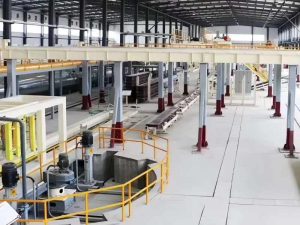


Get a Customized AAC Factory Price
There is no one-size-fits-all price for an AAC factory. The final investment depends on:
- Desired production capacity
- Level of automation
- Raw material type
- Local market conditions
A well-planned factory is not just about minimizing upfront cost—it’s about building a system that runs efficiently and delivers consistent returns over time.
If you are considering entering the AAC industry, the most practical next step is to define your requirements and evaluate a solution tailored to your specific market.