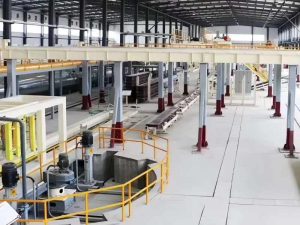
80,000 m³/Year AAC Block Plant Exported to Tanzania
In October 2024, we successfully delivered and commissioned an 80,000 m³/year AAC Block Manufacturing Plant to Tanzania—a milestone that strengthens our footprint in East Africa’s booming construction sector.
| Country | Tanzania (Dar es Salaam Region) |
| Annual Production Capacity | 80,000 m³ (Classified as Mini-AAC-Anlage—aligned with Tanzania’s local demand) |
| Plant Type | Fully-equipped Mini AAC Block Manufacturing Plant |
| Client Type | Tanzanian construction company expanding into eco-friendly building materials |
| Service Provided | End-to-end turnkey solution (Custom Design + Equipment Supply + On-site Installation + Operator Training + Post-Launch Support) |
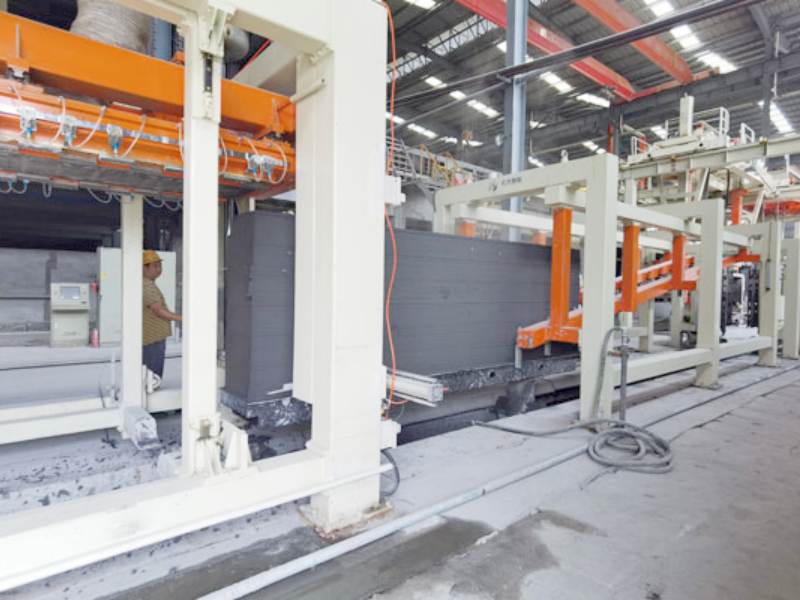
Why the Tanzanian Client Chose an 80,000 m³/Year AAC Plant?
Our client—an established local construction firm—initially focused on traditional concrete blocks but recognized Tanzania’s growing demand for lightweight, energy-efficient building materials. After analyzing their goals (serving Dar es Salaam’s residential and commercial projects) and constraints (limited land, budget for new ventures), we recommended the 80,000 m³/year mini plant for three key reasons:
- Market Fit: Tanzania’s construction sector is driven by affordable housing projects (e.g., Tanzania’s National Housing Corporation initiatives) and urbanization in Dar es Salaam, Mwanza, and Arusha. An 80,000 m³/year capacity perfectly matches regional demand without overinvesting.
- Cost-Efficiency: With a setup cost of about 850,000 USD, the plant fits the client’s budget for expansion while offering a fast ROI (projected 1.8–2.2 years).
- Land & Labor Adaptability: The plant’s compact layout (70m × 45m) works with the client’s existing 3,200 m² industrial plot, and its simplified operation requires only 12 workers per shift—ideal for training local staff with limited AAC experience.
Why AAC Blocks Are in High Demand in Tanzania?
Tanzania’s construction industry is shifting from heavy, energy-inefficient materials (like red clay bricks) to AAC blocks, driven by:
- Government Priorities: Tanzania’s National Development Plan (2021–2025) emphasizes sustainable housing and infrastructure, with subsidies for projects using eco-friendly materials.
- Affordable Housing Needs: Over 3 million Tanzanian households lack adequate housing; AAC blocks reduce construction time by 30% and building weight by 60% (vs. clay bricks), lowering overall project costs.
- Wärmedämmung: Tanzania’s tropical climate demands materials that regulate indoor temperatures. AAC blocks’ thermal conductivity (0.12–0.15 W/mK) cuts energy use for cooling by 25–30%—a critical selling point for developers.
- Raw Material Availability: Tanzania has abundant fly ash (from power plants like Kinyerezi II) and river sand—key raw materials for AAC production—reducing our client’s long-term material costs.
Equipment Used in AAC Block Plant Exported to Tanzania
| Ausrüstung | Customization for Tanzania |
|---|---|
| Kugelmühle | Adjusted grinding speed to process Tanzania’s high-silica river sand (ensures uniform slurry). |
| Automatic Batching System | Calibrated for local fly ash (lower carbon content) to maintain block strength (≥3.5 MPa). |
| Autoklav | Φ2.2m × 28m design (fuel-efficient, uses locally available diesel or biomass for steam). |
| Schneidemaschine | Small-scale vertical cutter with dust-collection (complies with Tanzania’s environmental regulations). |
| Packaging System | Manual-to-semi-automatic hybrid (balances cost and efficiency for small-batch local deliveries). |
This configuration ensures the plant produces Tanzania-standard AAC blocks (600×200×100/150/230 mm) with a 96%+ qualification rate—meeting the client’s requirements for selling to local contractors and housing projects.
Export & Logistics: Smooth Delivery to Tanzania
Exporting to Tanzania requires careful coordination with local customs and infrastructure. Our process included:
- Pre-Production Customization:
- Tested 3 batches of Tanzanian fly ash and sand to optimize the production formula.
- Designed the plant layout to fit the client’s Dar es Salaam plot (accounted for local rainfall patterns to protect outdoor equipment).
- Manufacturing & Quality Checks:
- 35-day equipment production cycle, with weekly video inspections by the client.
- Conducted load tests, safety checks, and dry runs before shipment.
- Shipping & Documentation:
- Shipped via Dar es Salaam Port (Tanzania’s main gateway) using 7×40HQ containers.
- Prepared all required documents: Certificate of Origin (COO), Tanzania Revenue Authority (TRA) import permits, packing list, commercial invoice, and bill of lading.
On-Site Installation & Operator Training
Our 4-person engineering team spent 25 days on-site in Dar es Salaam to ensure seamless setup:
- Mechanical Installation (15 days): Assembled the ball mill, autoclave, and conveyor systems, with adjustments for local power voltage (230V/50Hz).
- Electrical Setup (5 days): Installed the PLC control system and trained staff to monitor production in Swahili (using translated manuals).
- Operator Training (5 days): Trained 12 local workers on:
- Safe operation of the batching and autoclaving systems.
- Troubleshooting common issues (e.g., slurry consistency, steam pressure).
- Quality control (testing block density, strength, and dimensions).
By the end of training, all workers could operate the line independently—fulfilling our client’s goal of building a local, skilled team.
Post-Commissioning Performance
One month after launch, the plant exceeded the client’s expectations:

- Täglicher Output: 220–240 m³ (meets 80,000 m³/year capacity).
- Block Quality: Density (580–620 kg/m³), compressive strength (3.8 MPa), and thermal insulation (0.14 W/mK)—all above Tanzania’s building codes.
- Energie-Effizienz: Uses 22% less fuel than the client’s original concrete block plant (thanks to the optimized autoclave).
- Market Penetration: The client has secured contracts to supply AAC blocks to 2 residential projects in Dar es Salaam and 1 hotel construction site in Arusha.
What Our Client Say?
“We were hesitant to switch from concrete blocks to AAC—until we worked with this team,” said the client’s operations manager, Mr. Juma. “They didn’t just sell us equipment: they tested our local materials, trained our staff in Swahili, and even helped us get import permits. The plant runs smoothly, and we’re already getting more orders than we expected. In 2 years, we plan to expand to 150,000 m³/year—and we’ll definitely work with them again.”
Warum uns wählen?
- Local Expertise: We understand Tanzania’s raw materials, regulations, and construction needs (e.g., adapting to biomass fuel for autoclaves).
- Turnkey Support: From feasibility studies to post-launch maintenance—we handle every step so you focus on growing your business.
- Nachgewiesene Erfolgsbilanz: We’ve supplied 12+ AAC plants to East Africa (Kenya, Uganda, Rwanda), with 95% of clients achieving ROI within 2 years.
- Cost Transparency: No hidden fees—our quotes include equipment, shipping, installation, and training.

Start Your AAC Block Manufacturing Plant?
Whether you are planning a klein, medium, oder large-scale AAC factory, we can provide complete solutions based on your land, budget, and market demand.
Contact us now to get a free feasibility study & detailed quotation. Our engineers will design the most suitable AAC plants for your needs.