
What Is an AAC Block Manufacturing Project?
An AAC block manufacturing project is a complete industrial system designed to produce autoclaved aerated concrete products at scale. It is not a machine purchase, but a fully integrated production plant.
A standard AAC project includes:
- Raw material storage and batching system
- Mixing and casting section
- Pre-curing area
- Cutting system for precise sizing
- Autoclave curing system (high-pressure steam)
- Finished product handling and packaging
Depending on configuration, the same plant can produce AAC blocks, AAC bricks, and in some cases panels, making it suitable for diversified construction markets.
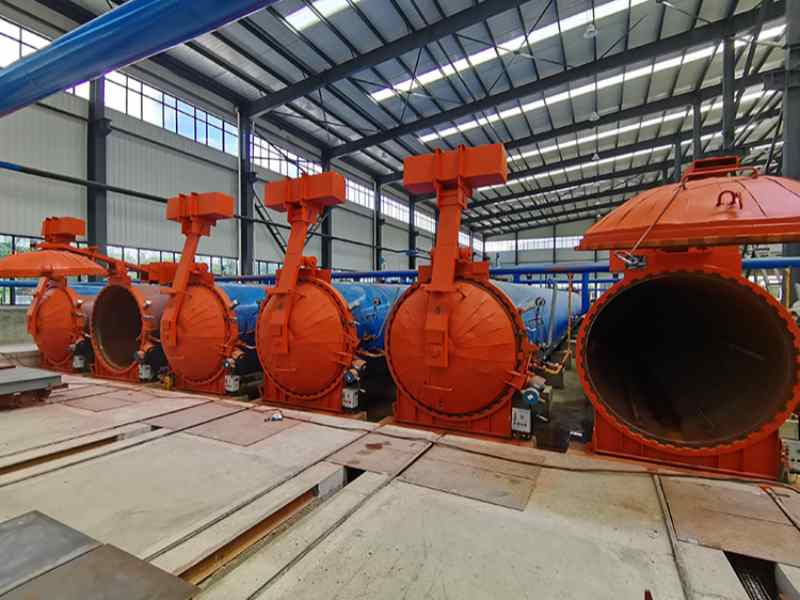
AAC Block Manufacturing Project Cost Overview
Project cost varies significantly depending on capacity, automation level, and engineering scope.
| Project Scale | Capacidad | Investment Range |
|---|---|---|
| Medium EPC project | 80,000–150,000 m³/year | $800,000 – $2,000,000 |
| Large industrial plant | 150,000–300,000 m³/year | $2,000,000 – $5,000,000 |
| Mega fully automatic project | 300,000 m³/year+ | $5,000,000 – $10,000,000+ |
At EPC level, cost is no longer driven by equipment alone, but by system engineering complexity.
EPC Turnkey Cost of AAC Block Manufacturing Project
In most international projects, EPC (Engineering, Procurement, Construction) delivery is preferred over equipment-only supply.
An EPC AAC project typically includes:
- Process engineering and plant design
- Full production line equipment supply
- Civil construction guidance
- Installation and commissioning
- Operator training and technical support
EPC Turnkey Investment Range
| Project Type | Capacidad | EPC Turnkey Cost |
|---|---|---|
| Medium EPC plant | 80,000–150,000 m³/year | $800K – $2M |
| Large EPC plant | 150,000–300,000 m³/year | $2M – $5M |
| Industrial mega project | 300,000 m³/year+ | $5M – $10M+ |
Fully Automatic AAC Plant Investment
A fully automatic AAC plant represents the highest level of industrial configuration, designed for continuous production with minimal manual intervention.
Typical features include:
- Fully integrated batching, casting, cutting, and autoclave systems
- High-precision cutting for dimensional consistency
- Automated material handling systems
- Stable multi-shift continuous production capability
Investment Range
| Capacidad | Plant Type | Investment Range |
|---|---|---|
| 100,000–150,000 m³/year | Entry automatic line | $1.5M – $2.5M |
| 150,000–300,000 m³/year | Standard industrial plant | $2M – $4M |
| 300,000 m³/year+ | Large-scale fully automatic EPC plant | $4M – $8M+ |
What Determines AAC Project Cost?
Main influencing factors include:
- Designed production capacity
- Autoclave quantity and configuration
- Automation level
- Raw material strategy (fly ash or sand-based system)
- EPC scope (equipment-only vs full turnkey)
- Local infrastructure requirements
Two projects with similar capacity can still have very different costs depending on engineering depth.
Full Cost Breakdown of an AAC Project
| Cost Component | Share of Total Investment |
|---|---|
| Production equipment | 40% – 55% |
| Civil construction | 20% – 30% |
| Utilities (steam, boiler, power system) | 10% – 15% |
| Installation & commissioning | 5% – 10% |
| Engineering & project management | 5% – 10% |
Operating Cost and Production Economics
| Coste Partida | Estimated Cost |
|---|---|
| Raw materials | $25 – $40 |
| Labor | $5 – $10 |
| Energy | $5 – $8 |
| Mantenimiento | $3 – $6 |
| Total production cost | $45 – $70 per m³ |
Typical selling price: $70 – $120 per m³
Profitability depends more on market structure and operational stability than equipment cost alone.
ROI of AAC Manufacturing Projects
Typical medium-scale model:
- Annual output: ~100,000 m³
- Net margin: $8 – $15 per m³
- Annual profit: $800,000 – $1.5 million
Periodo de amortización: 2 to 4 years
EPC Turnkey vs Equipment Supply – What Actually Changes the Cost?
A common mistake in project evaluation is comparing only equipment prices without understanding delivery scope.
Equipment Supply Model
- Only machinery provided
- No engineering design
- Limited system integration
- Installation handled by client
Lower initial cost
Higher execution risk
Less optimized production performance
EPC Turnkey Model
- Full engineering design
- Complete plant integration
- Civil + utilities coordination
- Installation + commissioning + training
Higher upfront investment
Lower operational risk
Stable long-term production efficiency
In large-scale AAC projects, EPC is usually the standard industrial approach, not an upgrade option.
High-Capacity AAC Plant ROI Comparison
| Capacidad | Investment Level | Producción anual | Net Profit Range | Periodo de amortización |
|---|---|---|---|---|
| 150,000 m³/year | $1.5M – $2.5M | Medium supply | $1.2M – $2.2M | 2 – 3.5 years |
| 200,000 m³/year | $2M – $4M | Large regional supply | $1.8M – $3.5M | 2 – 3 years |
| 300,000 m³/year+ | $4M – $8M+ | Industrial + export | $3M – $6M+ | 1.8 – 3 years |
Higher capacity does not automatically mean higher ROI. Efficiency and market structure are more important.
Real EPC Project Cases
Below are three real AAC plant projects. Each one represents a different investment approach—and a different way to control plant cost.
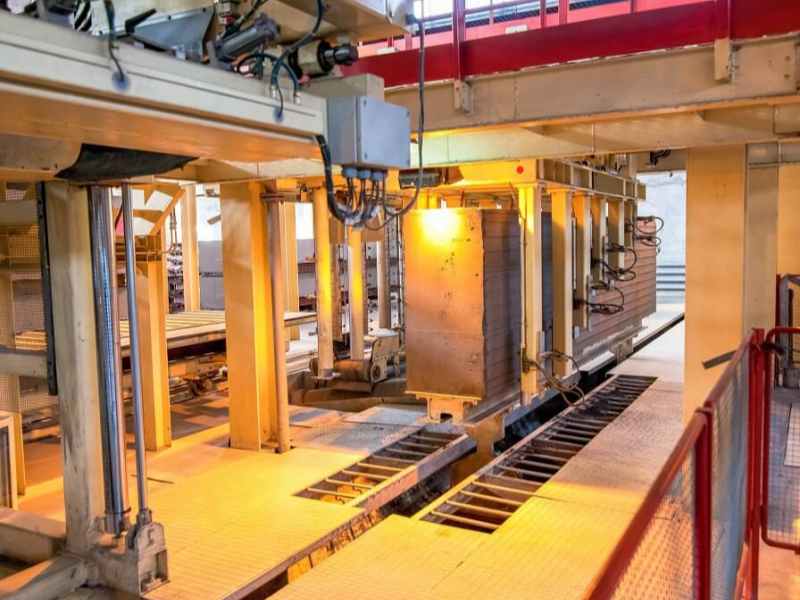
This project was designed for the European market, where energy efficiency and construction standards are strict.
Key features:
- Medium-scale fully automatic production line
- High precision cutting system
- Optimized for multi-product output (blocks + bricks)
- Energy-efficient industrial design
The investment logic here focuses on compliance, efficiency, and long-term stability.

This project was designed for large-scale industrial production and export-oriented supply.
Key features:
- 200,000 m³/year fully automatic line
- High-output continuous production system
- Optimized for cost-per-m³ competitiveness
- Designed for export markets in multiple regions
The focus here is scale, output, and cost efficiency.
How We Structure an AAC EPC Project for Clients
We do not start from equipment selection.
We start from project fundamentals:
- Target market (domestic / export / mixed)
- Raw material conditions (fly ash / sand / hybrid)
- Production capacity target
- Investment budget range
Based on these inputs, we design:
- Full plant layout
- Autoclave configuration
- Automation level
- Production flow system
- Energy optimization plan
This is why two AAC plants with similar capacity can still have completely different cost structures.
Planta de hormigón celular autoclavado relacionada


Start AAC Block Manufacturing Project Cost Evaluation
At EPC level, requesting a price without defining project parameters usually leads to inaccurate results.
If you are evaluating an AAC block manufacturing project, the most effective approach is to start with a technical evaluation rather than a quotation request.
We typically analyze:
- Planned production capacity
- Product types (block / brick / mixed)
- Raw material availability
- Budget range
- Expected payback target
Based on this, we provide:
- Customized plant configuration
- EPC layout proposal
- Investment model estimation
- Production planning recommendation
This is not a standard sales quotation process. It is a project engineering evaluation stage.