
How Much Does a Concrete Block Manufacturing Plant Cost?
| Plant Type | Investment Range |
|---|---|
| A pequeña escala | $20,000 – $100,000 |
| Mediana escala | $100,000 – $500,000 |
| A gran escala | $500,000+ |
That’s the headline. But it doesn’t tell you much unless you understand what sits behind each level.
A $30,000 setup and a $300,000 plant are not variations of the same thing—they are completely different business models.lete, working system rather than a collection of separate components.
Concrete Block Plant Cost by Investment Level
This is where most decisions should start—not with machines, but with your position in the market.
Small-Scale Concrete Block Plant Cost (Entry Level)
Investment: $20,000 – $100,000
This is where most first-time investors begin.
Typical setup:
- Manual or semi-automatic block machine
- Basic mixer
- Open yard curing
- Limited molds
You’re not building a factory here—you’re setting up a production yard.
Where it works:
- Local housing demand
- Rural or developing regions
- Areas with low competition
Where it fails:
- When you try to scale too fast
- When quality consistency becomes critical
I’ve seen investors start at $40K, reach stable sales in 6 months, then reinvest into better equipment. That’s the right way to approach this level.
Medium-Scale Block Manufacturing Plant Cost
Investment: $100,000 – $500,000
This is the real market.
Configuration usually includes:
- Semi-automatic or entry-level automatic line
- Conveyor systems
- Hydraulic block machines
- Controlled curing area
At this level, you’re no longer just producing—you’re running a business with output targets.
What changes here:
- Production becomes consistent
- Labor cost starts to matter
- Equipment reliability becomes critical
Most of our clients fall into this category. It’s where you can:
- Supply contractors
- Handle repeat orders
- Build distribution channels
Large-Scale Fully Automatic Plant Cost
Investment: $500,000+
Now you’re in industrial territory.
Typical configuration:
- Fully automatic production line
- PLC-controlled system
- Pallet circulation system
- Automated stacking and curing
This is not about making blocks. It’s about:
- Supplying infrastructure projects
- Meeting strict timelines
- Running continuous production
Clients at this level are usually:
- Government contractors
- Large developers
- Industrial investors
Full Concrete Block Manufacturing Plant Cost Breakdown
A lot of people assume machines are the main cost. They are—but not the only one.
Here’s how a typical project budget looks:
| Cost Component | Percentage |
|---|---|
| Maquinaria | 50% – 70% |
| Land & Civil Work | 10% – 20% |
| Installation & Setup | 5% – 10% |
| Labor & Utilities Setup | 5% – 10% |
What this means in practice:
- A $200K plant doesn’t mean $200K in machines
- Civil work can quietly eat your budget if not planned
- Poor layout leads to higher operating costs later
I’ve seen projects where the equipment was fine, but the layout forced unnecessary handling—resulting in higher labor cost every single day.
That kind of mistake doesn’t show up in quotations. It shows up in your margins.
Concrete Block Machine Cost vs Full Plant Cost
This confusion comes up constantly.
People ask:
“Your machine is $50K. Why is the plant $200K?”
Because a machine doesn’t produce blocks on its own.
Machine Cost
- $10,000 – $80,000
- Covers the core forming equipment
Full Plant Cost
- $20,000 – $500,000+
- Includes:
- Material handling
- Mixing system
- Curing area
- Electrical setup
- Installation
You can buy a machine and start small. That’s fine.
But once you want:
- Stable output
- Consistent quality
- Higher volume
You’re building a system, not buying a machine.
Manual vs Semi-Automatic vs Fully Automatic Plant Cost
Automation is where most people either overspend—or hold themselves back.
| Tipo | Coste | Labor | Output Stability |
|---|---|---|---|
| Manual | Low | High | Low |
| Semiautomático | Medio | Medio | Good |
| Totalmente automático | High | Low | Very High |
What actually matters
- Manual systems are flexible but inconsistent
- Semi-automatic systems are the best entry point for scaling
- Fully automatic lines require stable demand to justify
One client in East Africa insisted on a fully automatic line from day one. Technically, everything worked. Financially, it didn’t—because sales volume took time to build.
Automation should follow the market, not lead it.
Real Project Cases of Concrete Block Plant Investment
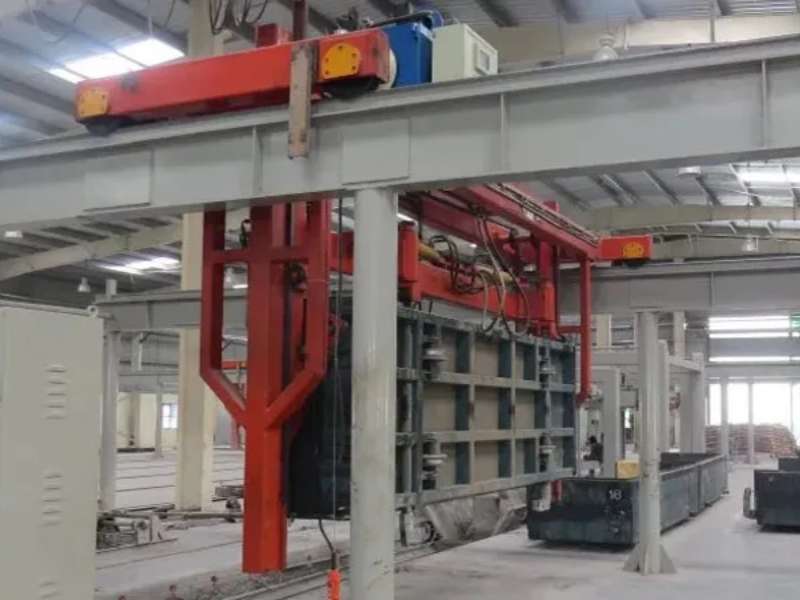
Below are three real AAC plant projects. Each one represents a different investment approach—and a different way to control plant cost.

This project was developed for a building materials company expanding into AAC production in a high-demand urban market.
- Capacidad: 300.000 m³/año
- Configuration: Fully automatic production line
- Market: Large-scale housing and commercial construction
Instead of using a standard configuration, the plant was adjusted to local conditions:
- Sand processing and slurry system optimized for variable raw materials
- Steam system redesigned to reduce energy consumption
- Automation level increased to reduce labor dependency
Result:
- Stable large-scale output
- Improved energy efficiency
- Strong long-term ROI potential
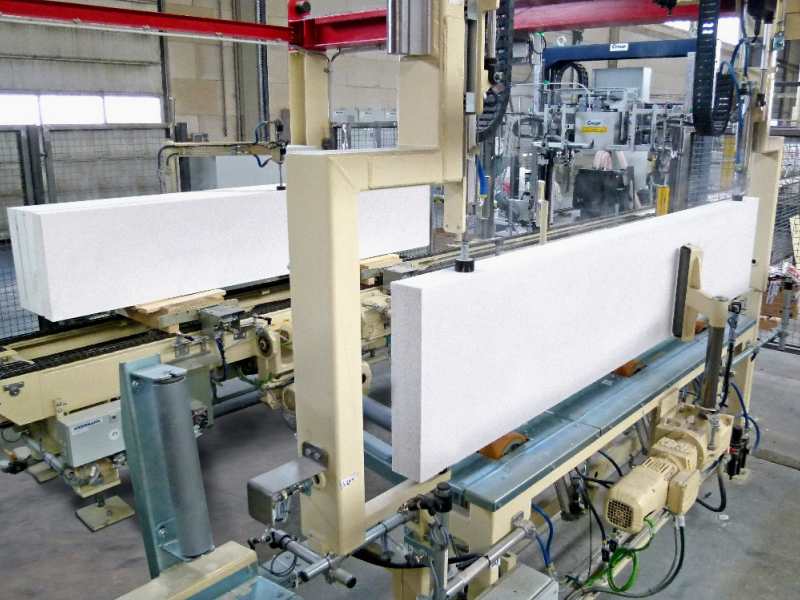
This project represents a more balanced investment approach—focused on controlled cost and scalable growth.
- Capacidad: Medium scale (approx. 100,000–150,000 m³/year)
- Configuration: Semi-automatic to automatic hybrid
- Market: Residential and commercial construction
Key strategy:
- Avoid over-investment in early stage
- Design modular layout for future expansion
- Maintain stable product quality with manageable cost
Result:
- Smooth startup phase
- Flexible expansion capability
- Balanced ROI within a reasonable timeframe
This is a high-end industrial project designed for large infrastructure supply and strict quality standards.
- Capacidad: Large-scale production
- Configuration: Fully automatic system
- Market: Government and infrastructure projects
Key design priorities:
- Continuous production capability
- High-precision cutting system
- Integrated automation for consistent output
Result:
- High production efficiency
- Minimal downtime
- Strong competitiveness in large project supply
Factors That Affect Concrete Block Manufacturing Plant Cost
Even with the same capacity, costs can vary significantly.
Main factors:
- Automation level
- Production capacity
- Raw material type (sand, cement ratio, additives)
- Labor cost in your region
- Power and infrastructure availability
- Supplier experience
Two plants with the same output can differ by 20–30% in cost—purely based on configuration choices.
How to Reduce Concrete Block Plant Investment Cost
Reducing cost doesn’t mean cutting corners. It means avoiding unnecessary spending.
What actually works:
- Start with semi-automatic instead of full automation
- Use modular expansion (add capacity later)
- Avoid custom designs unless necessary
- Focus on layout efficiency
What doesn’t work:
- Buying the cheapest machine
- Ignoring future scalability
- Overbuilding from day one
Good cost control is about timing your investment, not minimizing it.
ROI of Concrete Block Manufacturing Plant
This is where the real decision is made.
A typical scenario:
- Selling price: varies by region
- Profit margin: 20%–40%
- Payback period: 1–3 years
But numbers alone don’t tell the story.
What actually drives ROI:
- Local demand
- Pricing stability
- Distribution network
- Production efficiency
I’ve seen small plants recover investment faster than large ones—because they matched their market better.
How to Choose the Right Concrete Block Plant Supplier
At some point, you’ll start comparing suppliers.
Price is the easiest metric—but not the most important.
Look for:
- Real project experience
- Ability to adapt design to your market
- Installation and training support
- Clear communication on configuration
If a supplier gives you a quote without asking about:
- Your market
- Your capacity target
- Your budget
They’re not designing a solution. They’re selling equipment.
Planta de hormigón celular autoclavado relacionada


Get a Customized Concrete Block Plant Cost Solution
At this stage, you don’t need another generic price range. You need numbers that actually apply to your situation.
The fastest way forward is simple:
Tell us:
- Your target production capacity
- Your country or region
- Your budget range
Based on that, we can help you:
- Define the right plant configuration
- Avoid unnecessary investment
- Plan a layout that works in real production
If you’re serious about starting a concrete block plant, start with the right structure—not just the lowest price.