
A customized 200,000–300,000 m³/Year AAC plant is designed for manufacturers and investors who require industrial-scale aerated concrete block production with high efficiency, stable quality, and long-term operational value. At this scale, production capacity supports regional building material supply, large construction projects, pre-cast concrete factories, and integrated industrial parks.
Selecting the right manufacturer for a 200,000–300,000 m³/Year AAC plant is critical. The right configuration affects efficiency, production cost, block quality, return on investment, and future expansion flexibility.
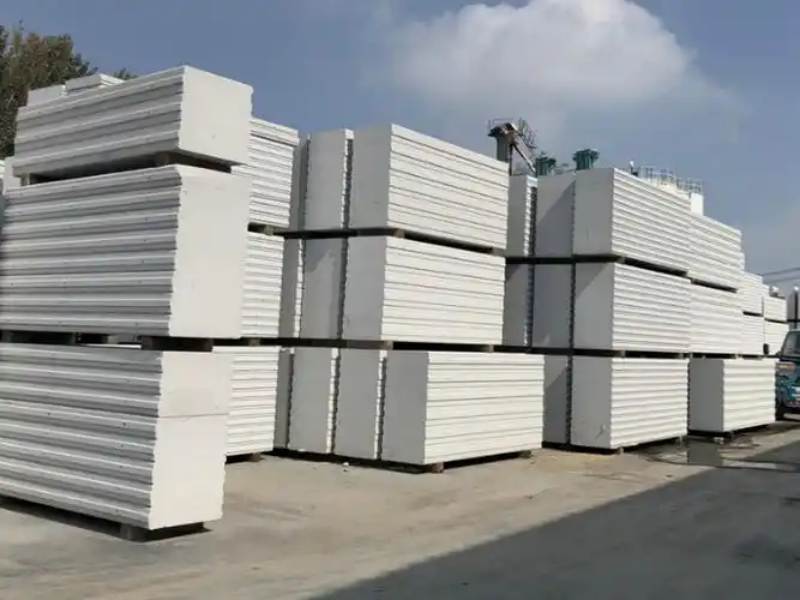

Why Choose a Customized 200,000–300,000 m³/Year AAC Plant?
A 200,000–300,000 m³/Year AAC plant occupies an important place between regional production lines and large industrial facilities. Without customization, a standard configuration can lead to production bottlenecks, quality variance, or unnecessary capital expenditure.
Customized solutions address:
- Local raw material variations (fly ash, sand, tailings, industrial byproducts)
- Automation level matched to labor cost and production targets
- Steam system design optimized for large autoclaves
- Modular layout for easier expansion
- Production quality that meets building standards
Such depth of customization ensures the plant delivers both operational stability and financial predictability.
Capacity and Production Performance
A properly engineered 200,000–300,000 m³/Year AAC plant offers:
| Annual Capacity | Producción diaria | Automation | Steam System |
|---|---|---|---|
| 200,000 m³ | ~650–700 m³/day | Totalmente automático | Multi-autoclave |
| 250,000 m³ | ~800–850 m³/day | High automation | Optimized steam routing |
| 300,000 m³ | ~1,000 m³/day | Centralized PLC | Large-scale steam configuration |
This scale requires careful matching between:
- Cutting system throughput
- Mixing and casting speed
- Steam supply continuity
- Material handling efficiency
The balance between these systems determines your actual daily capacity and production cost per cubic meter.
Core Technical Features of a 200,000–300,000 m³/Year AAC Plant
A high-performance 200,000–300,000 m³/Year AAC plant typically includes:
1. Raw Material System
- Crushing and milling units capable of processing sand, fly ash, and tailings
- Accurate batching systems with weighing precision
2. Mixing and Pouring Section
- High-capacity mixers
- Automatic aluminum dosing system
- Stable slurry distribution to molds
3. Cutting and Pre-curing Section
- Multi-wire vertical and horizontal cutting
- Profile cutting for groove & tongue blocks
- Conveyor-fed pre-curing system
4. Autoclave & Steam System
- Multiple autoclaves sized for large batches
- Boiler and steam recycling system
- Intelligent pressure and temperature control
5. Finished Product Handling
- Automatic block separation
- Stacking and packaging lines
- Palletizing and storage yard integration
Every sub-system in a 200,000–300,000 m³/Year AAC plant must be optimized for continuous production with minimal stoppage.
Automation and Control
At this capacity range, automation matters for both efficiency and cost:
- PLC-based centralized control
- Real-time production monitoring
- Automatic fault detection & reporting
- Remote support capabilities
Automation brings:
- Stable product density and strength
- Lower labor cost per m³
- Predictable production scheduling
- Better quality consistency
Raw Material Adaptation and Formula Optimization
One of the most important factors influencing final AAC block quality is raw material behavior:
- Fly ash fineness
- Lime reactivity
- Sand impurity
- Tailings composition
For a 200,000–300,000 m³/Year AAC plant, laboratory testing and formula adjustment are essential before plant layout and equipment ordering take place. Customized mix designs ensure the following:
- Consistent expansion rate
- Targeted compressive strength
- Controlled density variation
- Reduced cement dosage
Accurate formulas save raw material cost and improve product reliability.
Investment and Operating Cost Considerations
A plant of this size requires significant upfront investment, but the operational cost structure becomes more predictable once the design is finalized:
Typical Investment Range
| Capacidad | Estimated Plant Cost | Total Investment* |
|---|---|---|
| 200,000 m³ | $5.0M – $6.5M | $7.5M – $10.0M |
| 250,000 m³ | $6.0M – $7.5M | $8.8M – $11.5M |
| 300,000 m³ | $7.5M – $9.0M | $10.5M – $13.5M |
*Total investment includes project design, equipment, steam system, electrical system, installation, commissioning, civil works, and working capital.
Operating Cost Breakdown
Operational expenditures typically include:
- Raw materials
- Electricidad
- Vapor
- Labor
- Mantenimiento
For a 200,000–300,000 m³/Year AAC plant, effective steam design and automation reduce unit production costs and improve energy utilization.
Return Expectations
Return on investment is influenced by:
- Local AAC block selling price
- Production efficiency
- Labor costs
- Energy pricing
- Raw material supply
Stable production performance shortens payback time and improves profitability.
Installation, Commissioning, and Support Services
A complete delivery for a 200,000–300,000 m³/Year AAC plant includes:
- Factory layout and civil design
- Raw material testing and formula development
- Equipment manufacturing
- On-site installation and supervision
- Start-up and trial production
- Operator training
- After-sales technical support
Technical support after commissioning is critical for such large-scale production lines to maintain stable block quality and consistent output.
How to Start Your 200,000–300,000 m³/Year AAC Plant Project
Key steps when planning a large AAC plant:
- Raw Material Evaluation:
Submit samples for chemical and fineness testing. - Market Demand Assessment:
Analyze local construction demand and pricing trends. - Land and Utility Planning:
Determine site layout, steam system, water and power supply. - Technical Configuration:
Define capacity, automation level, equipment list. - Investment Planning:
Finalize budget and financing strategy.
Early engagement with experienced manufacturers ensures technical risks are addressed before ordering equipment and starting construction.
Case Example of a High-Capacity AAC Plant
One client upgraded an existing facility to a 250,000 m³/Year AAC plant. After commissioning:
- Daily output stabilized above 820 m³
- Labor requirements reduced by 35%
- Block compressive strength consistently met specification
- Expansion capacity was built into initial layout
Formula optimization for locally available fly ash improved production quality and reduced raw material cost.

Partner with an Experienced AAC Plant Manufacturer
A customized 200,000–300,000 m³/Year Planta de hormigón celular is a substantial industrial investment. Choosing a manufacturer with deep experience in large-scale AAC plant engineering, raw material adaptation, and overseas installation helps ensure production stability, minimized operating cost, and predictable long-term performance.
If you have raw material samples, target output, and project parameters, technical consultation can help you finalize layout design and equipment configuration tailored to your specific market conditions.


