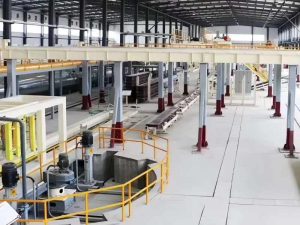
In the AAC industry, purchasing equipment is not the same as building a stable, profitable factory.
Many projects face operational challenges after installation — fluctuating fly ash chemistry, unstable block density, excessive steam consumption, inefficient plant layout, or automation levels that do not align with local labor conditions.
These problems rarely originate from a single machine. They result from production systems designed with generic assumptions instead of real operating data.
A Customized AAC Block Plant is a complete engineering solution. From raw material preparation to autoclaving and packing, every system is designed according to:
- Actual raw material chemical composition
- Local energy structure
- Target production capacity
- Land and layout constraints
- Automation level requirements
- Long-term expansion planning
We design and supply factory-direct Customized AAC Block Plant from 30,000 to 600,000 m³ per year, with complete EPC support and global installation experience.
What “Customized” Really Means in AAC Manufacturing


Customization is not cosmetic configuration changes. It involves full-process engineering optimization:
A. Raw Material Adaptation Engineering
- Fly ash chemical variability correction
- Sand grinding fineness adjustment
- Lime activity balancing
- Aluminum powder reaction control
B. Capacity-Based System Design
- Autoclave quantity calculation
- Mold circulation speed matching
- Cutting line throughput balance
- Steam system capacity verification
C. Layout & Logistics Engineering
- Linear vs U-shaped layouts
- Crane track optimization
- Internal logistics flow design
- Expansion reservation planning
D. Automation Level Customization
- Semi-automatic systems (small scale)
- Fully automatic PLC control
- SCADA + remote diagnostics
- Labor-saving intelligent batching
E. EPC-Level Integrated Design
- Civil foundation drawings
- Steam boiler integration
- Power load planning
- Installation & commissioning
Capacity Solutions: Small, Medium, and Large Plants
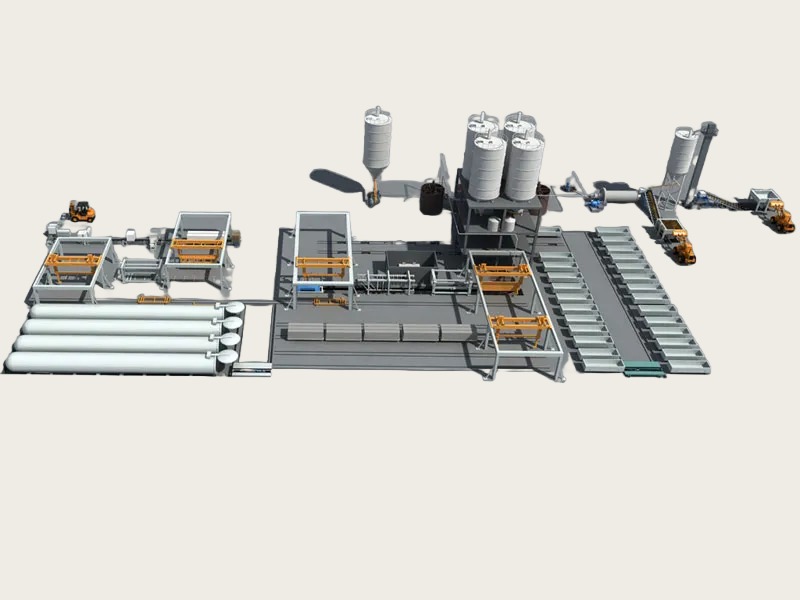
Mini/pequeño AAC Production Line
Capacidad: 30000-100000 m3/año
Autoclave: 1-3 series
Fábrica: unos 4000-10000m2
Tipossemiautomático/totalmente automático
Característicasbaja inversión inicial, gran flexibilidad.
Adecuado para: Empresas de nueva creación o empresas con una inversión limitada y una demanda de mercado reducida.
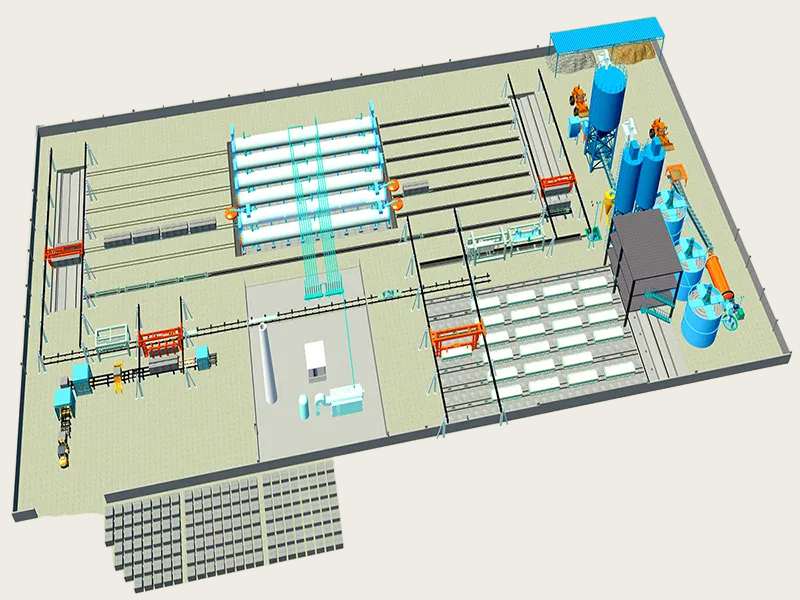
Escala media AAC Production Line
Capacidad: 100000-200000 m3/año
Autoclave: 4-8 series
Fábrica: unos 10000-20000m2
Tipo: totalmente automático
CaracterísticasCapacidad de producción estable, costes controlables, flexibilidad y producción a gran escala.
Adecuado para: Empresas con cierta cuota de mercado y demanda estable.
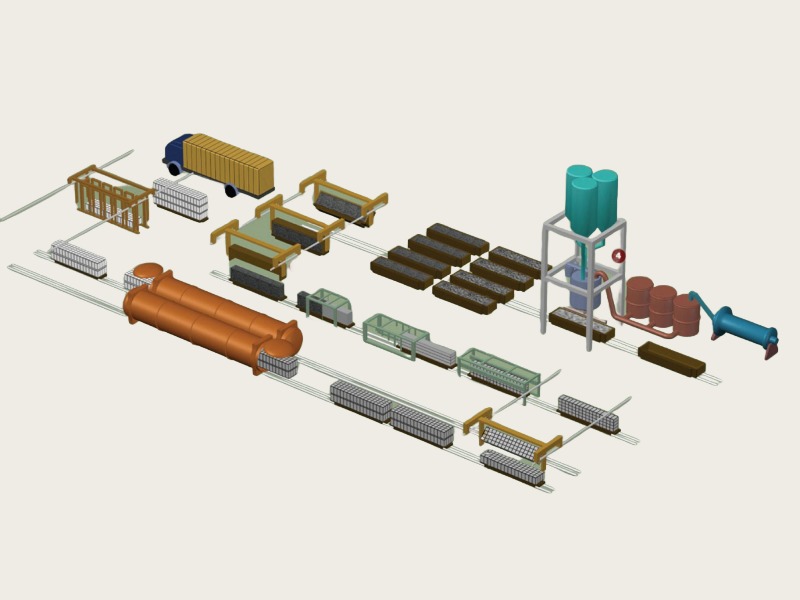
Grande AAC Production Line
Capacidad: 200000-600000 m3/año
Autoclave8-12 series
Fábricamás de 20000m2
Tipo: totalmente automático
CaracterísticasEfecto de escala significativo, alta consistencia del producto.
Adecuado para: producción estandarizada y en serie, y puede responder rápidamente a grandes demandas.
Core Engineering Modules
A Customized AAC Block Plant integrates:
Procesamiento de materias primas
- Ball mill / sand grinding
- Slurry storage tanks
- Intelligent batching system
Pouring & Pre-curing
- Automatic mold circulation
- Temperature-controlled pre-curing room
Sistema de corte
- Vertical cutting
- Horizontal cutting
- Edge trimming
- High-precision wire control
Autoclave
- Steam pressure control
- Condensate recycling
- Energy efficiency optimization
Packing & Handling
- Automatic stacking
- Wrapping system
- Forklift logistics design
Standard AAC Plant vs Customized AAC Plant
What Is the Real Difference?
In AAC manufacturing, the difference is not just equipment configuration — it is engineering depth.
A standard plant delivers machines.
A Customized AAC Block Plant delivers a production system designed for your real operating conditions.
Core Comparison Overview
| Artículo | Standard AAC Plant | Customized AAC Plant |
|---|---|---|
| Design Basis | Generic parameters | Real raw material data |
| Adaptación de materias primas | Limited adjustment | Formula engineered |
| Layout Planning | Template layout | Site-specific optimized |
| Consumo de vapor | Standard level | Optimized energy efficiency |
| Automation | Fixed | Adjustable by labor cost |
| Expansion Planning | Rarely reserved | Future-ready design |
| Long-Term Stability | Acceptable | Highly stable |
1️⃣ Raw Material Adaptability
AAC quality depends heavily on fly ash and lime activity.
- Standard plants assume average material quality.
- Customized plants are designed according to your chemical analysis.
Result:
- More stable density
- Lower reject rate
- Controlled strength consistency
2️⃣ Energy & Steam Efficiency
Steam is one of the largest operating costs.
Customized AAC Block Plant include:
- Steam balance calculation
- Condensate recovery design
- Pipeline pressure optimization
This directly impacts long-term operating cost.
3️⃣ Layout & Logistics Efficiency
Standard layouts may cause:
- Internal transport bottlenecks
- Crane congestion
- Limited expansion space
Customized layouts:
- Optimize internal logistics flow
- Reduce material handling time
- Reserve space for capacity expansion
4️⃣ Investment Perspective
Standard plant:
- Lower initial entry cost
- Possible later modification expenses
Customized AAC Block Plant:
- Engineering investment upfront
- Lower long-term correction cost
- Predictable operational performance
When to Choose Which?
Standard Plant is suitable if:
• Raw materials are stable
• Budget is very limited
• Short-term production focus
Customized AAC Block Plant is recommended if:
• Raw material quality varies
• Energy cost is high
• Market demands consistent product quality
• Long-term expansion is planned
Layout Engineering & Workflow Optimization
Efficient layout determines long-term profitability.
We provide:
- Full plant 2D layout drawings
- 3D plant simulation
- Logistics path analysis
- Crane load calculation
- Future expansion planning
Investment Overview & ROI Considerations
Investment Range
| Tamaño de la planta | Capacidad | Investment |
|---|---|---|
| Pequeño | 30k–100k m³ | $60,000 – $300,000 |
| Medio | 100k–200k m³ | $200,000 – $1,000,000 |
| Grande | 200k–400k m³ | $1,000,000 – $3,000,000 |
Major Cost Factors:
- Autoclave quantity
- Automation level
- Raw material preparation system
- Steam boiler system
- Civil construction scope
Operational Efficiency Drivers:
- Steam consumption per m³
- Block density control stability
- Labor productivity
- Equipment uptime rate
Why Work With Us

Factory Direct Manufacturing: No trading layers. Transparent cost structure.
Extensive Export Experience: Delivered to multiple international markets with different raw materials and standards.
Overseas Installation Teams: Experienced engineers for:
- Installation supervision
- Commissioning
- Staff training
Automation Expertise: Advanced PLC and control systems with stable long-term performance.
Long-Term Spare Parts Support: Stable supply chain for critical components.
Who We Work With
- New AAC investors
- Traditional clay brick factories upgrading
- Government housing authorities
- EPC contractors
- Building material groups
- Global distributors
Final Perspective
A customized Planta de bloques de hormigón celular is a long-term industrial investment.
The right engineering approach determines:
- Product consistency
- Energy efficiency
- Operational stability
- Market competitiveness
- Expansion flexibility
We do not sell generic production lines. We engineer production systems adapted to real operating conditions.
If you are planning a new AAC project or upgrading an existing facility, we can provide:
- Technical feasibility analysis
- Raw material testing guidance
- Budget estimation
- Layout planning
- EPC execution roadmap
Request a Technical Proposal
Contact us with:
- Raw material type
- Target capacity
- Land size
- Automation preference
- Local energy conditions
Our engineering team will prepare a tailored plant solution and investment estimate.