
What Is an AAC Block Project?
An AAC block project is not just about buying machinery—it is a complete industrial setup that turns raw materials into finished building products at scale.
A typical project includes:
- Engineering design and planning
- Equipment manufacturing and supply
- Civil construction and utilities
- Installation, commissioning, and startup
Most investors today prefer an EPC model (Engineering, Procurement, Construction). This approach reduces coordination risk and ensures the plant is delivered as a complete, working system rather than a collection of separate components.
Total Project Cost Breakdown (EPC)
To understand where your budget goes, it’s useful to break the project into three core stages.
Design (Engineering) — 5%–10%
This phase defines how efficiently your plant will operate.
It includes:
- Factory layout planning
- Production flow design
- Utility system integration
A well-designed plant minimizes material handling, reduces construction waste, and improves long-term operating efficiency. Poor design, on the other hand, often leads to higher costs later—not just during construction, but throughout operation.
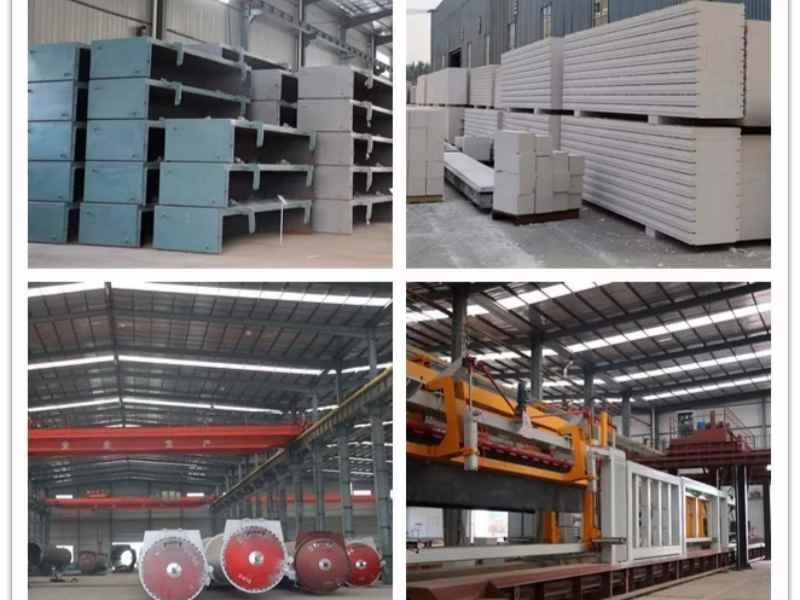
Procurement (Equipment) — 50%–60%
This is the largest portion of the investment and determines your plant’s core performance.
Typical scope:
- Raw material batching and mixing system
- Cutting machine
- Autoclave system
- Automation and control system
At this stage, differences between suppliers become very clear. Equipment quality, integration level, and automation directly affect:
- production stability
- energy consumption
- product quality
Construction (Civil + Installation) — 30%–40%
This stage turns the plan into a working factory.
It includes:
- Workshop construction
- Equipment foundation and installation
- Boiler, power, and water systems
Construction cost varies significantly by country, depending on labor, materials, and infrastructure conditions.
Project Cost by Scale
Capacity is the main factor that determines total project investment.
| Project Scale | Capacity (m³/year) | Investment Range (USD) |
|---|---|---|
| Small | 30,000 – 100,000 | $300,000 – $1,000,000 |
| Medium | 100,000 – 200,000 | $1,000,000 – $2,000,000 |
| Large | 200,000 – 600,000+ | $2,000,000 – $3,500,000+ |
Larger plants require more capital upfront, but they significantly reduce cost per cubic meter, which is critical in competitive markets.
Project Case Study
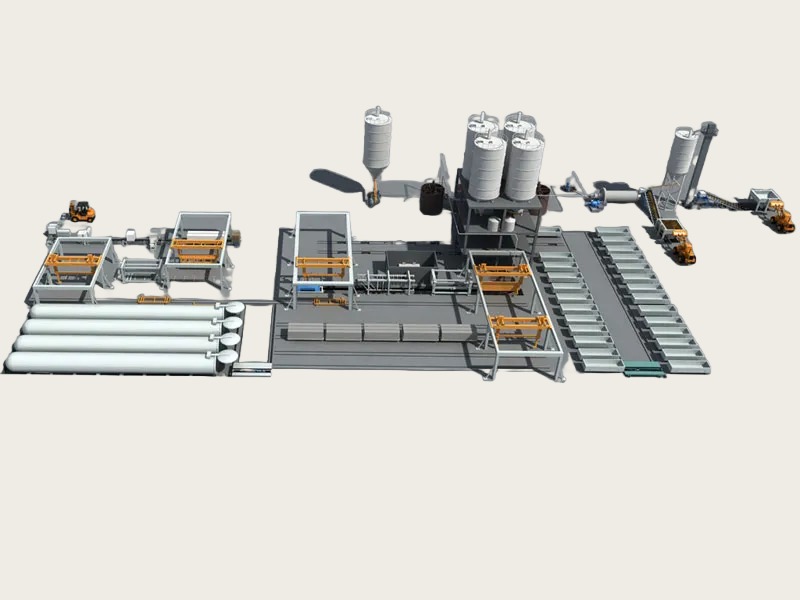
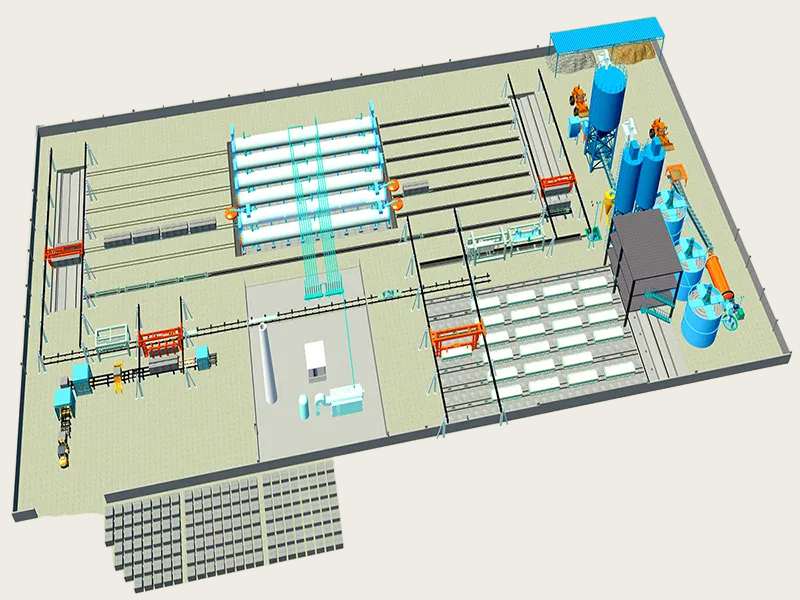
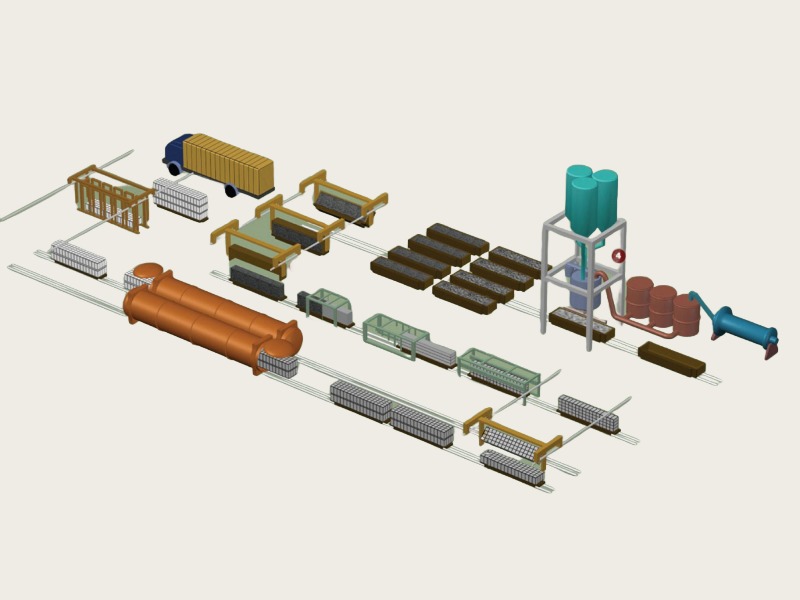
Real projects show how EPC investment decisions translate into actual production performance.

- Capacity: 75,000 m³/year
- Project Type: Mini to medium-scale AAC plant
- Scope: Full equipment supply + layout design + installation + training
- Project Timeline: ~75 days total (manufacturing to commissioning)
This project was designed for a local building materials supplier entering the AAC market. The client prioritized:
- moderate investment
- fast installation
- stable production
The plant achieved:
- daily output of 220–250 m³
- 97% product qualification rate
- 20% lower energy consumption than typical small plants
This type of project is typical in Southeast Asia, where investors want quick market entry with controlled risk.
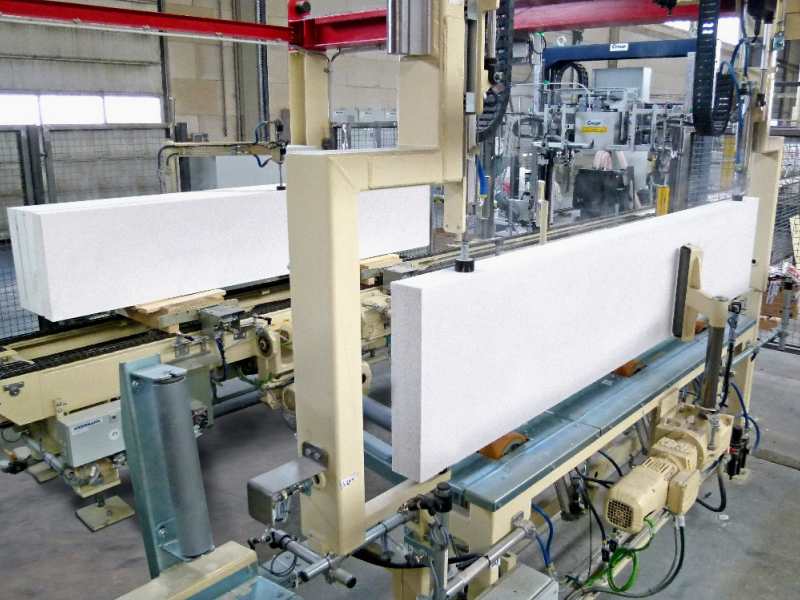
- Capacity: ~100,000–150,000 m³/year (typical configuration)
- Project Type: Medium-scale AAC plant
- Scope: Equipment export + installation support + technical training
- Key Focus: Stable production in challenging climate conditions
This project required adaptation to:
- colder climate
- different raw material composition
- regional construction standards
The plant was designed with:
- enhanced autoclave insulation
- optimized steam system
- stable automation control
Projects like this highlight the importance of custom engineering, not just equipment supply. The ability to adapt to local conditions is often what determines long-term success.
Price Reference by Capacity
For quick evaluation, the following benchmark is widely used in real projects:
| Capacity | Investment |
|---|---|
| 50,000 m³ | $300,000 – $600,000 |
| 100,000 m³ | $600,000 – $1.2M |
| 200,000 m³ | $1.2M – $2.5M |
This reflects typical EPC project investment under standard configurations.
How to Reduce AAC Block Project Cost
Reducing cost is not about cutting corners—it’s about making the right decisions early.
Use Local Raw Materials
Sourcing fly ash or sand locally can significantly reduce:
- transportation cost
- production cost
- long-term operational risk
Start with a Semi-Automatic Line
For many first-time investors:
- lower upfront investment
- easier operation
- faster payback
Automation can always be upgraded later.
Adopt a Phased Investment Strategy
Instead of building a large plant immediately:
- start with 50,000–75,000 m³
- expand to 100,000+ m³ later
This reduces financial pressure and improves cash flow.
Optimize Plant Design
A well-designed layout reduces:
- unnecessary construction cost
- material handling distance
- labor inefficiency
Design decisions made early often have the biggest impact on total project cost.
Related Autoclaved Aerated Concrete Plant




FAQ
The total cost of an AAC block project typically ranges from $300,000 to $2,500,000+, depending on capacity, automation level, and project scope.
- 50,000 m³/year: $300,000 – $600,000
- 100,000 m³/year: $600,000 – $1,200,000
- 200,000 m³/year: $1,200,000 – $2,500,000
This includes design, equipment, construction, and installation under an EPC model.
An EPC (Engineering, Procurement, Construction) AAC project typically includes:
- Engineering design and plant layout
- Equipment manufacturing and supply
- Civil construction and utilities
- Installation, commissioning, and training
This approach ensures the plant is delivered as a complete, operational system.
The total project timeline usually ranges from:
- 3–6 months for small to medium plants
- 6–10 months for large-scale projects
This includes equipment production, shipping, installation, and commissioning.
The most important cost drivers include:
- Production capacity
- Automation level
- Raw material type (fly ash or sand)
- Project location (labor, land, logistics)
Among these, capacity and equipment configuration have the greatest influence on total investment.
Yes, many projects are designed with future expansion in mind.
A common approach is to:
- Start with a 50,000–75,000 m³/year plant
- Expand to 100,000 m³/year or more as demand grows
This phased strategy reduces initial investment risk and improves cash flow flexibility.
Start Your AAC Block Project with a Reliable Manufacturer
If you are planning an AAC block project, the most important step is not just estimating the cost—it’s choosing the right solution from the beginning.
With the right planning, equipment, and technical support, an AAC plant can deliver:
- Stable production
- Consistent product quality
- Strong long-term returns
If you already have a project idea, you can share a few basic details with us, such as:
- Target capacity
- Raw material type
- Project location
Based on this, we can provide a customized solution and accurate quotation tailored to your market conditions.
A well-designed AAC project doesn’t just reduce costs—it helps you enter the market faster and operate with confidence.
Send us your requirements today, and get a tailored AAC plant proposal.