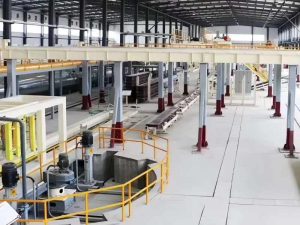
What Is an AAC Blocks Manufacturing Machine?
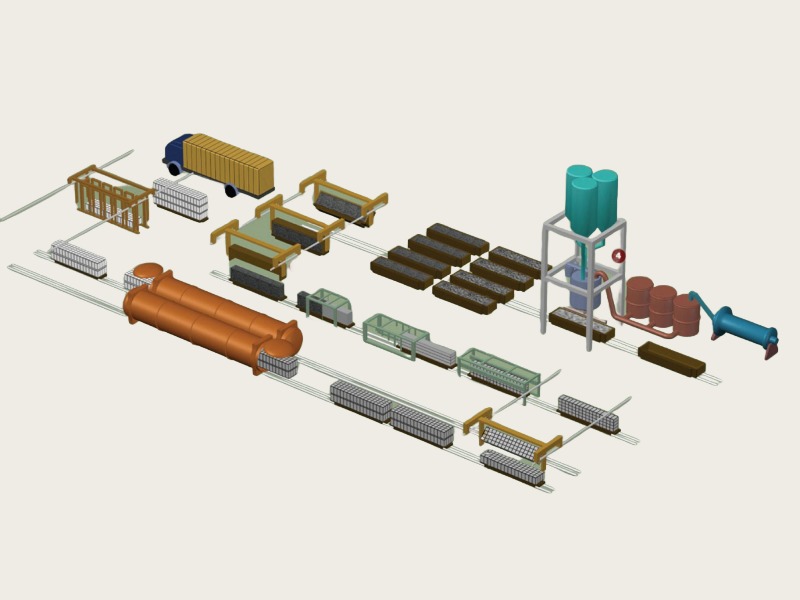
An AAC blocks manufacturing machine refers to the individual equipment units used within an AAC production line, covering mixing, casting, cutting, and curing processes.
In practice, it can mean anything from a single cutting machine to a full integrated production line.

Are You Looking for a Single Machine or a Full Line?
This is the most important question in the early stage.
| Option | What It Means | Suitable For |
|---|---|---|
| Single machine | Individual equipment (e.g., cutter, mixer) | Existing plant upgrade |
| Full line | Complete AAC production system | New factory investment |
We often see new investors underestimate this difference. Buying a single machine without system compatibility usually leads to integration issues later.
Main Types of AAC Machines
1. Raw Material Handling Equipment
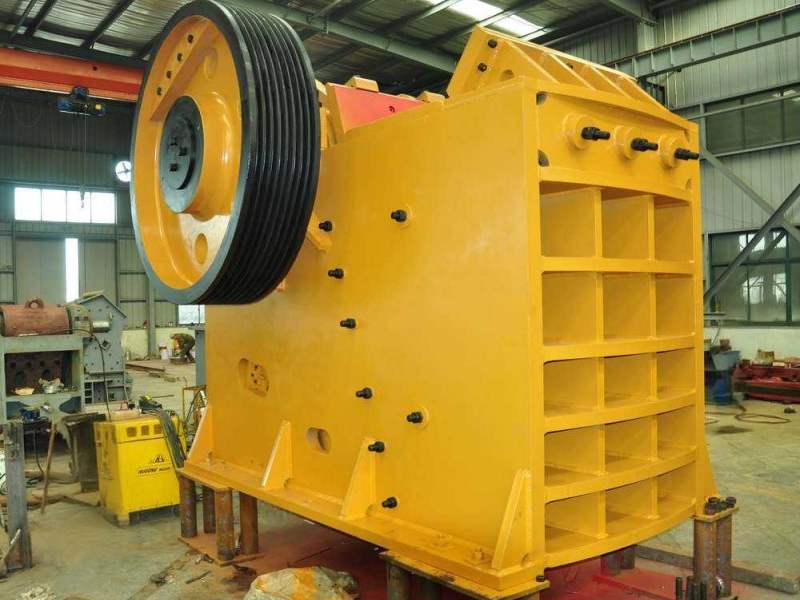
Crusher: Crushes raw materials such as sand and lime to the specified particle size. Jaw crushers are used for hard materials, and impact crushers are used for fine crushing.
Screener: Uses vibratory screening to remove impurities and make sure raw material particles are uniform in size.
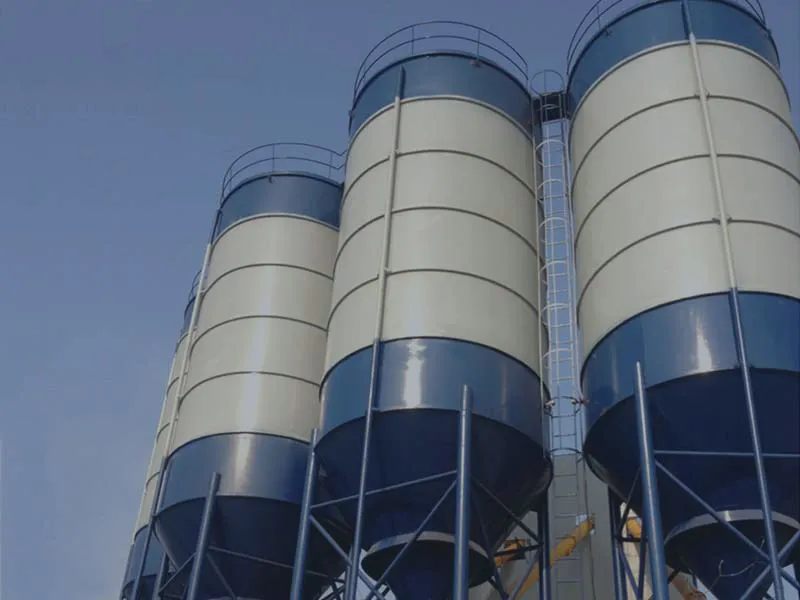
Storage Silo: Stores pre-treated raw materials. It has a level meter and dust removal device to keep production running continuously and meet environmental protection requirements.
Weighing Scale: Belt or spiral scales accurately measure raw material quantities to minimize formulation errors.
2. Mixing and Foaming Equipment
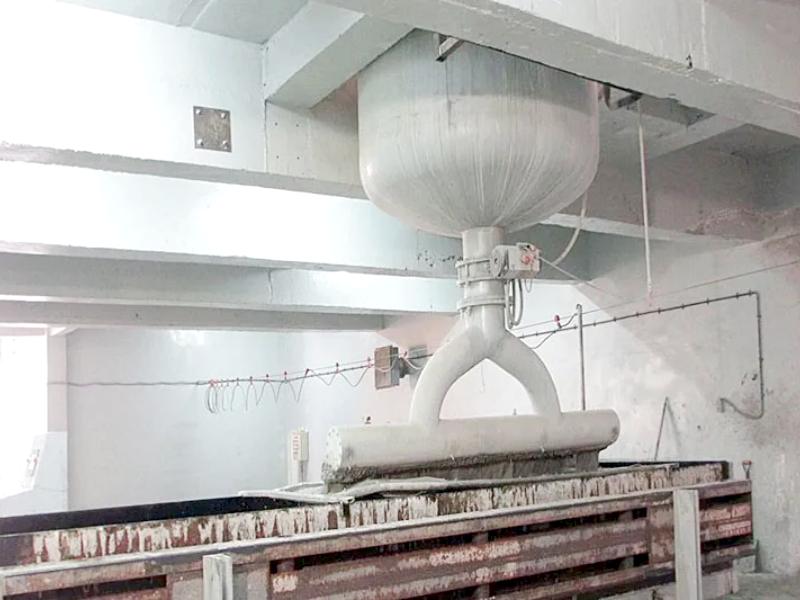

Forced Mixer: Mixes solid raw materials and water at high speed to form a uniform slurry, laying the foundation for foaming.
Aluminum Powder Mixing Tank: Mixes aluminum powder suspension at low speed to prevent sedimentation and ensure uniform dispersion.
Foaming System: Aluminum powder suspension is injected in proportion to react with the slurry to generate bubbles, which are then linked to the mixer for automated control.
3. Casting and Forming Equipment
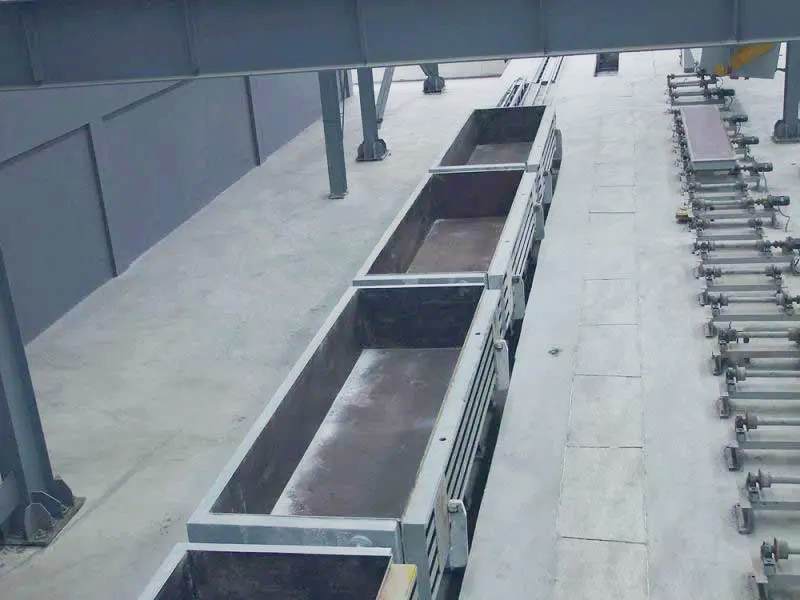
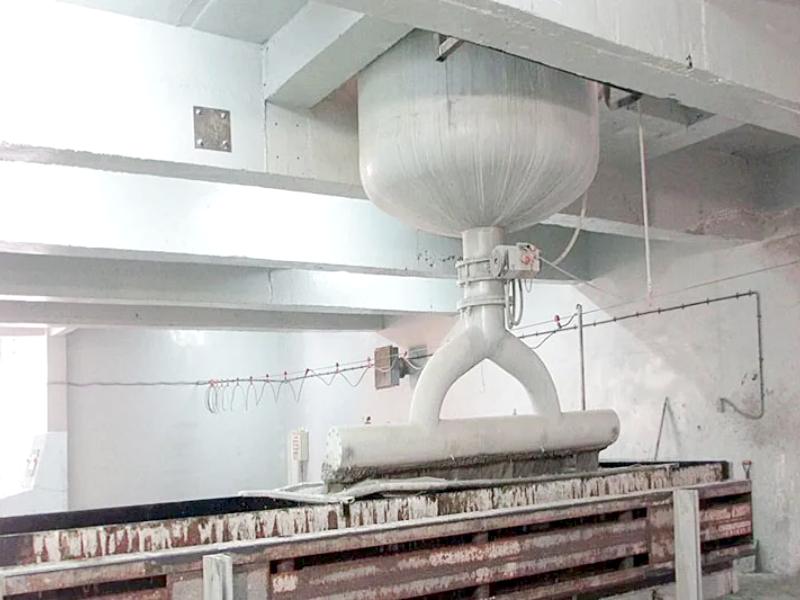
Molds: Custom-made high-strength steel with a special surface treatment, adjustable in size to accommodate different product specifications.
Casting Machines: Precisely control the slurry injection volume, and some are equipped with automatic travel to prevent material shortages or overflow.
Curing Chamber: A constant temperature and humidity environment ensures slurry aeration and initial setting, resulting in a uniform porous structure.
4. Cutting Equipment
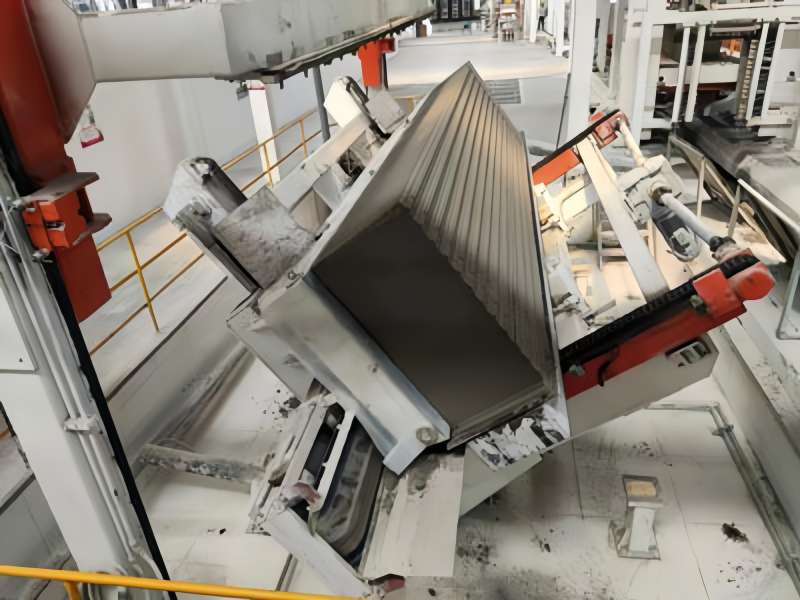
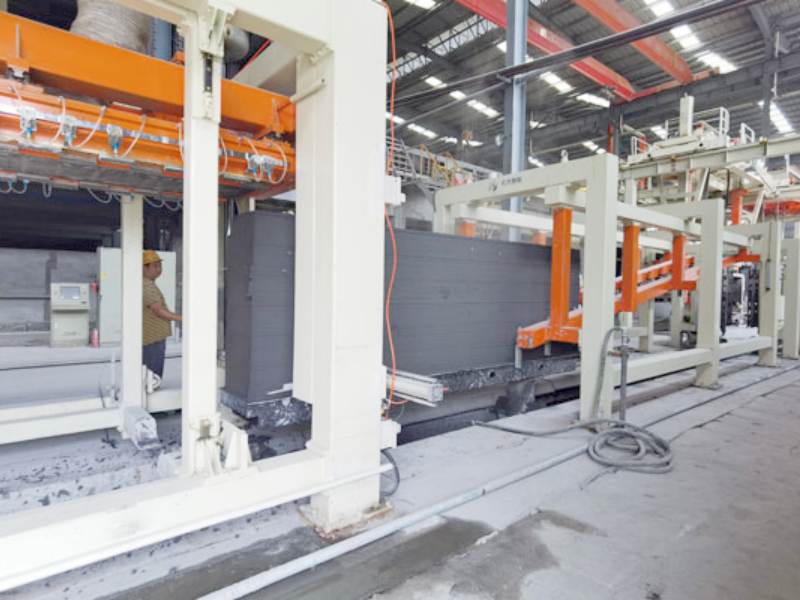
Turning Table: Driven by hydraulics, it rotates molds and blanks smoothly—this makes demolding and cutting easier.
Wire Saw: Uses multiple sets of high-strength steel wires for high-speed cutting. A CNC system ensures cutting accuracy down to the millimeter. For large wire saw equipment, it can do continuous cutting at multiple stations.
5. Autoclave Curing Equipment
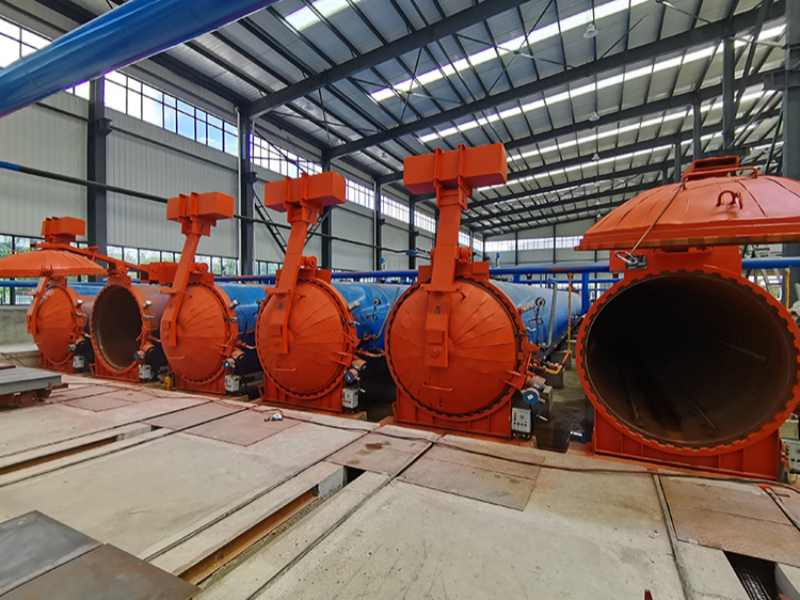

Autoclaves: Large pressure vessels cure blanks at temperatures of 180–200°C and pressures of 10–12 bar, forming high-strength calcium silicate hydrates. Equipped with safety interlocks.
6. Auxiliary Equipment
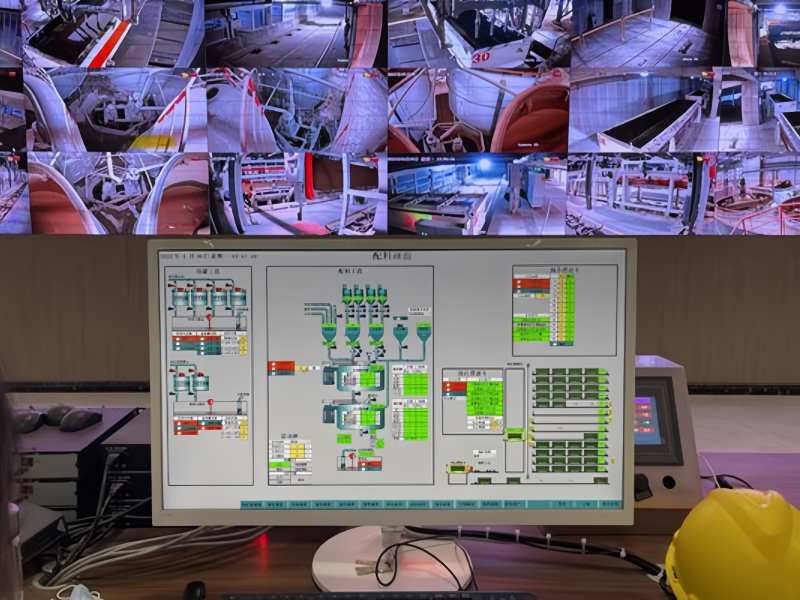

Steam Boilers: Supply stable steam for autoclaves and curing chambers, with various heating options available.
Air compressor: Provides compressed air for pneumatic equipment, ensuring valves, clamps, and other devices work properly.
Conveyor belt system: Transports materials through the entire process. Uses belt or chain conveyors (chosen based on material needs) for automated, continuous movement.
Control system: PLC or DCS systems monitor and adjust production parameters in real time. They record data for management and traceability, and help resolve issues promptly.
Capabilities of AAC Blocks Manufacturing Machine
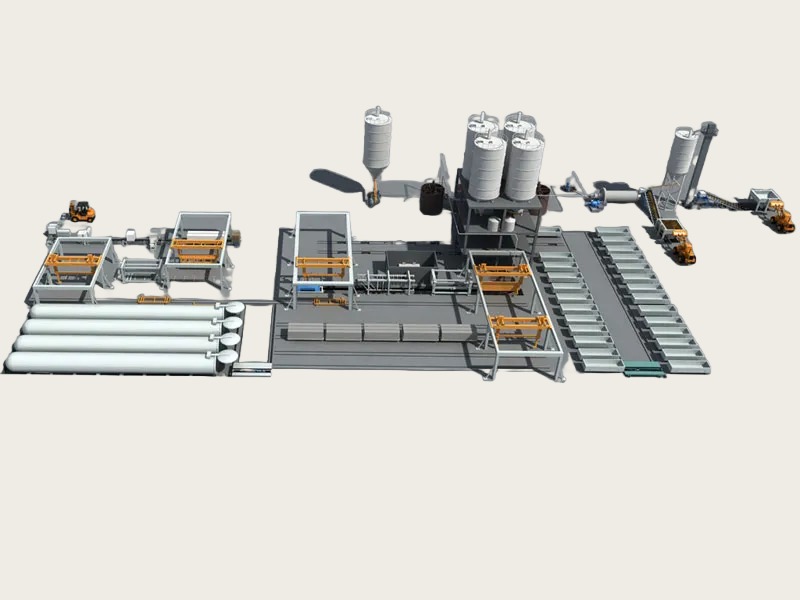
Mini/small AAC Production Line
Capacity: 30000-100000 m3/year
Autoclave: 1-3 sets
Factory: about 4000-10000m2
Types: semi-automatic/ fully automatic
Features: low initial investment, high flexibility.
Suitable for: Start-ups or enterprises with limited investment and small market demand.
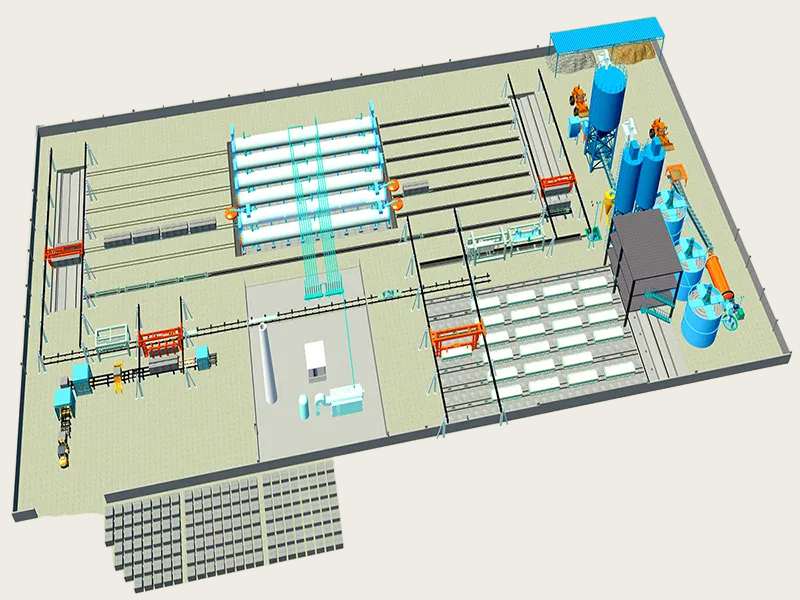
Medium- Scale AAC Production Line
Capacity: 100000-200000 m3/year
Autoclave: 4-8 sets
Factory: about 10000-20000m2
Type: fully automatic
Features: stable production capacity, controllable costs, and flexibility and large-scale production.
Suitable for: Enterprises with certain market share and stable demand.
Technical Parameters That Actually Matter
When comparing machines, most clients focus on price first.
But in real operation, these parameters matter more:
| Parameter | Why It Matters |
|---|---|
| Cutting accuracy | Affects block size consistency |
| Mixing uniformity | Impacts strength and density |
| Autoclave pressure stability | Determines final quality |
| Cycle time | Directly affects capacity |
| Automation level | Impacts labor and stability |
We’ve seen plants with similar investment perform very differently simply because of these parameters.
Manual vs Semi-Auto vs Fully Automatic
This is where investment strategy becomes clear.
| Type | Labor Requirement | Stability | Investment Level |
|---|---|---|---|
| Manual | High | Low | Low |
| Semi-automatic | Medium | Medium | Medium |
| Fully automatic | Low | High | High |
From experience, manual systems only work in very small or experimental setups. For commercial production, semi-auto is the minimum baseline.
Cost vs Output: What Makes Financial Sense?
AAC investment should always be evaluated through output efficiency, not just purchase cost.
Example ROI Comparison
| Setup Type | Investment | Daily Output | Operational Stability |
|---|---|---|---|
| Low-cost system | Lower | Unstable | High risk |
| Optimized system | Higher | Stable | Predictable |
A cheaper system often results in:
- Higher defect rate
- More labor dependency
- Lower long-term profit
In most cases, the “cheapest option” becomes the most expensive over time.
Common Mistakes When Buying AAC Machines
From our project experience, the same mistakes appear repeatedly:
- Buying equipment based only on price
- Ignoring system compatibility
- Underestimating autoclave requirements
- Overlooking cutting precision
- No layout planning before purchase
The biggest issue is not technical—it’s decision sequencing.
Our Real Case
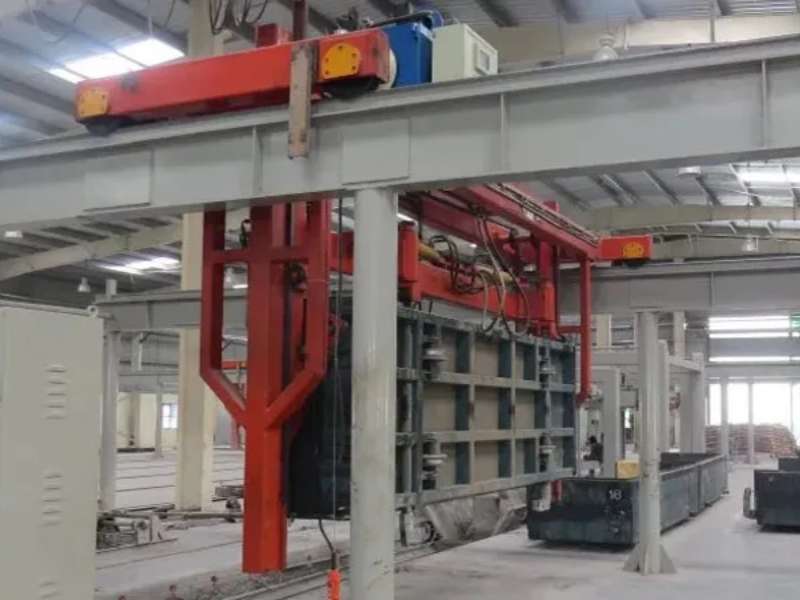
In this project, the client initially purchased partial equipment from different suppliers to reduce upfront cost.
After installation, several issues appeared:
- Cutting system was not aligned with mold design
- Material flow was inconsistent
- Production cycle delays occurred
After technical review, the client restructured the system with a unified configuration.
Result after adjustment:
- Better overall output consistency
- Stable production achieved
- Significant reduction in downtime

This project started with a conservative equipment plan.
However, after reviewing local market conditions:
- Demand growth was faster than expected
- Supply gap was significant
We recommended upgrading to a more integrated production line instead of a basic setup.
Final outcome:
- Faster production ramp-up
- Better market coverage
- Reduced need for early expansion
Talk to Our Engineers Before You Buy
Before purchasing any AAC equipment, the most important step is not comparing prices—it is confirming your system design.
When you contact us, it helps if you provide:
- Target capacity
- Raw material type (fly ash or sand)
- Project location
- Investment range
Based on this, we can help you define:
- Suitable machine configuration
- Production layout
- Investment structure
- ROI expectation
This avoids most of the costly mistakes we see in early-stage projects.
FAQs
Q1: Can I buy only one AAC machine and expand later?
Yes, but only if expansion is planned in the initial layout design.
Q2: What is the most important machine in AAC production?
Cutting system and autoclave system are the most critical for quality stability.
Q3: Is fully automatic always better?
Not always. It depends on labor cost, market size, and investment strategy.
Q4: How long does installation take?
Typically 6–10 months depending on plant size and configuration.
Q5: Do you provide full production line design?
Yes, we design based on raw materials, capacity, and market conditions.