What Is an AAC Block Unit?
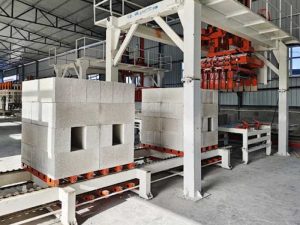
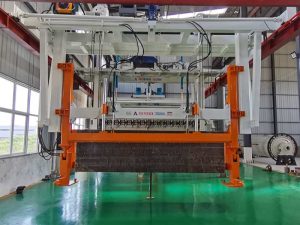
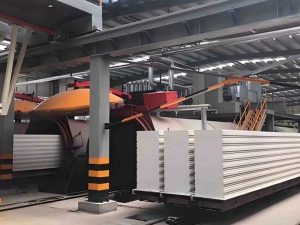
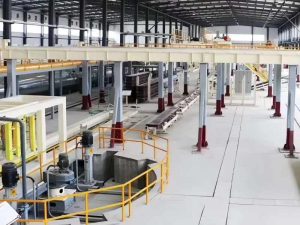
An AAC Block Unit is a compact, modular AAC block production system designed for small to medium-scale manufacturing. Unlike a complete AAC block manufacturing plant, which is built for high output and continuous operation, an AAC Block Unit focuses on controlled investment, simplified layout, and flexible expansion.
In practice, an AAC Block Unit includes the essential processes needed to produce standard AAC blocks, but with:
- Reduced automation level
- Smaller daily output
- Lower infrastructure requirements
This concept is especially attractive for first-time AAC investors, regional building material suppliers, or companies transitioning from traditional blocks to AAC products.

Why Many Investors Choose an AAC Block Unit?
1. Lower Entry Barrier
A full AAC block plant requires significant capital, land, utilities, and technical management. An AAC Block Unit reduces:
- Initial equipment investment
- Installation complexity
- Operating pressure during the early market development stage
2. Market-Driven Flexibility
In many countries, AAC demand is growing but still regional or project-based. An AAC Block Unit allows manufacturers to:
- Test the local AAC market
- Supply nearby construction projects
- Adjust production volume based on demand
3. Easier Operation and Management
Compared with large AAC production lines, AAC Block Units:
- Require fewer operators
- Have simpler control systems
- Are easier to maintain for local technical teams
Typical Production Capacity of an AAC Block Unit
AAC Block Units are commonly designed for small to medium output, depending on investment goals and market size.
Typical configurations include:
- 20–50 m³/day AAC Block Unit – entry-level production
- 50–100 m³/day AAC Block Unit – stable regional supply
How Annual Output Is Calculated
For example, a 50 m³/day AAC Block Unit operating:
- 300 working days/year
- Single shift operation
Annual output ≈ 15,000 m³/year
Actual production depends on:
- Automation level
- Steam curing conditions
- Operator experience
- Raw material consistency
Core Equipment Included in an AAC Block Unit
A standard AAC Block Unit typically includes the following modules:
Vorbereitung des Rohmaterials
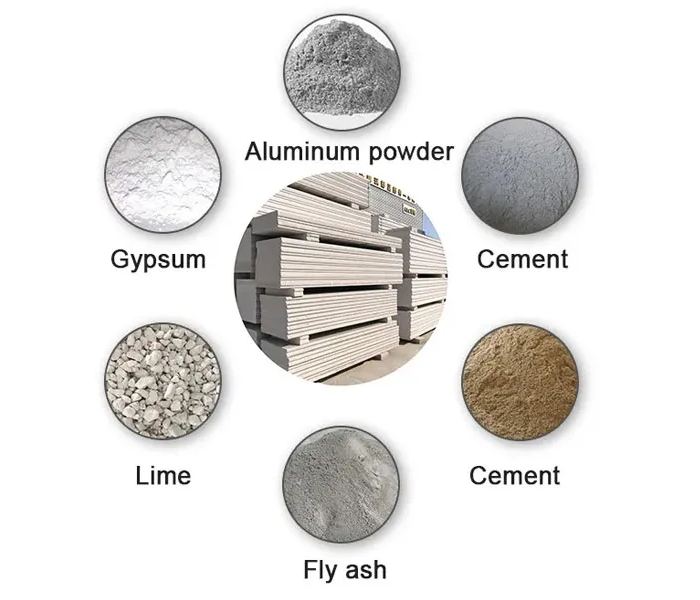
- Cement, lime, fly ash or sand handling
- Crushing or grinding (if required)
Batching and Mixing System
- Accurate weighing system
- High-efficiency AAC slurry mixer
Casting and Pre-Curing
- Molds suitable for small-batch production
- Controlled pre-curing environment
Schneidesystem
- Horizontal and vertical cutting machines
- Designed for stable block size accuracy
Autoclaving (Optional or Modular)
- Autoclave system can be:
- Fully included
- Shared with future expansion
- Added later as production grows
Electrical Control System
- Semi-automatic PLC control
- Manual-friendly operation interface
This modular structure makes the AAC Block Unit easier to transport, install, and upgrade.
Automation Level and Labor Requirement
Most AAC Block Units are halbautomatisch, which balances cost and productivity.
Typical manpower requirement:
- 6–10 workers per shift
- 1–2 technicians for quality and equipment supervision
Compared with traditional solid block production, AAC Block Units:
- Reduce manual handling
- Improve product consistency
- Lower long-term labor dependency
Investment Cost and Return Logic
What Determines AAC Block Unit Price?
AAC Block Unit pricing depends on:
- Daily capacity
- Automation level
- Local voltage and standards
- Autoclave configuration
- Optional auxiliary systems
Rather than a fixed number, it is more realistic to view AAC Block Unit investment as a scalable cost structure, not a one-time rigid expense.
Return on Investment (ROI)
For many markets:
- AAC blocks sell at a higher unit price than clay bricks
- Lightweight properties reduce transportation and construction costs
- Energy-saving regulations increase AAC adoption
With stable sales channels, many AAC Block Units reach cost recovery within a reasonable operating cycle, especially when serving government or housing projects.
Where AAC Block Units Work Best
AAC Block Units are particularly suitable for:
- Africa
- South Asia
- Southeast Asia
- Middle East secondary cities
Key local considerations:
- Availability of cement, lime, fly ash, or sand
- Stable electricity and steam supply
- Growing demand for energy-efficient buildings
- Supportive or tightening construction regulations
Expansion and Upgrade Possibilities
One major advantage of an AAC Block Unit is future scalability.
Typical upgrade paths include:
- Increasing mold quantity
- Adding automatic handling systems
- Expanding autoclave capacity
- Converting the unit into a full AAC block production line
This protects early investment and avoids equipment redundancy.
Why Choose Us as Your AAC Block Unit Supplier
With over 10 years of experience in AAC block manufacturing equipment, we focus on:
- Practical production solutions, not overdesigned systems
- Export-proven AAC Block Units
- Custom layout based on your land and utilities
- Technical support from installation to stable production
We understand that for many clients, AAC Block Unit investment is a business decision, not just an equipment purchase.
Andere Hot-sale Block Manufacturing Plant
| Jährliche Produktion | Preis (USD) | Kern-Konfiguration |
|---|---|---|
| 100,000 m³ | 1.5-1.9 M | Schneiden im Luftstrom, 3×31 m Autoklaven |
| 150,000 m³ | 2.1-2.6 M | Palettierroboter, 4×31 m Autoklaven |
| 200,000 m³ | 2.8-3.5 M | Sechsseitiges Schneiden, 4×37 m Autoklaven |
| 300,000 m³ | 4.0-4.8 M | Zwei Schneidlinien, 6×37 m große Autoklaven |
| 400,000 m³ | 5.5-6.5 M | Vollautomatische Autoklaven mit Luftumwälzung, 8×37 m und mehr |
Take the Next Step
If you are:
- Planning to enter AAC block manufacturing with controlled risk
- Looking for a small or medium AAC block unit
- Considering future expansion without rebuilding from zero
You are welcome to contact us with:
- Target daily capacity
- Project location
- Raw material conditions
- Budget range
Our engineers will help you evaluate whether an AAC Block Unit is the right starting point—and design a solution that fits both your market and long-term plan.