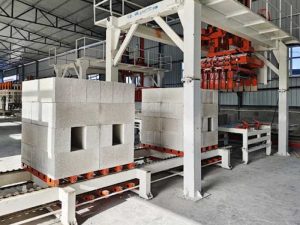
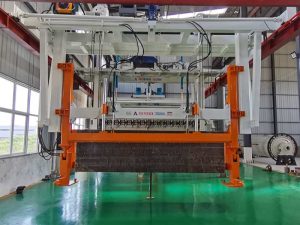
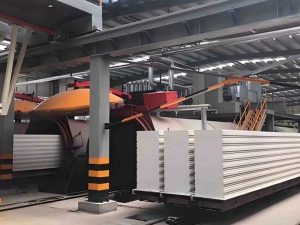
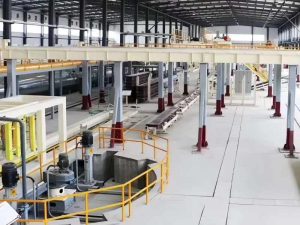
What Is Medium Flyash AAC Block Plant Manufacture?
Medium flyash AAC block plant manufacture refers to the engineering, production, and installation of an AAC block manufacturing system that:
- Uses fly ash as the primary siliceous raw material
- Operates within a typical capacity range of 30,000–100,000 m³ per year
- Is designed for continuous, stable, and scalable production
Importantly, manufacturing a plant is not the same as selling standard equipment. True plant manufacture includes:
- Process design based on raw material characteristics
- Equipment configuration matching capacity targets
- Layout planning, installation, and commissioning
This manufacturing-oriented approach significantly reduces operational risks after startup.

Who Should Invest in a Medium Flyash AAC Block Plant?
Medium flyash AAC block plant manufacturing is especially suitable for:
- Medium-scale building material manufacturers
- Investors upgrading from clay brick production
- Operators transitioning from small AAC plants
- Regional suppliers serving city-level construction markets
- Developers with stable housing or infrastructure demand
For these users, medium-scale manufacturing offers a balance between production efficiency and market flexibility.
Why Fly Ash Is a Strategic Raw Material for AAC Block Manufacturing?
Fly ash has become one of the most important raw materials in modern AAC block manufacturing.
Key Advantages of Fly Ash
- Wide availability near thermal power plants
- Lower raw material cost in many regions
- Stable chemical composition when properly sourced
- Contribution to waste recycling and sustainability goals
However, fly ash quality varies by source. Differences in fineness, moisture, and reactivity can directly affect AAC block strength and density. This is why fly ash–based AAC plants must be manufactured with customized process parameters, rather than copied designs.
Key Manufacturing Stages of a Medium Flyash AAC Block Plant
Raw Material Preparation and Fly Ash Handling
Depending on whether dry or wet fly ash is used, the plant may include:
- Fly ash storage silos or slurry tanks
- Grinding systems when fineness adjustment is required
- Accurate dosing and mixing control
Stable raw material preparation is the foundation of consistent block quality.
Batching, Mixing, and Casting
Precise batching and homogeneous mixing ensure:
- Uniform pore structure
- Controlled density
- Reduced production waste
Casting systems in medium plants are designed for efficiency without excessive automation.
Cutting and Pre-Curing
After initial setting, the green cake is cut using:
- Horizontal cutting
- Vertical cutting
Cutting accuracy directly affects block dimensions and surface quality.
Autoclaving and Steam Curing
Steam curing under controlled pressure completes the AAC reaction process. Proper autoclave design ensures:
- Required compressive strength
- Dimensional stability
- Consistent density across batches
Capacity Design and Output Calculation for Medium AAC Plants
Medium flyash AAC block plants are typically designed for:
- 100–300 m³ per day, depending on shift arrangement and automation level
For example:
- 200 m³/day × 300 working days ≈ 60,000 m³/year
Actual output depends on:
- Number of shifts
- Equipment configuration
- Raw material stability
- Production management
Realistic capacity planning avoids the common mistake of overestimating output during early operation.
Equipment Configuration in Medium Flyash AAC Block Plant Manufacturing
A complete medium flyash AAC block plant generally includes:
- Raw material preparation system
- Batching and mixing equipment
- Casting and mold systems
- Cutting machines
- Autoclaves and boiler system
- Electrical and control systems
Automation levels can be adjusted based on:
- Labor cost
- Technical skill availability
- Budget constraints
This flexibility is one of the advantages of medium-scale manufacturing.
Investment Cost Structure of Medium Flyash AAC Block Plant Manufacture
Rather than focusing on a single price figure, investors should understand the full cost structure:
- Core production equipment
- Autoclaves and steam system
- Civil construction and foundations
- Power, water, and utility systems
- Installation, commissioning, and training
Medium flyash AAC block plant manufacturing costs vary significantly depending on localization and customization. A properly planned plant avoids unnecessary equipment while ensuring stable long-term operation.
Operating Cost, Profit Logic, and ROI Expectation
Operating costs mainly include:
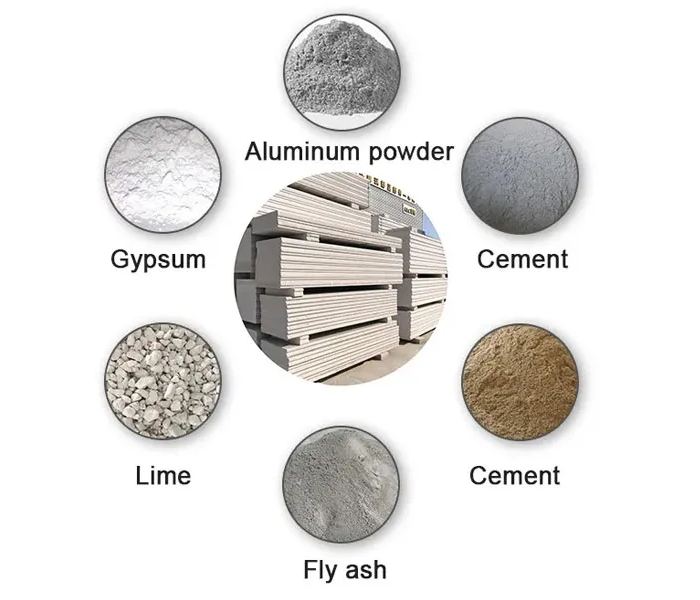
- Fly ash, cement, lime, and gypsum
- Electricity and steam
- Labor and maintenance
Compared with traditional blocks, AAC blocks often achieve:
- Better market pricing
- Lower transportation and structural costs
- Higher acceptance in energy-efficient buildings
Medium-capacity plants typically focus on steady returns, not short-term speculation. This approach aligns with long-term construction demand.
Plant Layout, Land Requirement, and Infrastructure Conditions
Plant layout design considers:
- Available land size and shape
- Material flow efficiency
- Future expansion space
Medium flyash AAC block plants can be designed with:
- Compact layouts for limited land
- Expandable layouts for long-term growth
Basic infrastructure requirements include:
- Stable electricity supply
- Water source
- Steam generation capability
Installation, Commissioning, and Technical Support Capability
Successful AAC block plant manufacturing does not end with equipment delivery. Professional support includes:
- On-site installation guidance
- Operator training
- Commissioning and quality stabilization
- Technical assistance during early production
This reduces startup delays and improves product consistency.
Expansion, Upgrade, and Long-Term Manufacturing Strategy
One of the key advantages of medium flyash AAC block plant manufacture is future scalability:
- Additional molds and cutting systems
- Automation upgrades
- Increased autoclave capacity
- Product diversification, such as AAC panels
This ensures that initial investment remains valuable as market demand grows.
Outros Fábrica de blocos de venda a quente
| Produção anual | Preço (USD) | Configuração do núcleo |
|---|---|---|
| 100,000 m³ | 1.5-1.9 M | Corte por rotação de ar, autoclaves de 3×31 m |
| 150,000 m³ | 2.1-2.6 M | Paletização robotizada, autoclaves de 4×31 m |
| 200,000 m³ | 2.8-3.5 M | Corte de seis lados, autoclaves de 4×37 m |
| 300,000 m³ | 4.0-4.8 M | Linhas de corte duplas, autoclaves de 6×37 m |
| 400,000 m³ | 5.5-6.5 M | Autoclaves de 8×37 m e superiores, com rotação de ar totalmente automática |
Why Choose Us for Medium Flyash AAC Block Plant Manufacture?
With more than 10 years of experience in AAC block plant manufacturing, we focus on:
- Engineering-based plant design
- Fly ash–specific process solutions
- Export-proven medium AAC plants
- Honest capacity and investment evaluation
Our goal is not to sell oversized equipment, but to help clients build stable, profitable AAC manufacturing operations.
Invest in Your Medium Flyash AAC Block Plant Manufacture
If you are considering a medium flyash AAC block manufacturing project, the first step should be technical evaluation, not price comparison.
To prepare a proper manufacturing solution, we typically assess:
- Target annual capacity
- Fly ash source and quality
- Available land and utilities
- Local market demand
- Budget and expansion plans
Contact us with your project details, and our engineering team will help you determine whether a medium flyash AAC block plant manufacture solution fits your market today—and supports sustainable growth in the future.