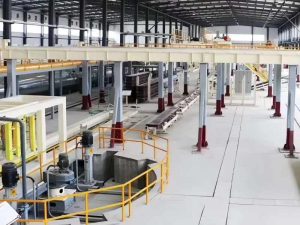
A Small AAC (Autoclaved Aerated Concrete) Block Plant is a compact, high-efficiency production facility built specifically to make AAC blocks.
AAC blocks themselves are lightweight, high-performance building materials, they are widely used in residential buildings, commercial spaces, and industrial construction projects.
What sets small AAC block plants apart from large-scale ones?
- Large plants need huge amounts of space and high initial investment.
- Small AAC block plants, by contrast, are designed for: Entrepreneurs, Local construction companies, Small-to-medium enterprises (SMEs).
- These users often want to enter the building materials market without high upfront costs—and small plants meet that need.
In terms of production capacity, small AAC block plants typically make 30,000 to 100,000 cubic meters of AAC blocks per year. This output is well-matched to the demand of regional construction projects. At the same time, they keep production scheduling flexible, so you can adjust output based on local needs.
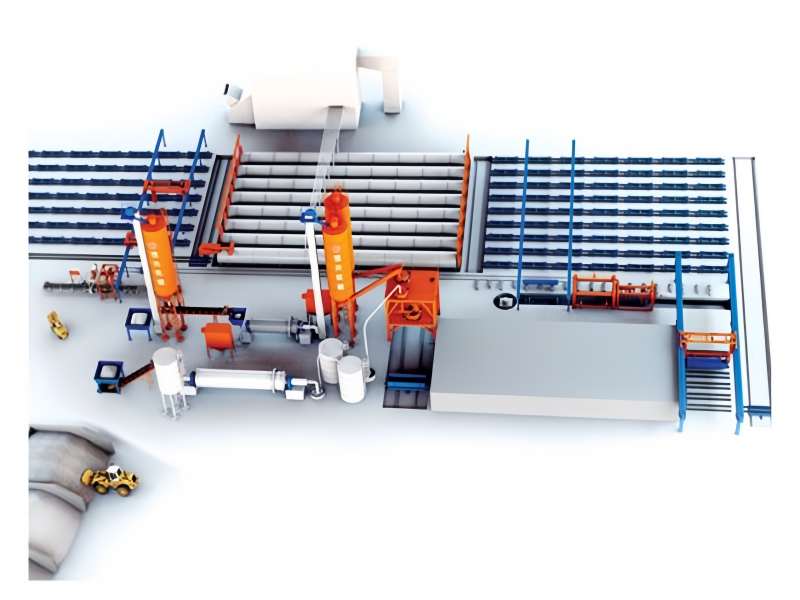
Small AAC Block Plant Cost
1. Initial Investment Cost
The initial investment for a small AAC block plant ranges from 100,000 to 250,000 USD, depending on production capacity and equipment configuration. Here’s how the cost breaks down:
- Equipment Purchase: The core equipment (mixing machine, mold, cutting machine, and small autoclave) accounts for 60-70% of the initial cost, roughly 60,000 to 175,000 USD.
- Site Rental: A small plant needs 500-800 square meters of land (including production area and storage). In most regional areas, annual rental costs range from 5,000to12,000 USD.
- Staff Training & Certification: Training 3-5 operators (for equipment safety and production standards) costs 2,000 to 4,000 USD, including local regulatory certification fees.
Compared to large AAC plants (which cost $500,000+ USD), small plants offer a 50-60% lower entry barrier – ideal for businesses testing market demand or expanding locally.
2. Operating Costs
Monthly operating costs for a 10,000 cubic meter/year plant average 6,000 to 8,500 USD, with clear cost-saving advantages:
2.1 Raw Materials: AAC blocks use low-cost, locally available materials:
- Cement (30% of cost, about 150/tonUSD),
- Sand(2520/ton USD),
- Lime (20%, about 80/ton USD)
- Aluminumpowder(52,000/kg USD).
Producing 1 cubic meter of blocks requires about 0.2 tons of cement, 0.3 tons of sand, and 0.05 kg of aluminum powder, with totaling 38 to 45 USD per cubic meter.
2.2 Energy Consumption: The autoclave (the most energy-intensive equipment) uses natural gas or electricity. With a natural gas rate of 0.15/cubic meter USD, heating the autoclave for 8 hours/day costs 120/day USD. Monthly energy costs average 3,000 to 4,000 USD.
2.3 Maintenance: Routine maintenance ( lubrication, filter replacement, and minor part repairs) costs 500 to 800 USD/month. Most equipment comes with a 1-year warranty, reducing unexpected repair costs.
3 Long-Term Cost vs. Return Analysis
With a production cost of 38 to 45 USD per cubic meter and a market price of 100 to 120 USD per cubic meter, a small AAC block plant generates a gross profit of 55 to 75 USD per cubic meter.
For a 10,000 cubic meter/year plant:
- Annual gross revenue: 1.0 million to 1.2 million USD
- Annual total costs (initial investment amortized over 5 years + operating costs): about 120,000 USD (initial amortization)+72,000-102,000USD (operating) = 192,000 to $222,000 USD
- Annual net profit: 778,000 to 988,000 USD
Most clients recoup their initial investment within 12 to 18 months– a faster ROI than many other construction-related investments.
Technical Parameters of Small AAC Block Plant
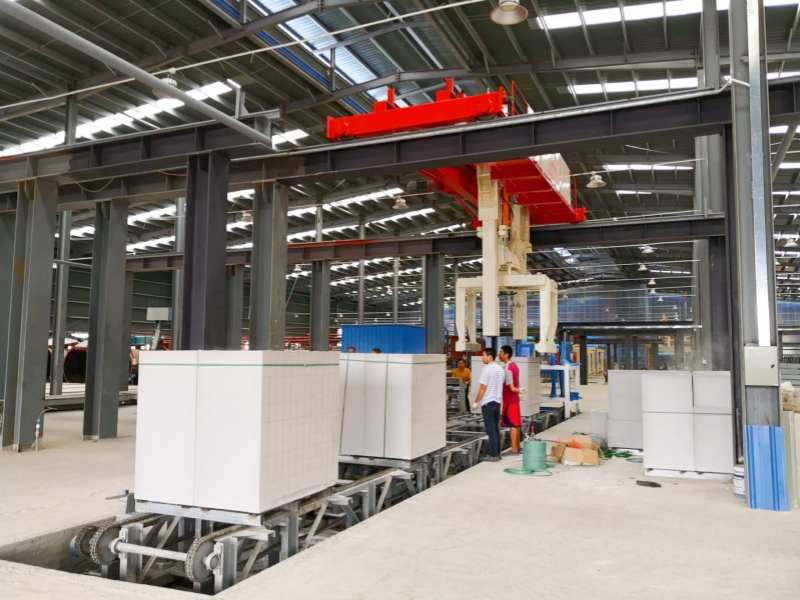
Small AAC Block Plant Process
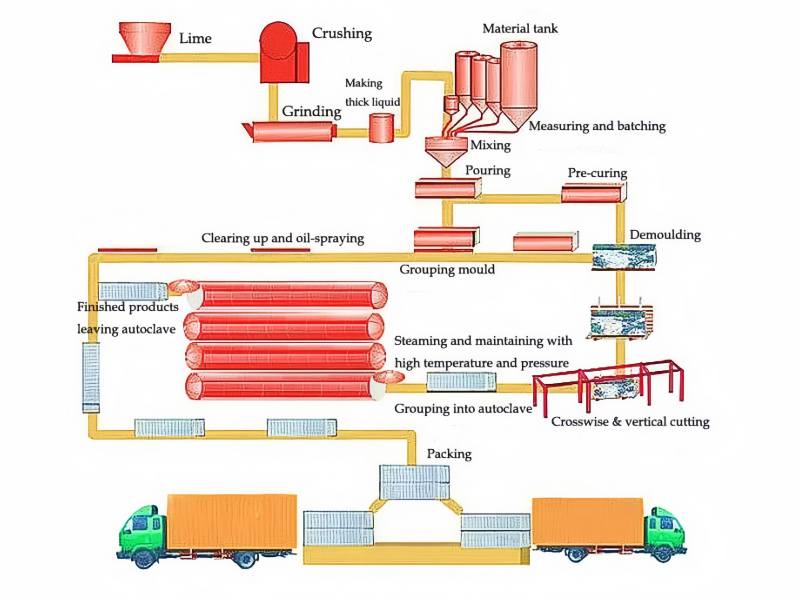
① Raw Material Grinding: Fly ash (or sand), lime, and cement are ground to a flour-like fineness to facilitate chemical reactions.
② Mixing: Pour the powder, water, and foaming agent (aluminum powder) into a large mixer, and bubbling begins within seconds.
③ In-Mold Foaming: The liquid is poured into the mold, where bubbles cause it to expand by two times its volume, forming a green body.
④ Curing: The green body is left at room temperature for 2–3 hours to solidify.
⑤ Turning and Cutting: Wire is used to cut the large green body into small pieces of precise size. Waste is automatically recycled.
⑥ Autoclaving: The small pieces are placed in an autoclave at 180–200°C and 1.0-1.3 MPa for 8-10 hours to achieve a high strength.
⑦ Demolding: After cooling, the lightweight, high-strength AAC blocks/boards emerge from the oven.
⑧ Packaging and palletizing: Robots or humans stack the finished products, affix barcodes, and directly load them for shipment.
Main Equipment Used in Small AAC Block Plant
- Jaw Crusher/Ball Mill: Grinds stone into powder.
- Mixer: Used to thoroughly mix the raw materials.
- Molds and Side Plates: Molds are used to shape AAC blocks, and side plates are an important part of the mold assembly. For example, a small AAC production line may require 15 sets of molds and 162 side plates.
- Cutter: Precision cutters are used to cut pre-cured blocks into desired sizes.
- Autoclave: A large pressure vessel used for steam curing aerated concrete blocks. A small AAC production line typically requires 3-4 autoclaves.
- Transfer and Conveying Equipment: Such as shuttles and cranes, used to move molds, blocks, and trolleys throughout the production process.
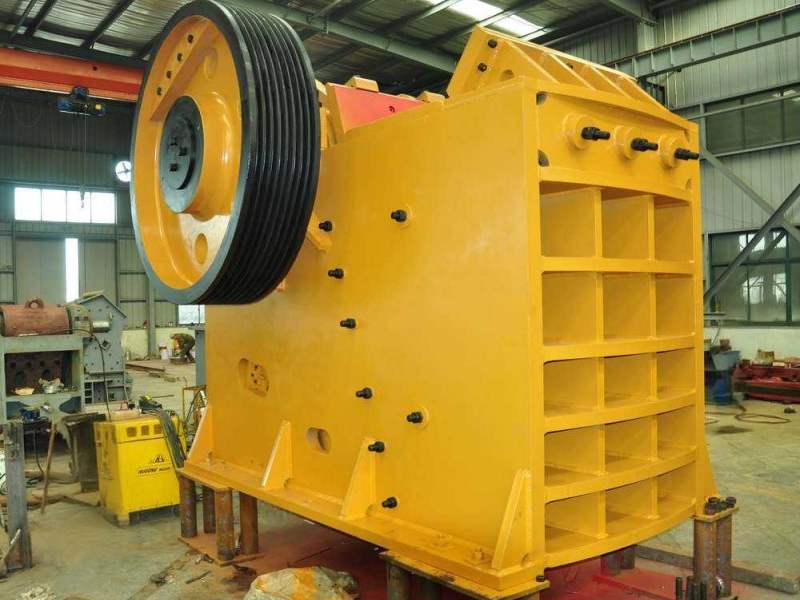
Jaw Crusher
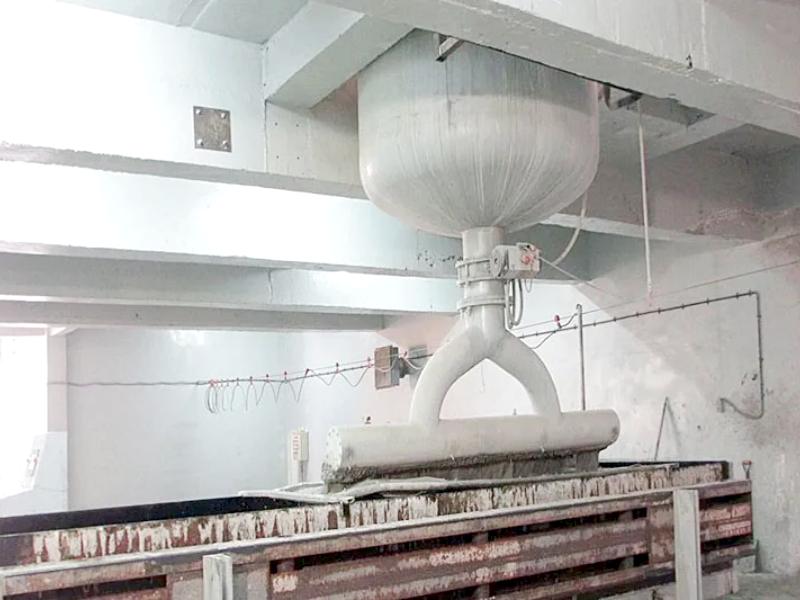
Mixer
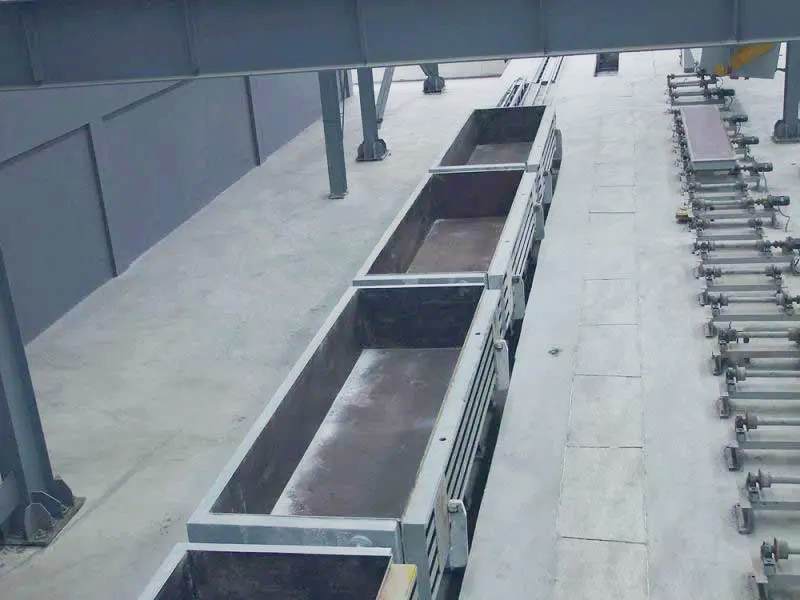
Molds and Side Plates:
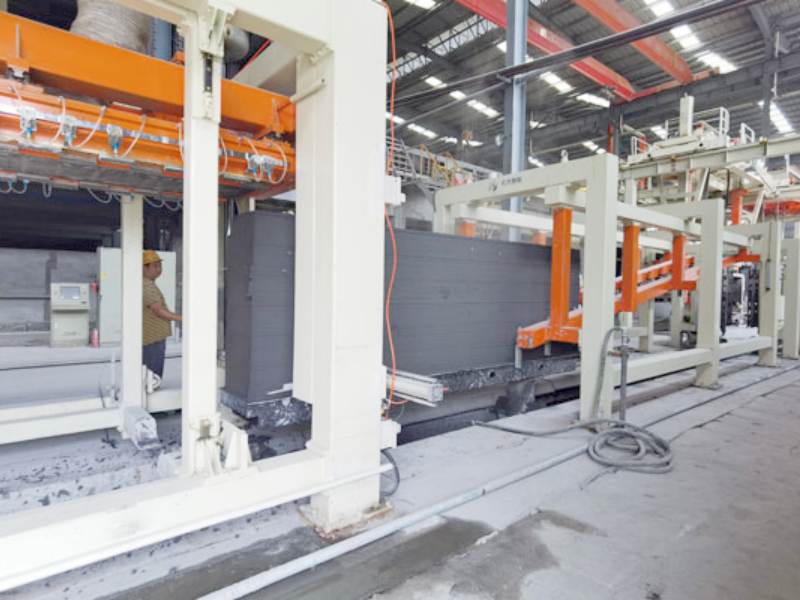
Cutter
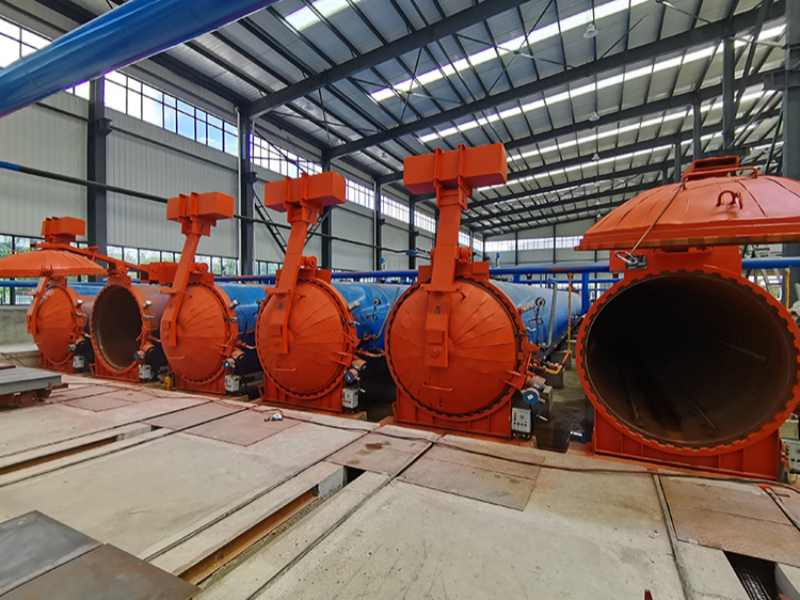
Autoclave
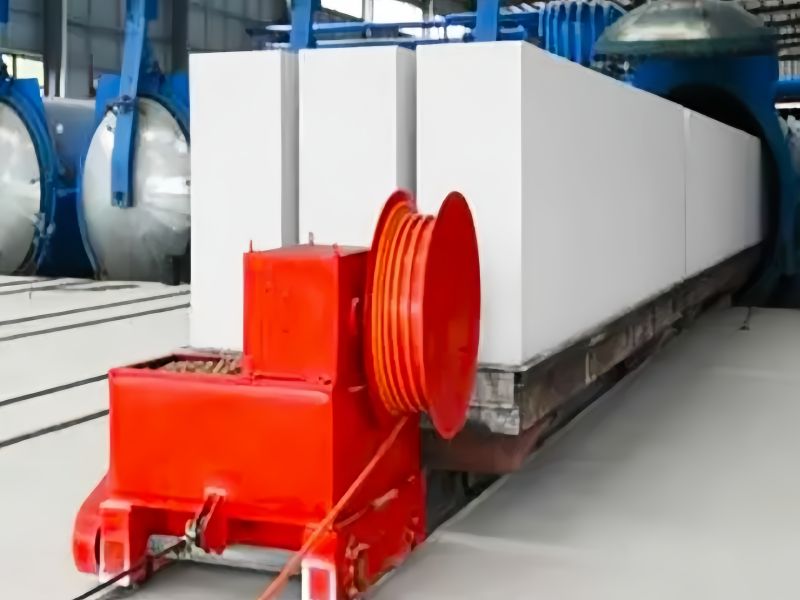
Transfer and Conveying Equipment
Advantages of a Small AAC Block Plant
Low Investment: Initial investment is low, requiring only 1/6–1/8 the investment cost of a large plant.
Suitable for the Local Market: Due to their smaller production capacity, small AAC production lines can effectively serve the local construction market, reducing transportation costs for raw materials and finished products.
Flexible Site: Even an old warehouse of 4,000 square meters can be converted.
Easy Expansion: Production capacity can be doubled by adding equipment later.
Quick Payback: Case studies show equipment payments are recovered within 3–4 months.
Ways to Reduce Setup Costs for Small AAC Manufacturing Plant
- Choosing Semi-Automated or Manual Equipment: If your budget is limited, choosing semi-automated or manual equipment over fully automated equipment can significantly reduce your initial investment.
- Sourcing Raw Materials Locally: Purchasing raw materials from local suppliers can reduce transportation costs.
- Using containerized, prefabricated steel structures is 30% cheaper than traditional concrete plants.
- Negotiating with Equipment Manufacturers: Try to negotiate better pricing, payment terms, or package deals with equipment manufacturers.
- Efficient Factory Layout: Design an efficient factory layout to minimize the need for excessive infrastructure and equipment.
Advantages of AAC Blocks
AAC blocks from small plants meet global quality standards (e.g., ASTM C1386 in the US, EN 12600 in Europe) and offer unmatched benefits for construction:
- Lightweight: Density of 500-700 kg/cubic meter – 30-50% lighter than traditional concrete blocks. Reduces structural load on buildings, cutting foundation costs by 15-20%.
- Thermal Insulation: Thermal conductivity of 0.12-0.18 W/(m·K) – lower than brick (0.8 W/(m·K)) or concrete (1.5 W/(m·K)). Helps buildings save 30-40% on heating and cooling costs.
- Fire Resistance: Non-combustible material with a fire rating of 2-4 hours (depending on thickness). Meets strict fire safety codes for residential and commercial buildings.
- Eco-Friendly: Uses 50% less cement than traditional blocks and reduces carbon emissions by 30%. AAC blocks are also 100% recyclable—aligning with green building trends (LEED, BREEAM).
Small AAC Plant Cost VS. Large AAC Plant Cost
| Indicator | Small Line (30,000 m³/year) | Large Line (300,000 m³/year) | Remarks |
| Single Line Investment | 0.475 M USD | 3.0–3.5 M USD | Approximately 1/6–1/7 of the large line |
| Payback Period | 3–4 months | 12–18 months | Small plants have faster cash flow |
| Energy Consumption per Unit | 34 kWh/m³ | 29 kWh/m³ | Gap < 15%, which is acceptable |
| Expansion Difficulty | Modular +50% capacity | Requires new factory construction and approval | Can be upgraded at any time in the later stage |
| Management Difficulty | Operable with 15 people | Team of 80+ people | Labor costs and complexity of small plants are significantly reduced |
Technical Support & After-Sales Service
Professional Team:
- Pre-Installation Consultation: Site assessment to optimize layout (e.g., minimizing material transport distance) and ensure compliance with local building codes.
- On-Site Training: 1-week on-site training for operators, covering equipment operation, quality control, and emergency protocols.
- 24/7 Technical Hotline: Engineers are available via phone/email to resolve issues (e.g., equipment malfunctions, production delays) within 4 hours.
After-Sales Guarantee:
We stand behind our equipment with a comprehensive after-sales package:
- Warranty: 1-year full warranty on all core equipment (mixer, autoclave, cutting machine) and 2-year warranty on electrical components.
- Spare Parts Supply: A global spare parts warehouse (with locations in the US, Germany, and China) ensures delivery of replacement parts within 3-5 business days.
- Annual Maintenance Visits: A free annual inspection by our technicians to optimize equipment performance and extend service life.